28% of Pakistan's children out of school as poverty drives child labour: Report
Synopsis
Nearly one in three girls and one in four boys in Pakistan are out of school, according to the country's own household survey. With 20% having never enrolled and only 7% of Grade 3 students able to read a simple story, Pakistan's education crisis is not just about access — it is about a generation being lost to poverty, child labour, and crumbling school infrastructure.
Key Takeaways
28 per cent of children aged five to 16 in Pakistan are currently out of school, per the Household Integrated Economic Survey 2024-25 .
The out-of-school rate is 31 per cent for girls and 25 per cent for boys , reflecting a sharp gender gap.
20 per cent of out-of-school children have never enrolled; 8 per cent dropped out after starting.
Only 60.2 per cent of surveyed government primary schools had usable washrooms, and 59.9 per cent had usable drinking water, per ASER Pakistan 2025 .
Just 7 per cent of Grade 3 children could read a simple story, and only 8 per cent could solve a basic division problem.
Poverty, child labour, safety concerns, and social barriers in rural areas are identified as the primary causes.
Nearly 28 per cent of children aged five to 16 in Pakistan are out of school, with millions spending their formative years labouring under the weight of poverty rather than attending classrooms, according to a new report released in November 2026. The findings paint a stark picture of an education crisis that disproportionately burdens girls and the rural poor.
Key Findings from the Survey
The Household Integrated Economic Survey 2024-25, published by the Pakistan Bureau of Statistics, reveals a stark gender divide: the out-of-school rate stands at 31 per cent for girls and 25 per cent for boys. Of the 28 per cent of children outside the education mainstream, 20 per cent have never enrolled in a school at all, while 8 per cent began their schooling and subsequently dropped out.
'In other words, out of every hundred children, 28 are outside the mainstream of education. Of these, 20 per cent have never set foot in a school, while 8 per cent began their education and then dropped out,' the report stated.
Poverty and Child Labour at the Root
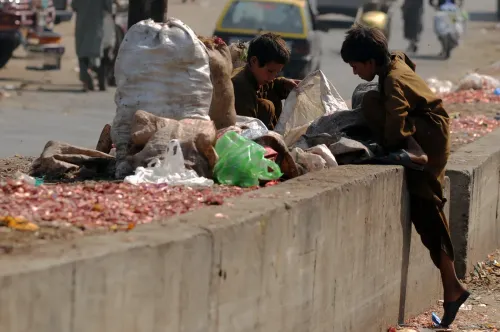
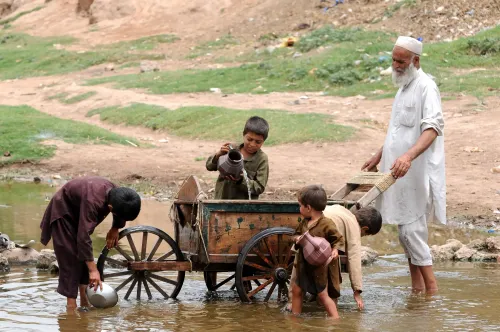
The report identifies poverty as the primary driver, noting that labourers struggling to meet monthly household expenses are often compelled to send their children to work despite wishing otherwise. Children are reportedly found carrying bricks, washing dishes in roadside eateries, and working on streets — occupations that consume years of their childhood.
'If, at an age when books should be in their hands, they are carrying bricks, washing dishes in hotels and working on the streets, this is not just the deprivation of their families. It is a failure of the whole society,' the report stated, as quoted by Pakistani daily Minute Mirror.
The Deeper Crisis Facing Girls' Education
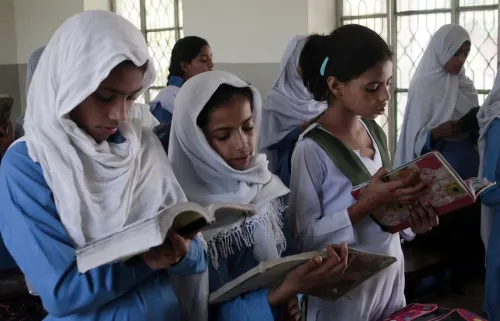
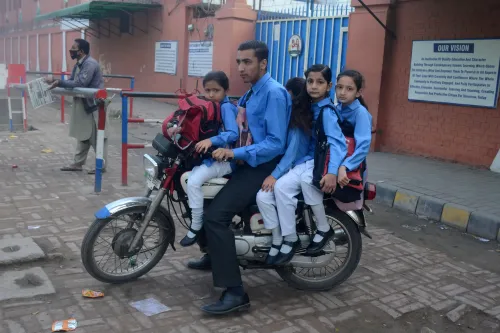
The report flags girls' education as a 'separate and more serious problem.' In many rural areas of Pakistan, there are no middle or high schools within reasonable distance of girls' homes. Continuing education beyond primary level often requires travelling several kilometres, raising safety concerns among parents. In addition, social pressure and traditional attitudes continue to act as barriers in several regions, the report noted.
Crumbling Infrastructure and Learning Outcomes
Facility data from the ASER Pakistan 2025 report underlines the structural rot: among government primary schools surveyed, only 60.2 per cent had usable washrooms, 59.9 per cent had usable drinking water, and 60.5 per cent had electricity. Even among children who do attend school, learning outcomes are alarmingly low — only 7 per cent of Grade 3 children could read a simple story, and only 8 per cent could solve a basic division problem, according to the same report.
These figures expose a dual crisis: not just access, but the quality of education that is delivered even when children do show up. This comes amid Pakistan's broader economic turmoil, where inflation and fiscal constraints have squeezed public investment in social services, raising concerns about whether a generation is being lost to systemic neglect.
What This Means Going Forward
Education advocates and international organisations have repeatedly flagged Pakistan as one of the countries with the highest number of out-of-school children globally. The latest data reinforces calls for emergency investment in school infrastructure, conditional cash transfer programmes to reduce economic pressure on families, and targeted outreach for girls in underserved rural districts. Without a course correction, critics argue, the country risks deepening a cycle of poverty that spans generations.
Point of View
But the latest household data makes the scale undeniable — and the gender dimension particularly troubling. A 31% out-of-school rate for girls in 2025 is not a development lag; it is a policy failure compounded by decades of underinvestment in rural school infrastructure. The ASER learning outcome numbers — 7% of Grade 3 children unable to read a simple story — suggest that even the 72% who are in school are receiving an education in name only. The real question is whether Pakistan's federal and provincial governments treat this as the emergency it is, or allow economic crisis management to crowd out the one investment that could break the poverty cycle.
NationPress
18 Nov 2026
Frequently Asked Questions
What percentage of children in Pakistan are out of school?
According to the Household Integrated Economic Survey 2024-25 by the Pakistan Bureau of Statistics, 28 per cent of children aged five to 16 in Pakistan are out of school. The rate is higher for girls at 31 per cent compared to 25 per cent for boys.
What is the main reason children in Pakistan are not attending school?
Poverty is identified as the primary cause, with many families unable to meet basic monthly expenses and therefore compelled to send children to work. Social barriers, safety concerns, and the lack of schools — especially for girls in rural areas — are also significant factors.
What do the ASER Pakistan 2025 findings reveal about school quality?
The ASER Pakistan 2025 report found that only 60.2 per cent of surveyed government primary schools had usable washrooms, 59.9 per cent had usable drinking water, and 60.5 per cent had electricity. Learning outcomes were equally alarming: just 7 per cent of Grade 3 children could read a simple story and only 8 per cent could solve a basic division problem.
Why are girls more affected by the out-of-school crisis in Pakistan?
Girls face a compounded set of barriers: in many rural areas there are no middle or high schools nearby, continuing beyond primary level requires travelling several kilometres, and parental safety concerns are heightened. Social pressure and traditional attitudes further restrict girls' access to education in several regions.
How many out-of-school children in Pakistan have never enrolled at all?
Of the 28 per cent of children who are out of school, 20 per cent have never enrolled in any school, while the remaining 8 per cent started school and subsequently dropped out, according to the Household Integrated Economic Survey 2024-25.