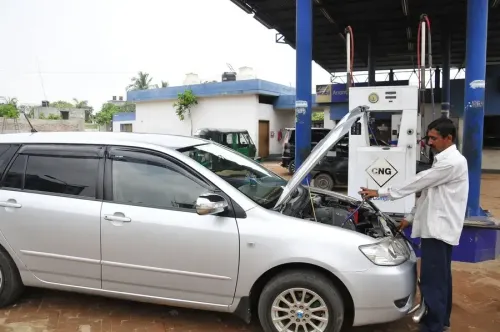
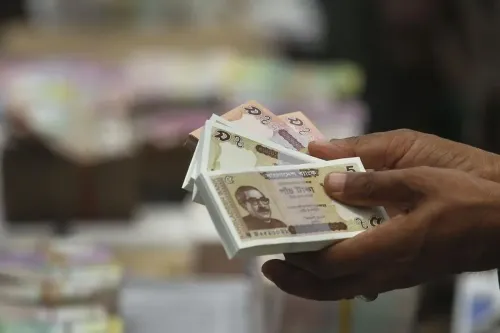
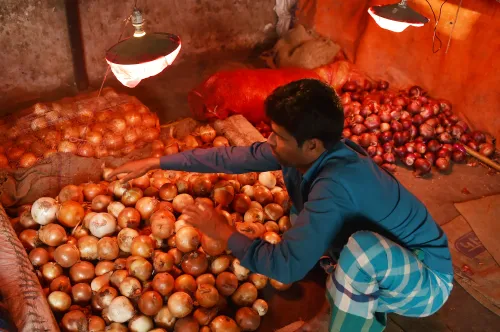
Bangladesh fuel price hike 2026: Diesel at Tk 135, stagflation fears rise
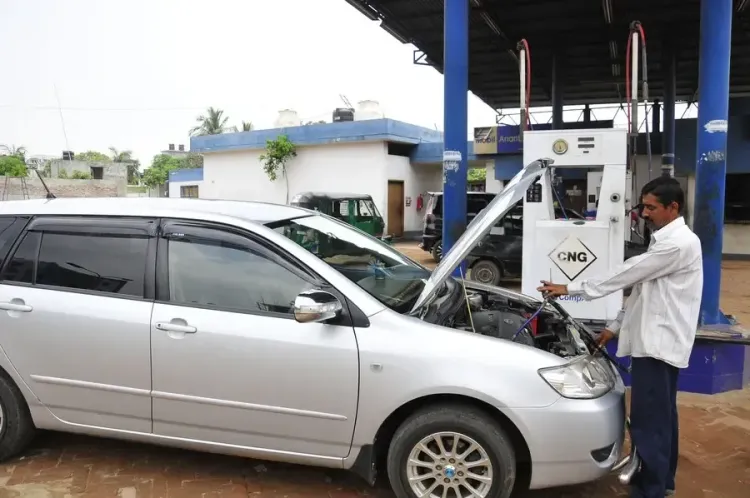
Synopsis
Bangladesh’s third fuel price hike under the BNP government has pushed diesel to a record Tk 135 per litre — a 36% rise since January. With economists warning of stagflation, rising food prices and a stagnant job market, the country faces a compounding economic crisis that the government has yet to offer a credible response to.
Key Takeaways
Bangladesh raised fuel prices by Tk 20 per litre effective Monday, 22 September 2026 , the third such hike under the BNP government since mid-February .
Diesel now costs Tk 135 per litre , up from Tk 115 — a key input for transport, agriculture and industry.
Cumulative fuel price increases between January and September 2026 amount to nearly 36% across all four major liquid fuels.
Economists at the Centre for Policy Dialogue (CPD) and Jahangirnagar University warn of stagflation, higher food prices and rising inequality.
Daily-wage earners and private-sector workers face the sharpest impact, with incomes unlikely to keep pace with rising costs.
Bangladesh's latest fuel price increase — a Tk 20-per-litre revision that took effect on Monday, 22 September — has pushed diesel, petrol, octane and kerosene to record retail highs, stoking fresh fears of a broad inflation surge across the country. Economists warn the ripple effects will hit transport, agriculture, industry and household budgets, with some raising the spectre of stagflation.
What Changed and How Much
The most critical revision concerns diesel, Bangladesh's most widely consumed fuel, which powers the country's transport fleets, irrigation pumps and factories. Its retail price has risen from Tk 115 to Tk 135 per litre. According to reports, all four major liquid fuels have seen repeated price increases between January and September 2026, with the cumulative rise amounting to nearly 36 per cent compared with January levels.
This is the third fuel price hike since the Bangladesh Nationalist Party (BNP) government assumed office in mid-February, according to The Daily Star, Bangladesh's leading English-language daily.
What the Government Said
Addressing a press conference at the Secretariat in Dhaka on Monday, Anindya Islam Amit, Bangladesh's state minister for power, energy and mineral resources, said that retaining the previous fuel prices had become financially unsustainable for the state. The minister did not elaborate on a timeline for any further revisions or relief measures.
Economists Sound the Alarm
Nazneen Ahmed, executive director of the Centre for Policy Dialogue (CPD) in Dhaka, warned that higher fuel prices would have far-reaching economic consequences — from agricultural production and freight logistics to industrial output.
“Think about how much the cost of operating a bus will increase from one end of the city to the other and the impact that will have on fares,” Ahmed was quoted as saying by The Daily Star.
Anu Muhammad, former economics professor at Jahangirnagar University, argued the government had alternatives. He said authorities could have lowered fuel-related taxes and fees rather than, in his words, “putting the burden on the entire economy.” In a pointed remark, he added: “Judging by the government’s approach, it seems to be trying to become unpopular very quickly.”
Mohammad Lutfor Rahman, an economics professor also at Jahangirnagar University, said the knock-on effects would touch nearly every sector. Rising agricultural expenses would push food prices higher, placing a disproportionate burden on daily-wage earners and private-sector workers whose incomes may not keep pace. “We may move towards stagflation, which means high inflation, declining purchasing power, rising inequality, and an increase in joblessness,” Rahman said.
Who Bears the Brunt
The sectors most exposed are transport operators, small farmers reliant on diesel-powered irrigation, and small and medium enterprises already grappling with high borrowing costs. Daily-wage earners — among Bangladesh's most economically vulnerable — face a double squeeze: higher food prices and higher commuting costs, with little prospect of a compensating income rise.
This comes amid a job market that analysts describe as stagnant, with industrialisation showing few signs of near-term momentum. The combination of persistent inflation and weak employment creation is precisely the condition Rahman identifies as a stagflation risk.
What Comes Next
With no relief measures announced, businesses and consumers are expected to absorb the cost increases in the near term. Economists are calling on the government to consider targeted subsidies or tax rationalisation on fuel to cushion the blow for the most vulnerable. Whether the BNP administration recalibrates its approach — or presses ahead with cost-reflective pricing — will likely determine Bangladesh’s inflation trajectory through the end of 2026.
Point of View
No tax rationalisation, no income support. If the BNP’s strategy is to front-load economic pain, it has so far not paired that with a coherent framework for who absorbs the shock and how.
NationPress
22 Sept 2026
Frequently Asked Questions
What is the latest fuel price hike in Bangladesh?
Bangladesh raised all major fuel prices by Tk 20 per litre effective Monday, 22 September 2026, pushing diesel to Tk 135 per litre from Tk 115. It is the third fuel price hike since the BNP government took office in mid-February 2026.
How much have Bangladesh fuel prices risen in 2026?
According to reports, cumulative price increases across all four major liquid fuels between January and September 2026 amount to nearly 36%. Diesel alone has risen from Tk 115 to Tk 135 per litre.
Why did Bangladesh raise fuel prices?
State minister Anindya Islam Amit said retaining previous fuel prices had become financially unsustainable for the government. The move reflects a cost-reflective pricing approach, though critics argue fuel-related taxes could have been cut instead.
What is the risk of stagflation in Bangladesh?
Economics professor Mohammad Lutfor Rahman of Jahangirnagar University warned that higher production costs from the fuel hike could trigger stagflation — a combination of high inflation, declining purchasing power, rising inequality and increased joblessness. He noted the job market remains stagnant and industrialisation shows little near-term momentum.
Who is most affected by Bangladesh’s fuel price hike?
Daily-wage earners, small farmers relying on diesel-powered irrigation and transport operators face the harshest impact. Rising food and commuting costs could disproportionately burden lower-income households, according to economists from the Centre for Policy Dialogue and Jahangirnagar University.