PPP slams Pakistan's petroleum pricing policy, demands consumer relief
Synopsis
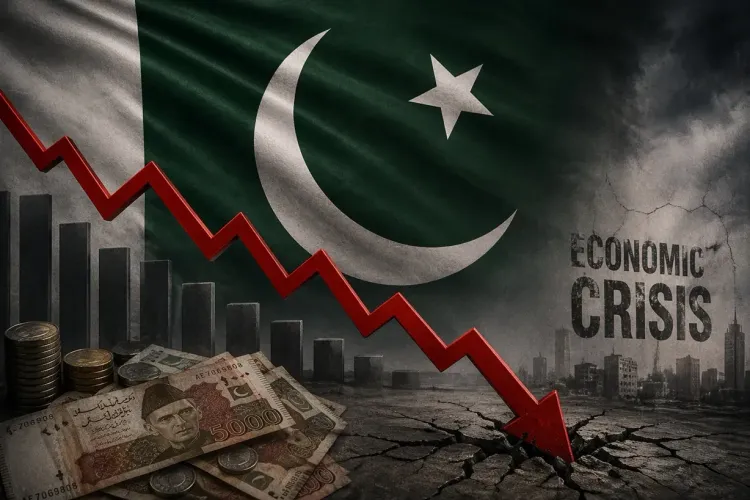
The PPP is accusing Pakistan's government of running an 'anti-people' fuel policy — one that quickly passes on global oil price hikes to consumers but quietly pockets the gains when prices fall. With dealer margins up Rs 2.68 per litre and the petroleum levy under fire, the opposition is framing fuel pricing as a political liability the ruling coalition cannot afford to ignore.
Key Takeaways
PPP has criticised Pakistan's petroleum pricing policy, alleging it disproportionately burdens ordinary consumers.
PPP Central Punjab Deputy Secretary Information Ahsan Rizvi said increased dealer margins add Rs 2.68 per litre to consumer costs.
Rizvi accused the government of collecting excessive revenues through the petroleum levy .
PPP alleges an asymmetric policy: global price hikes are passed on quickly, but price drops are not fully reflected domestically.
Rizvi compared Pakistan's approach unfavourably with Bangladesh , which reportedly did not raise petrol prices between 1 June 2026 and mid-August 2026.
The PPP leader warned of serious economic and political consequences if the pricing mechanism is not reformed.
The Pakistan Peoples Party (PPP) has sharply criticised the Pakistan government's petroleum pricing policy, alleging that frequent fuel price revisions and inflated dealer margins are imposing an unfair financial burden on ordinary citizens while failing to pass on the benefits of falling international oil prices. The criticism was voiced on 19 August, according to reports.
Key Allegations by PPP
PPP Central Punjab Deputy Secretary Information Ahsan Rizvi said the uncertainty surrounding petroleum prices had created widespread consumer anxiety and was fuelling a broader rise in the cost of essential commodities. He also took aim at the government's recently revised mechanism for determining fuel prices, arguing it had delivered no meaningful relief to the public.
Rizvi alleged that the government had raised dealer margins on petrol and diesel, resulting in an additional burden of Rs 2.68 per litre on consumers. He further accused the authorities of collecting excessive revenues through the petroleum levy, describing it as yet another financial strain on households already squeezed by inflation.
The Bangladesh Comparison
Drawing a pointed contrast with a neighbouring economy, Rizvi claimed that Bangladesh had last revised its petrol prices on 1 June 2026 and had not raised them in the three months since. He used this comparison to argue that Pakistan's pricing approach was out of step with regional peers and disproportionately harmful to consumers.
Asymmetric Pricing: The Core Complaint
At the heart of PPP's criticism is what Rizvi described as an asymmetric policy — one in which increases in global crude prices are swiftly passed on to domestic consumers, while declines in international oil prices are not fully reflected at the pump. He demanded that the same pricing mechanism applied during upward revisions be used when prices fall, so that consumers receive a corresponding benefit.
Political Warning and Demands
Rizvi warned that what he characterised as an 'anti-people' petroleum policy could carry serious economic and political consequences if left unaddressed. He urged the government to review the current pricing framework, reduce the burden on consumers, and ensure that any softening in global oil prices is adequately transmitted to domestic fuel prices. This comes amid broader public discontent in Pakistan over the cost of living, with fuel prices remaining a politically sensitive flashpoint.
Point of View
And Pakistan's petroleum levy has historically served as a fiscal buffer at the consumer's expense. The Bangladesh comparison is rhetorically effective but incomplete: the two countries have different subsidy structures and fiscal constraints. What PPP has not yet offered is a concrete alternative mechanism, which limits the critique to opposition positioning rather than a credible policy counter-proposal. The real test will come if global oil prices fall sharply — whether the government responds will define whether this is a structural flaw or a temporary revenue grab.
NationPress
5 Oct 2026
Frequently Asked Questions
What is PPP's criticism of Pakistan's petroleum pricing policy?
The PPP alleges that Pakistan's government applies an asymmetric fuel pricing mechanism — passing on global oil price increases quickly to consumers while not fully reflecting price declines at the pump. The party also accuses the government of raising dealer margins by Rs 2.68 per litre and collecting excessive petroleum levy revenues.
Who made the PPP statement on fuel prices?
PPP Central Punjab Deputy Secretary Information Ahsan Rizvi made the statements, according to reports. He demanded a review of the pricing mechanism and urged that consumers receive the full benefit of any decline in international oil prices.
How does Pakistan's fuel pricing compare to Bangladesh, according to PPP?
According to Rizvi, Bangladesh last revised its petrol prices on 1 June 2026 and had not raised them in the subsequent three months. He used this comparison to argue that Pakistan's pricing approach was more burdensome to consumers than that of its regional peers.
What is the petroleum levy, and why is PPP criticising it?
The petroleum levy is a government-imposed charge on fuel sales in Pakistan. PPP's Rizvi alleged that the government was collecting excessive amounts through this levy, describing it as an additional financial strain on consumers already struggling with rising costs.
What has PPP demanded from the Pakistan government on fuel pricing?
PPP has demanded that the government apply the same pricing mechanism for downward oil price revisions as it does for upward ones, reduce the burden on consumers, review dealer margin increases, and ensure that any fall in global oil prices is adequately reflected in domestic fuel prices.