Bangladesh Ram statue construction halted amid minority rights concerns
Synopsis
An 81-foot Lord Ram statue in Bangladesh's Gaibandha district has stood frozen since 13 June — not by court order or government directive, but reportedly by fear. With no written instruction and no public acknowledgement from authorities, the suspension exposes the gap between Prime Minister Tarique Rahman's minority-rights pledges and the reality facing Hindus on the ground.
Key Takeaways
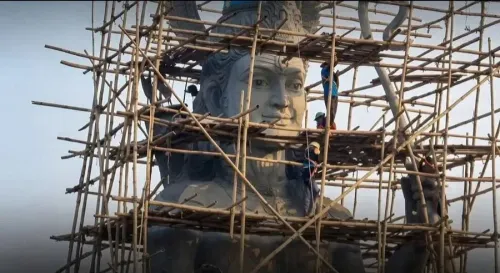
The Lord Ram statue at Sri Sri Radha Govinda and Kali Temple , Palashbari, Gaibandha , has been suspended since 13 June , with the structure approximately 80 per cent complete .
No written government order or judicial directive was issued — workers cited fear as the reason for the halt, according to reports.
Authorities reportedly encouraged the temple committee to pause construction informally, with no public acknowledgement of those discussions.
The Bangladesh Hindu Buddhist Christian Unity Council has documented hundreds of attacks on minority communities since the political transition of August 2024 .
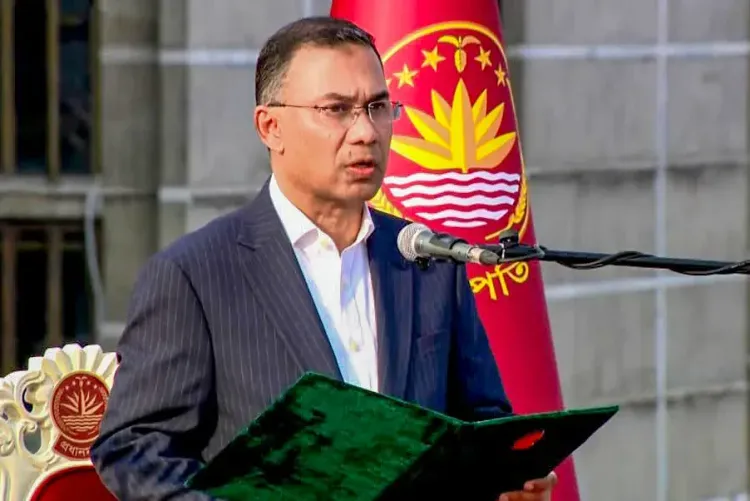
Prime Minister Tarique Rahman had pledged safety for all religious communities after his February election victory — a promise the temple committee itself invoked in seeking permission to resume work.
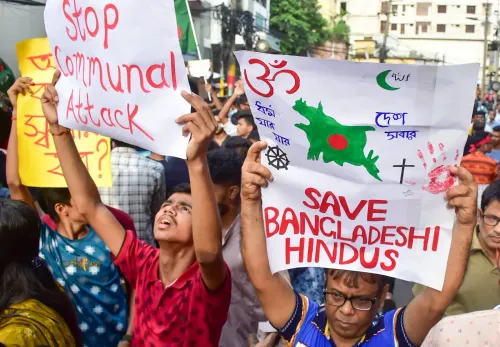
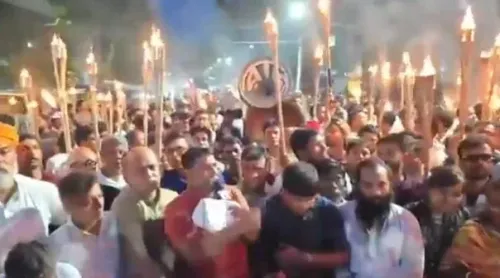
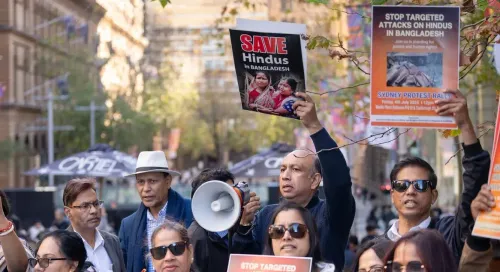
Students from Jagannath Hall, Dhaka marched to Shahbagh demanding resumption of construction and legal action against those who allegedly desecrated the Ram image.
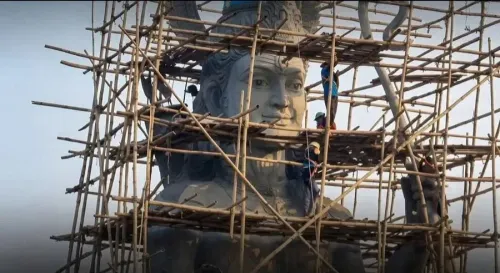
The suspension of the Lord Ram statue construction at the Sri Sri Radha Govinda and Kali Temple in Palashbari Upazila, Gaibandha district, Bangladesh, has drawn fresh scrutiny over the government's commitment to protecting minority religious rights, according to a report by The Borderlens. The approximately 81-foot statue — around 80 per cent complete — has remained untouched since 13 June, with workers citing fear rather than any formal legal or governmental order as the reason for the stoppage.
No Order, No Clarity
Notably, neither a judicial directive nor a written government instruction was issued to halt the project. According to the report, sources familiar with discussions between local officials and temple representatives indicated that Bangladeshi authorities had privately encouraged the temple committee to pause construction before tensions escalated. 'No written order was ever issued. No government agency has publicly acknowledged those conversations,' the report observed, adding that the absence of a formal directive leaves the statue's legal standing in limbo while affording the government plausible deniability.
The temple committee, for its part, maintained that construction was suspended in the interest of communal harmony — a justification that many within Bangladesh's minority community have reportedly received with scepticism.
A Symbol Beyond Its Foundations
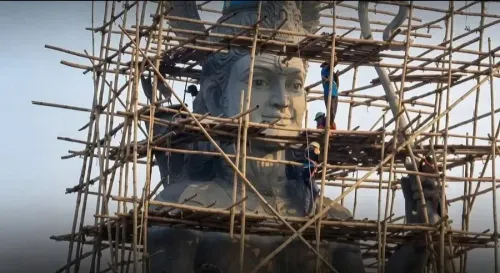
Situated on the edge of the Dhaka–Rangpur highway, the unfinished concrete figure — steel bars still jutting from its crown — has taken on a significance far beyond an interrupted construction project. 'For many local Hindus, that frozen construction site has come to represent something larger than an interrupted building project. It has become a measure of how far Bangladesh's constitutional promise of religious freedom extends when organised opposition pushes back,' the report noted.
The suspension follows reports of protests over the alleged desecration of an image of Lord Ram by radical Islamist groups during demonstrations opposing the statue's construction in Gaibandha. Critics have alleged that the halt came under direct pressure from Islamist organisations opposed to the project.
Minority Rights Record Under Scrutiny
Several minority rights organisations, including the Bangladesh Hindu Buddhist Christian Unity Council, have recorded hundreds of incidents involving attacks on minority communities across the country since the political transition that followed the ouster of the Sheikh Hasina-led Awami League government in August 2024. These documented incidents form the backdrop against which the statue controversy is being assessed by rights groups and community leaders.
Students from Jagannath Hall in Dhaka marched to Shahbagh, blocked traffic, and demanded both the resumption of construction and legal action against those accused of desecrating the image of Lord Ram during earlier protests.
Government's Stated Position
Bangladesh Prime Minister Tarique Rahman, following his election victory in February, had pledged to build 'a safe land for every citizen — Muslims, Hindus, Buddhists, Christians — regardless of party, opinion, religion, or ethnicity.' In seeking permission to resume construction, the temple committee reportedly cited Rahman's own words — that 'religion belongs to the individual, but the state belongs to all' — underlining the gap between official rhetoric and ground-level reality as perceived by the minority community.
What Happens Next
The report concluded that the eventual fate of the statue — whether completed, permanently frozen, or quietly removed — will serve as a critical indicator of how the Rahman government intends to balance majority sentiment against minority rights. Rights groups and observers within Bangladesh and beyond are watching closely, with the outcome likely to shape assessments of the country's post-transition democratic credentials.
Point of View
No public acknowledgement, and a temple committee left to absorb the political cost of a decision that was, by all accounts, not entirely its own. The Rahman government's silence is itself a policy choice, and it sends a signal that informal pressure on minority religious expression can succeed without legal consequence. With hundreds of incidents already documented since August 2024, the absence of accountability at the institutional level risks normalising a pattern that erodes Bangladesh's constitutional guarantees. The statue's fate will be watched not just by Bangladeshi Hindus, but by every government and rights body assessing whether the post-Hasina transition represents genuine pluralism or a change of management.
NationPress
24 Jun 2026
Frequently Asked Questions
Why has the Lord Ram statue construction in Gaibandha, Bangladesh been halted?
Construction of the approximately 81-foot Lord Ram statue at the Sri Sri Radha Govinda and Kali Temple in Palashbari, Gaibandha has been suspended since 13 June, reportedly due to fear rather than any formal judicial or government order. Reports indicate that local authorities informally encouraged the temple committee to pause work before communal tensions escalated, though no written directive was ever issued.
What is the Bangladesh government's official position on the statue suspension?
No government agency has publicly acknowledged any role in halting the construction. The temple committee stated the pause was made in the interest of communal harmony, but the absence of a formal directive has left the statue's legal status unresolved and drawn criticism for providing the government with plausible deniability.
What has Prime Minister Tarique Rahman said about minority rights in Bangladesh?
Following his election victory in February, Prime Minister Tarique Rahman pledged to build 'a safe land for every citizen — Muslims, Hindus, Buddhists, Christians — regardless of party, opinion, religion, or ethnicity.' The temple committee cited his own words — 'religion belongs to the individual, but the state belongs to all' — in their appeal to resume construction.
How has Bangladesh's minority community responded to the statue halt?
Many within Bangladesh's Hindu minority community have viewed the temple committee's communal-harmony explanation with scepticism. Students from Jagannath Hall in Dhaka marched to Shahbagh, blocking traffic and demanding the resumption of construction as well as legal action against those accused of desecrating the image of Lord Ram during earlier protests.
What is the broader context of minority rights in Bangladesh since August 2024?
Since the political transition following the ouster of the Sheikh Hasina-led Awami League government in August 2024, organisations including the Bangladesh Hindu Buddhist Christian Unity Council have recorded hundreds of incidents involving attacks on minority communities across the country. The Ram statue case is being assessed against this documented backdrop of rising incidents.