CENTCOM: US forces redirect 24 vessels, board 2 as Iran blockade tightens
Synopsis
CENTCOM has redirected 24 commercial ships, disabled 2, and boarded 2 in its Iran blockade — backed by 20-plus warships and hundreds of aircraft. Simultaneously, it is pushing back hard against Iranian state media claims, denying that F-35s were destroyed and that a tanker broke through its 'steel wall.' The information war is now as active as the naval one.
Key Takeaways
CENTCOM confirmed as of 30 July that US forces have redirected 24 commercial vessels , disabled 2 , and boarded 2 to enforce the Iran blockade.
The operation involves more than 20 US warships , hundreds of aircraft, and thousands of service members across the Middle East .
CENTCOM denied Iranian claims that three F-35 stealth fighters were destroyed in a recent attack, stating all missiles and drones were intercepted.
The command rejected IRGC assertions that the Strait of Hormuz is unsafe for commercial vessels, attributing danger to Iranian 'verbal threats and attempted attacks.' Claims that oil tanker M/T Nora broke through the US blockade were also disputed by CENTCOM.
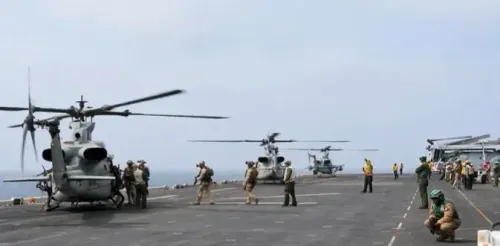
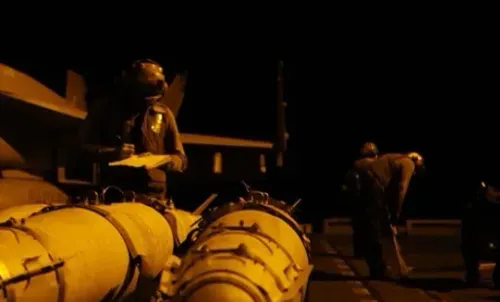
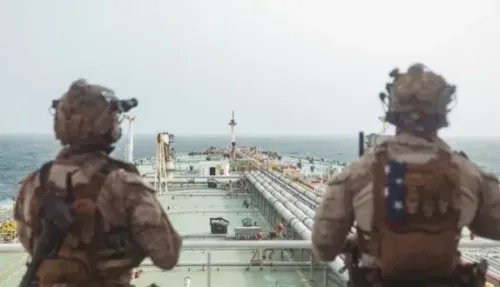
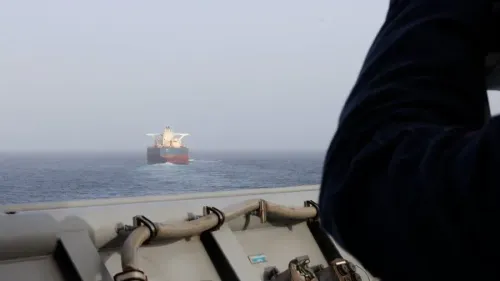
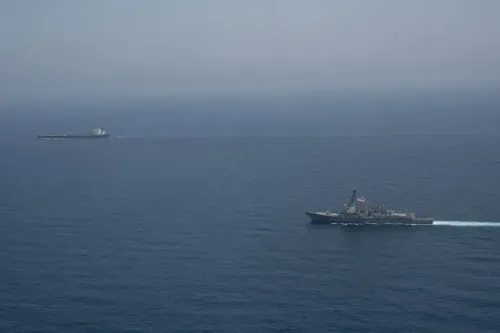
US Central Command (CENTCOM) on 30 July disclosed that American forces have redirected 24 commercial vessels, disabled 2, and boarded 2 to enforce compliance as Washington's naval blockade against Iran intensifies across the Middle East. The operational update, shared via CENTCOM's official account on X, underscores the scale of what the command describes as a comprehensive maritime enforcement campaign backed by more than 20 warships, hundreds of aircraft, and thousands of service members.
Scale of the Enforcement Operation
CENTCOM confirmed that its blockade is being enforced through a layered deployment of warships, reconnaissance aircraft, and ground personnel. Among the assets cited is the US Navy P-8 Poseidon, a specialised maritime patrol aircraft, which CENTCOM described as 'among the many assets monitoring regional waters during America's blockade against Iran.' An image shared alongside the post showed the aircraft approaching a US Air Force KC-135 Stratotanker for mid-air refuelling over the Middle East.
The command stated that its forces 'remain vigilant and continue to fully enforce the blockade,' signalling no let-up in the operation's tempo.
CENTCOM Rejects Iranian Counterclaims
The operational update followed CENTCOM's direct rebuttal of what it characterised as 'false claims' circulated by Iranian state media and the Islamic Revolutionary Guard Corps (IRGC). The command identified three specific assertions it disputed.
First, CENTCOM rejected the IRGC's claim that 'free and open routes through the Strait of Hormuz are dangerous for commercial vessels,' countering that 'the immediate dangers posed to commercial vessels and their civilian crews are the IRGC's verbal threats and attempted attacks.'
Second, the command denied Iranian reports that 'three US F-35 stealth fighters and three other aircraft were destroyed during a recent Iranian attack on an American air base,' stating categorically: 'No US aircraft were destroyed or damaged in recent attempted Iranian attacks. All missiles and drones were intercepted or failed to reach targeted areas.'
Third, CENTCOM disputed claims that the commercial oil tanker M/T Nora had 'broken through the US blockade,' asserting the vessel had not breached what it called 'America's steel wall blockade.'
Strategic Stakes: The Strait of Hormuz
The Strait of Hormuz is among the world's most strategically critical maritime chokepoints, through which a significant share of global oil exports transits daily. Any sustained disruption to commercial navigation in the corridor carries immediate implications for global energy markets and supply chains. This comes amid an intensifying war of narratives between Washington and Tehran, with both sides issuing competing accounts of events on the ground and at sea.
Notably, the scale of the US deployment — more than 20 warships, hundreds of aircraft, and thousands of personnel — represents one of the most significant American naval presences in the region in recent years.
What Comes Next
With both sides entrenched in competing information campaigns, the risk of miscalculation remains elevated. Analysts will be watching whether Iran escalates its posture in the Strait of Hormuz or whether diplomatic back-channels, reportedly active behind the scenes, produce any de-escalation. The trajectory of commercial shipping through the corridor — and the response of global oil markets — will serve as the clearest near-term indicators of how far this standoff has progressed.
Point of View
Suggesting Iranian messaging is finding enough traction to warrant a formal response. What is missing from both sides' accounts is independent verification: no neutral maritime authority or third-party observer has confirmed the vessel tallies or the aircraft status. In a theatre where both parties have strong incentives to shape perception, the gap between claim and verified fact is itself the most important story.
NationPress
14 Sept 2026
Frequently Asked Questions
How many vessels has the US redirected under the Iran blockade?
As of 30 July, CENTCOM confirmed that US forces have redirected 24 commercial vessels, disabled 2, and boarded 2 to enforce compliance with the blockade against Iran.
What is CENTCOM's Iran blockade and where is it being enforced?
The US Iran blockade is a naval enforcement operation in the Middle East, centred on the Strait of Hormuz and surrounding waters. It is backed by more than 20 US warships, hundreds of aircraft, and thousands of service members, according to CENTCOM.
Did Iran destroy US F-35 aircraft in a recent attack?
CENTCOM categorically denied this claim, stating that no US aircraft were destroyed or damaged in recent Iranian attacks and that all missiles and drones were intercepted or failed to reach their targets.
Did the oil tanker M/T Nora break through the US blockade?
CENTCOM rejected the claim, saying the M/T Nora had not broken through what it called 'America's steel wall blockade,' and that the full naval and air enforcement presence remained in place.
Why is the Strait of Hormuz strategically significant?
The Strait of Hormuz is one of the world's most critical maritime chokepoints, through which a major share of global oil exports passes daily. Any disruption to navigation there has immediate consequences for global energy markets and supply chains.