UNDP Highlights Growing Gender Inequality in Bangladesh's Political Leadership
Synopsis
In Bangladesh, a troubling gender gap persists in political leadership roles, with women's representation lagging significantly behind their voting participation. The UNDP emphasizes the need for immediate action to address this disparity and foster women's active engagement in governance.
Key Takeaways
Significant gender gap in Bangladesh's political leadership.
Current female representation in political committees stands at 2.33% .
RPO aims for 33% female representation by 2030.
Political parties must take the lead in nominating women candidates.
Women's leadership is vital for a strong democracy and economic growth.
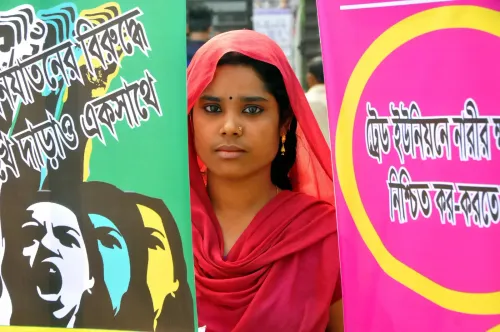
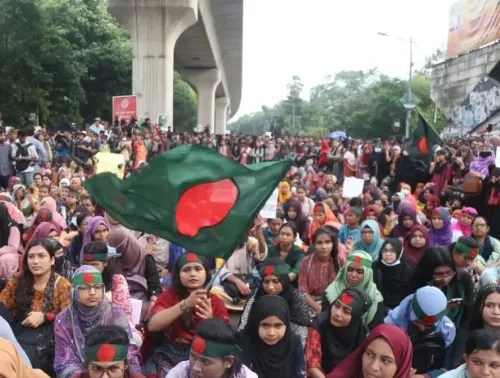
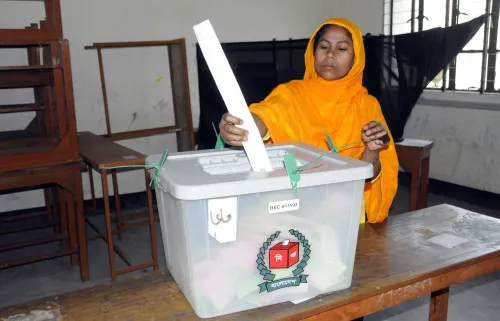
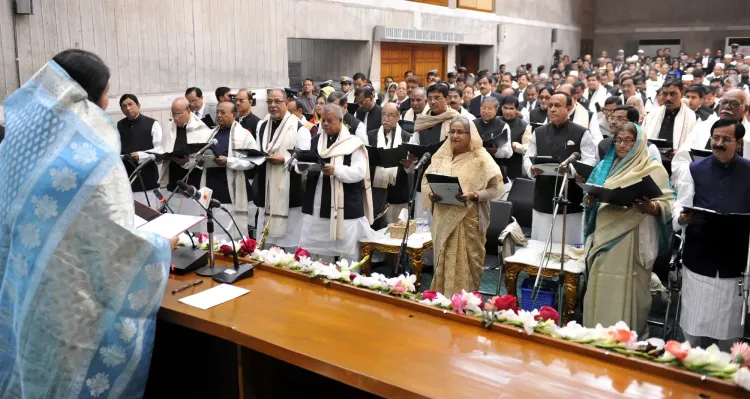
Dhaka, April 8 (NationPress) The political arena in Bangladesh reveals a significant gender disparity, with women actively participating as voters; however, their advancement into leadership positions is progressing at an alarming rate, as highlighted by the United Nations Development Programme (UNDP).
A discussion hosted in Dhaka last month commenced with a symbolic presentation entitled 'Women to Discover, Develop, and Lead', collaboratively organized by the UNDP and the Bangladesh Election Commission (BEC) to amplify women's voices in the democratic framework.
The UNDP underscored the shocking gap, indicating that the Representation of the People Order (RPO) in Bangladesh requires 33% female representation in political party committees by 2030. Currently, this figure stands at a mere 2.33%, triggering urgent calls for decisive action.
Bangladesh’s Election Commissioner, Anwarul Islam Sarker, attributed the duty to political parties, asserting, “Political parties need to take greater initiatives concerning the nominations of women candidates. The Election Commission serves as a referee; without initiatives from both sides, progress is unattainable.”
During the session, other leaders mirrored the necessity for a cultural transformation within political frameworks.
The dialogue stressed that solutions should transcend quotas to foster an atmosphere where women can confidently and safely engage in public life.
Election Commissioner Tahmida Ahmad emphasized that “good governance and effective law enforcement are crucial for ensuring safety, which will motivate women’s participation.”
The benefits of this transformation extend well beyond political representation, with Bangladesh Chief Election Commissioner A M M Nasir Uddin presenting a “compelling economic perspective,” noting that “if women's unpaid household work were valued monetarily, Bangladesh's GDP could potentially triple.”
UNDP's Resident Representative, Stefan Liller, remarked, “When women lead, democracy strengthens, and communities thrive. International Women’s Day serves as a reminder that a robust democracy relies on women participating fully, not just as voters but also as leaders and decision-makers.”
The dialogue concluded with a renewed collaboration between the UNDP and the BEC, signaling a collective commitment to advancing institutional reforms and ongoing advocacy.
Reinforcing the overarching message, the UNDP stated, “Promoting women's political leadership is not merely a question of rights or justice, but a fundamental requirement for the prosperity and resilience of Bangladesh’s democracy.”
Point of View
I observe that the persistent gender gap in political leadership in Bangladesh is not only a matter of justice but also a critical factor influencing the country's democratic health. Urgent reforms are needed to empower women and enhance their participation in governance.
NationPress
25 Sept 2026
Frequently Asked Questions
What is the current percentage of women in political leadership roles in Bangladesh?
Currently, women hold only 2.33% of leadership roles in political party committees in Bangladesh.
What does the Representation of the People Order (RPO) mandate regarding women's representation?
The RPO mandates that by 2030, 33% of political party committee positions should be occupied by women.
What role do political parties play in increasing women's representation?
Political parties are crucial in initiating nominations for women candidates to improve their representation in leadership roles.
Why is women's participation in leadership important for democracy?
Women's participation strengthens democracy and contributes to the overall prosperity of communities and societies.
What economic impact could women's unpaid work have on Bangladesh's GDP?
If women's unpaid household work were monetized, it could potentially triple Bangladesh's GDP.