IMF: Global economy resilient amid Middle East war, AI investment a key buffer
Synopsis
The IMF says AI-led investment is doing something economists rarely credit technology with — acting as a macroeconomic shock absorber. With the Middle East war pushing up energy and food prices, it is the technology productivity cycle that is keeping global growth from tipping over. But the Fund's own assumptions — Hormuz normalising by mid-July, oil at $89 a barrel in 2026 — carry significant geopolitical risk.
Key Takeaways
The IMF on 9 July said the global economy has remained resilient despite the economic shock from the Middle East conflict .
AI-led investment and productivity gains are offsetting the negative supply shock from higher energy, fertiliser, and food prices .
IMF spokesperson Julie Kozack warned that uncertainty remains 'exceptionally high' and is expected to stay elevated.
The July WEO assumes Strait of Hormuz transit normalises by mid-July and average oil prices reach $89 per barrel in 2026.
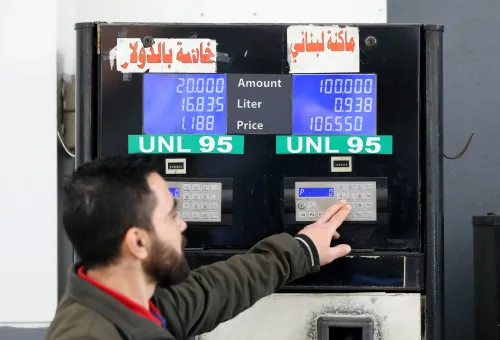
Commodity-importing nations with limited fiscal space are bearing a disproportionate share of the war's economic burden.
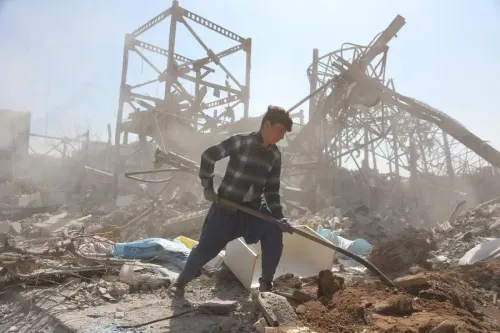
The International Monetary Fund (IMF) on Thursday, 9 July said the global economy has remained resilient despite the economic shock triggered by the Middle East conflict, with artificial intelligence (AI)-led investment and productivity gains helping offset the drag from surging energy, fertiliser, and food prices. The Fund, however, cautioned that uncertainty remains exceptionally high and that the burden of the conflict has fallen unevenly across nations.
Two Opposing Forces Shaping the Global Economy
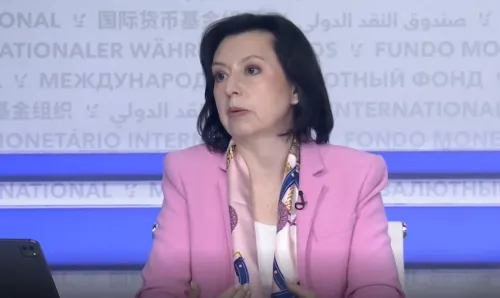
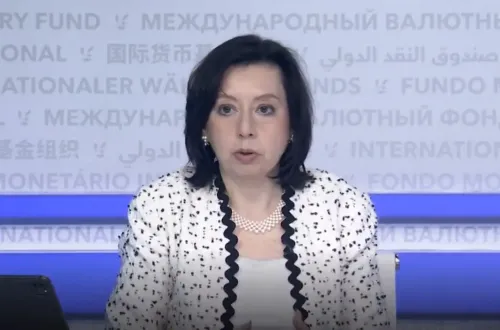
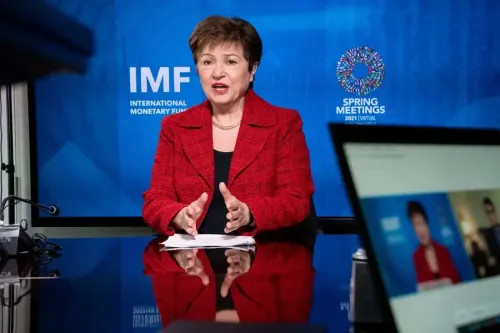
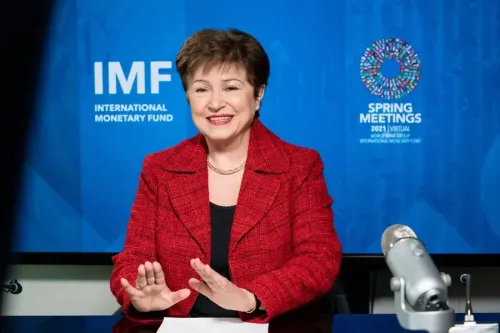
Julie Kozack, Director of the IMF's Communications Department, speaking at the Fund's regular press briefing, described the current global situation as a tug-of-war between two powerful forces. 'We have the negative supply shock from the war, which has pushed up commodity prices, particularly energy, fertiliser and food prices,' she said. On the other side, she noted, 'we have a positive demand and productivity shock, which is coming from the technology cycle and particularly AI-led investment.'
Kozack summarised the net effect plainly: 'There's two forces that are pulling the global economy in somewhat different directions, and the overall impact has been a resilient global economy.' This framing positions AI not merely as a corporate trend but as a macroeconomic stabiliser — a notable shift in how multilateral institutions are characterising the technology cycle.
Who Bears the Heaviest Burden
Despite the headline resilience, the IMF was clear that the pain has not been shared equally. Countries that are commodity importers with limited fiscal space — largely lower-income and emerging-market economies — have faced the full force of higher fuel, fertiliser, and food costs while capturing fewer of the productivity benefits associated with AI and advanced technology adoption.
This asymmetry is a recurring concern in the Fund's assessments. Nations without the digital infrastructure or fiscal headroom to invest in technology-led productivity are effectively absorbing the war's costs without access to the offsetting gains, widening the gap between advanced and developing economies.
IMF's World Economic Outlook: Key Assumptions
Kozack outlined the assumptions underpinning the Fund's July World Economic Outlook (WEO) update, released on Wednesday, 8 July. The forecast assumes that transit through the Strait of Hormuz begins to normalise by mid-July and that the average oil price in 2026 will be approximately $89 per barrel.
'Those are the assumptions that have gone into the July WEO update,' Kozack confirmed, adding that the IMF will continue to monitor developments in oil markets, commodity prices, and Hormuz shipping to assess their implications. Critically, the current forecast does not assume an immediate return to pre-war conditions, reflecting the continued uncertainty surrounding both the conflict and global energy markets.
Uncertainty Remains Elevated, IMF Warns
'We still anticipate that uncertainty will remain elevated,' Kozack said, a signal that the Fund's cautious tone is unlikely to soften in the near term. The IMF has increasingly placed uncertainty itself at the centre of its global economic outlook — a departure from earlier frameworks that focused primarily on growth projections.
The revised WEO also flagged geopolitical tensions and volatile commodity markets as persistent risks. For India and other large emerging markets, the interplay between global energy prices and domestic inflation remains a key variable to watch in the months ahead.
Point of View
In large part, a rich-country story. Meanwhile, the WEO's baseline assumptions — Hormuz normalising by mid-July, oil at $89 — are optimistic given the conflict's trajectory. If either assumption breaks, the headline resilience narrative unravels quickly.
NationPress
9 Jul 2026
Frequently Asked Questions
What did the IMF say about the global economy on 9 July?
The IMF said the global economy has remained resilient despite the economic shock from the Middle East conflict, with AI-led investment and productivity gains helping offset higher energy, fertiliser, and food prices. However, it warned that uncertainty remains exceptionally high.
How is AI helping the global economy amid the Middle East war?
According to the IMF, the technology cycle — particularly AI-led investment — is generating a positive demand and productivity shock that is counterbalancing the negative supply shock from war-driven commodity price increases. This dynamic has been a key reason global growth has not contracted sharply.
Which countries are most affected by the Middle East conflict's economic impact?
The IMF identified commodity-importing nations with limited fiscal space as the hardest hit. These countries face higher costs for fuel, fertiliser, and food while benefiting less from the AI and technology productivity gains that are cushioning advanced economies.
What are the IMF's assumptions in its July World Economic Outlook?
The July WEO update assumes that transit through the Strait of Hormuz begins to normalise by mid-July and that the average oil price in 2026 will be approximately $89 per barrel. The forecast does not assume an immediate return to pre-war conditions.
Will global economic uncertainty ease soon, according to the IMF?
No. IMF Communications Director Julie Kozack stated that the Fund still anticipates uncertainty will remain elevated, reflecting continued risks from geopolitical tensions, volatile commodity markets, and the unresolved Middle East conflict.