Hegseth: US will 'negotiate with bombs' until Iran accepts Trump nuclear deal
Synopsis
US Defence Secretary Pete Hegseth declared from CENTCOM headquarters that America would 'negotiate with bombs' if Iran refuses Trump's nuclear terms — while revealing that nearly 140 Iranian vessels have been stopped under a US-enforced blockade and that over 100 million barrels of oil have moved through a US-controlled Strait of Hormuz. The statement is among the bluntest public admissions that military force is being used as a direct lever in nuclear diplomacy.
Key Takeaways
Pete Hegseth warned on Wednesday that US strikes on Iran would continue until Tehran agrees to President Trump's nuclear terms.
Speaking at CENTCOM headquarters, MacDill Air Force Base, Florida , Hegseth said: 'If we need to negotiate with bombs, we'll negotiate with bombs.' The US has enforced a maritime blockade, stopping nearly 140 vessels from entering or leaving Iranian ports, with at least one tanker disabled.
More than 100 million barrels of oil have moved through the Strait of Hormuz under US protection as part of 'Project Freedom.' Hegseth claimed US operations had degraded Iran's navy, air force, air defences, and power projection capabilities.
Washington and Tehran have held intermittent nuclear talks for months, with negotiations repeatedly stalling over Iran's nuclear programme scope and sanctions sequencing.
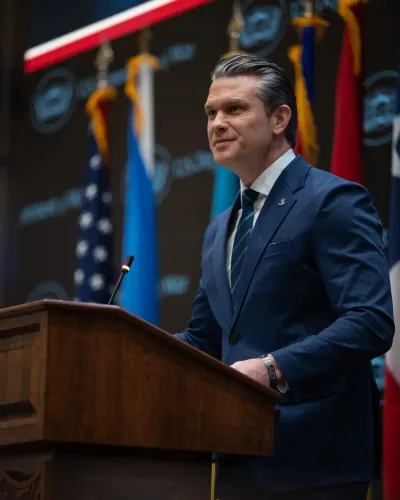
US Defence Secretary Pete Hegseth on Wednesday issued one of the Trump administration's starkest warnings to Iran, declaring that Washington would continue military strikes until Tehran agrees to President Donald Trump's nuclear terms — and that if necessary, the US would 'negotiate with bombs.' Speaking at US Central Command (CENTCOM) headquarters at MacDill Air Force Base in Florida, Hegseth signalled that further military action was imminent and already planned.
The Warning from CENTCOM
After receiving operational briefings from CENTCOM commanders, Hegseth told reporters that strikes on Iran would not stop until a nuclear agreement was finalised. 'Central Command will be busy tonight because President Trump said, 'We will be hitting Iran hard, and we will be,' he said. He accused Tehran of repeatedly delaying negotiations despite what he described as a fully developed diplomatic path offered by Washington.
'As President Trump said, they've been tap-tap-tapping,' Hegseth said. 'Instead, they're gonna have tap, tap, tap bombs dropping on key facilities in Iran from the United States of America.' He framed the military campaign as a tool to strengthen diplomacy rather than replace it, arguing that sustained pressure was necessary to secure the kind of deal Trump expects.
Project Freedom and the Strait of Hormuz
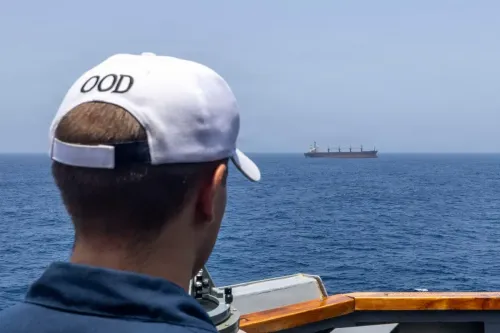
Hegseth also disclosed new details about what he called 'Project Freedom' — an operation aimed at keeping commercial shipping lanes open through the Strait of Hormuz amid the ongoing confrontation with Iran. According to the secretary, more than 100 million barrels of oil have moved through the strategic waterway under US protection.
'The United States of America controls the Strait of Hormuz,' Hegseth said. He added that American forces had enforced a blockade against Iranian maritime trade, claiming that nearly 140 vessels attempting to enter or leave Iranian ports had been stopped, and that at least one additional tanker had been disabled after violating the blockade.
Iran's Degraded Military Capabilities
The secretary argued that recent US operations had significantly weakened Iran's military. 'Add that to what the United States military with Central Command did to their navy, to their air force, to their air defences, to their power projection capabilities,' he said. 'We know exactly on this ledger who's on the strong end and who is not.'
Asked whether future strikes could target bridges, electrical infrastructure, or other civilian-adjacent facilities, Hegseth declined to provide operational details but pushed back against suggestions that US actions were indiscriminate. 'We will hit them hard on our terms, on the targets that improve the environment for us to operate in and undermine the capabilities that Iran wants to have,' he said.
Iran Still Has a Choice, Hegseth Says
Despite the combative language, Hegseth repeatedly insisted Iran retained the option of a negotiated settlement. 'Iran has an opportunity to make a deal. President Trump is a deal maker, the best in the world. He's prepared to make that deal. Iran would be wise to take it,' he said.
This comes amid months of intermittent US-Iran nuclear talks that have repeatedly stalled over the scope of Tehran's nuclear programme and the sequencing of sanctions relief. The Trump administration has made preventing Iran from acquiring a nuclear weapon the central pillar of its Middle East strategy. Notably, Hegseth's remarks represent one of the most explicit public acknowledgements yet that military operations are being calibrated to extract diplomatic concessions.
What Comes Next
With Hegseth signalling that CENTCOM operations were imminent on the night of his remarks, all eyes are now on whether Tehran will move toward a deal or absorb further strikes. The administration has not publicly detailed a ceiling for military action, leaving the scope of potential escalation uncertain. Analysts will be watching whether Iran's response shifts the diplomatic calculus or deepens the confrontation.
Point of View
A posture that risks locking both sides into an escalation spiral if Tehran reads the pressure as existential rather than transactional. The disclosure of 'Project Freedom' and the 140-vessel blockade figure suggests the US is already operating on a war footing in all but name. What is missing from the public framing is any credible account of what a 'good deal' actually requires of Iran — without that clarity, the military pressure has no defined endpoint, which is precisely what makes it dangerous.
NationPress
26 Oct 2026
Frequently Asked Questions
What did Pete Hegseth mean by 'negotiate with bombs'?
Hegseth said that if the US needs to, it will use military strikes as a direct instrument to compel Iran to accept President Trump's nuclear deal terms. He framed the ongoing bombing campaign not as a replacement for diplomacy but as a mechanism to set the conditions for the kind of agreement Washington demands.
What is 'Project Freedom' and why does it matter?
'Project Freedom' is a US military operation to keep commercial shipping lanes open through the Strait of Hormuz amid the confrontation with Iran. Hegseth said more than 100 million barrels of oil have moved through the waterway under US protection, asserting that America effectively controls the strait.
How many Iranian vessels has the US stopped under its blockade?
According to Hegseth, nearly 140 vessels attempting to enter or leave Iranian ports have been stopped under a US-enforced maritime blockade. He also said at least one additional tanker was disabled after violating the blockade.
Where is the US-Iran nuclear deal currently?
Washington and Tehran have engaged in intermittent nuclear negotiations for months, but talks have repeatedly stalled over the scope of Iran's nuclear programme and the sequencing of sanctions relief. Hegseth accused Iran of repeatedly delaying despite a 'fully developed diplomatic path' offered by the Trump administration.
What targets could the US strike in Iran?
Hegseth declined to specify future targets but said strikes would focus on facilities that 'improve the environment for us to operate in and undermine the capabilities that Iran wants to have.' He rejected suggestions that US actions were indiscriminate, without ruling out any category of infrastructure.