India-UAE energy ties: UAE becomes India's 4th largest crude supplier in 2026

Synopsis
The UAE has quietly become one of India's most critical energy partners — not just as a crude supplier, but as a co-investor in oilfields, a co-operator of strategic reserves, and a provider of a Hormuz-bypass route. A May 2026 deal letting ADNOC store 30 million barrels in India, and India park strategic reserves in Fujairah, signals a partnership built for geopolitical disruption.
Key Takeaways
The UAE is now India's fourth-largest crude supplier and second-largest source of both LNG and LPG as of 2026 .
India's crude imports from the UAE grew from under 1 million barrels/day in the 1990s to 4.4 million barrels/day by 2018 .
In 2018 , ONGC Videsh , Indian Oil Corporation , and Bharat PetroResources acquired a 10% stake in Abu Dhabi's Lower Zakum oilfield for $600 million .
A May 2026 agreement allows India to store strategic reserves at Fujairah and ADNOC to store up to 30 million barrels at Visakhapatnam and Chandikol .
ADNOC's West–East Pipeline is under construction and expected to be operational by 2027 , doubling export capacity through Fujairah.
The United Arab Emirates has emerged as India's fourth-largest crude oil supplier in 2026, as bilateral energy cooperation between the two nations deepens through strategic investments, storage agreements, and new supply routes. India's crude imports from the UAE have surged from under one million barrels a day in the 1990s to approximately 4.4 million barrels a day in 2018, according to a report by journalist Justin Varghese in Gulf News. The Ministry of External Affairs has also listed the UAE as India's second-largest source of both liquefied natural gas (LNG) and liquefied petroleum gas (LPG) as of 2026.
A Landmark Investment in Gulf Oil Production
The energy partnership took a decisive turn in 2018, when a consortium of Indian public sector companies — ONGC Videsh, Indian Oil Corporation, and Bharat PetroResources — acquired a 10 per cent stake in Abu Dhabi's Lower Zakum offshore oilfield for $600 million. India's petroleum ministry informed Parliament that this was the country's first investment in Gulf oil production. The stake is estimated to yield an average of 1.75 million tonnes of crude per year over the 40-year concession period.
Strategic Oil Reserve Agreement Signed in May 2026
In a significant development in May 2026, New Delhi and the UAE signed a bilateral agreement enabling India to store part of its strategic oil reserve at Fujairah — a port that allows tankers to load outside the Strait of Hormuz. The same agreement provides Abu Dhabi National Oil Company (ADNOC) access to store up to 30 million barrels in India. This mutual storage arrangement marks a qualitative shift from buyer-seller ties to deeper energy interdependence.
India has identified Visakhapatnam in Andhra Pradesh as a site for ADNOC's participation in an existing storage facility. Chandikol in Odisha has been earmarked as a location for developing new reserve infrastructure. The 30 million barrels figure represents the potential total for ADNOC crude storage in India under the agreement. The memorandum also opens the door for cooperation on LNG and LPG storage in India.
Fujairah Route Gains Strategic Importance
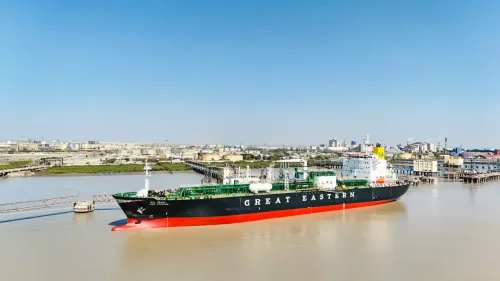
The port of Fujairah has gained outsized strategic relevance in 2026 as regional conflict disrupted shipping through the Strait of Hormuz — a risk explicitly flagged in India's finance ministry's May 2026 economic report. ADNOC's existing 406-km pipeline already carries crude from onshore operations to Fujairah, from where tankers can load directly for India, bypassing the strait entirely.
ADNOC is now constructing a second route to the port. In May 2026, the company confirmed that its West–East Pipeline is under construction and is expected to become operational in 2027. Once complete, the project is expected to double ADNOC's export capacity through Fujairah, further reinforcing the India-UAE energy corridor.
What This Means for India's Energy Security
India's growing dependence on a diversified Gulf supply chain reflects a deliberate energy security strategy amid volatile geopolitics. By locking in long-term storage rights, joint oilfield stakes, and alternative shipping corridors, New Delhi is insulating itself against price shocks and supply disruptions. With ADNOC's West–East Pipeline set to come online in 2027, the India-UAE energy partnership is poised to deepen further in the years ahead.
Point of View
Stable import market insulated from regional instability. What's notable is the speed of institutionalisation: from a first-ever Gulf oilfield stake in 2018 to a full strategic reserve-sharing agreement in eight years. The missing piece remains transparency on pricing terms and whether the ADNOC storage deal comes with supply-commitment clauses — details that would determine whether this is genuine energy security or headline diplomacy.
NationPress
10 Nov 2026
Frequently Asked Questions
Why has the UAE become India's fourth-largest crude supplier?
The UAE has become India's fourth-largest crude supplier by 2026 due to decades of rising imports, a landmark 2018 oilfield investment, and a 2026 strategic reserve-sharing agreement. India's crude imports from the UAE grew from under one million barrels a day in the 1990s to around 4.4 million barrels a day by 2018.
What is the significance of the May 2026 India-UAE energy agreement?
The May 2026 agreement allows India to store part of its strategic oil reserves at Fujairah in the UAE, outside the Strait of Hormuz, reducing exposure to shipping disruptions. It also allows ADNOC to store up to 30 million barrels in India at Visakhapatnam and Chandikol.
What is India's stake in the Lower Zakum oilfield?
ONGC Videsh, Indian Oil Corporation, and Bharat PetroResources jointly acquired a 10 per cent stake in Abu Dhabi's Lower Zakum offshore oilfield in 2018 for $600 million. India's petroleum ministry described it as the country's first investment in Gulf oil production, with the stake expected to yield 1.75 million tonnes of crude per year over a 40-year concession.
What is ADNOC's West–East Pipeline and when will it be ready?
ADNOC's West–East Pipeline is a new pipeline under construction that will provide a second route for crude exports to the port of Fujairah, bypassing the Strait of Hormuz. ADNOC announced in May 2026 that the pipeline is expected to become operational in 2027, doubling its export capacity through Fujairah.
Why is the Fujairah route strategically important for India?
Fujairah allows tankers to load crude outside the Strait of Hormuz, a critical chokepoint that faced disruption due to regional conflict in 2026. India's finance ministry highlighted this shipping risk in its May 2026 economic report, making the Fujairah bypass a key element of India's energy security planning.