India slams OIC for 'wilful blindness' on terror victim vs perpetrator
Synopsis
India took the fight to the OIC at the UN's Sixth Committee, accusing the bloc of 'wilful blindness' for conflating victim and aggressor on Kashmir and Pakistan-based terror. BJP MP Biplab Kumar Deb's warning — 'there will be consequences for indulging in terrorism' — was paired with a demand that the OIC look at the killings in Pakistan-occupied Kashmir before lecturing New Delhi.
Key Takeaways
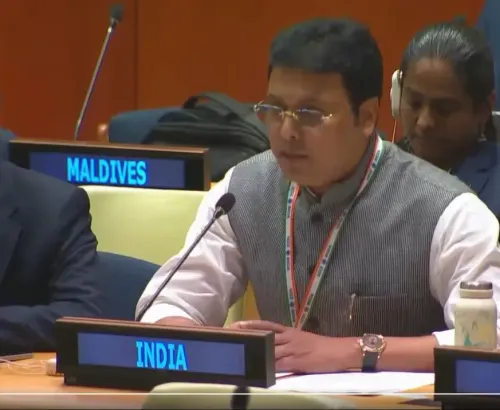
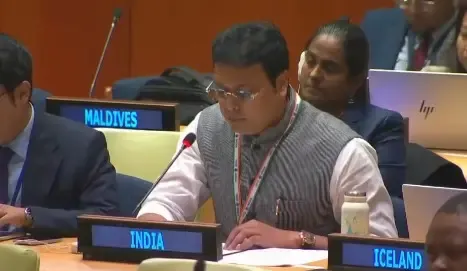
BJP MP Biplab Kumar Deb rebuked the OIC at the UN General Assembly's Sixth Committee on 7 October .
India accused the OIC of 'wilful blindness' for failing to distinguish between 'victim and perpetrator' on Kashmir and counterterror operations.
The OIC statement was delivered by chair Saudi Arabia and referenced India's post- Pahalgam massacre strikes against Pakistan -based terror infrastructure.
Deb urged the OIC to address conditions in Pakistan-occupied Jammu and Kashmir , citing over 90 deaths in recent months according to human rights groups.
India framed its counterterror actions as a legal right to self-defence, choosing the Sixth Committee — which handles international legal matters — as the venue for its response.
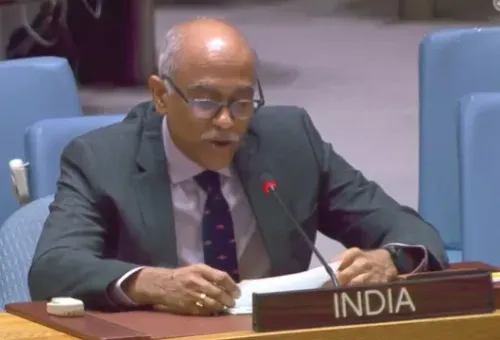
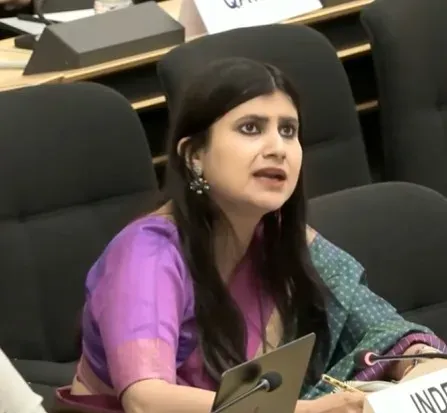
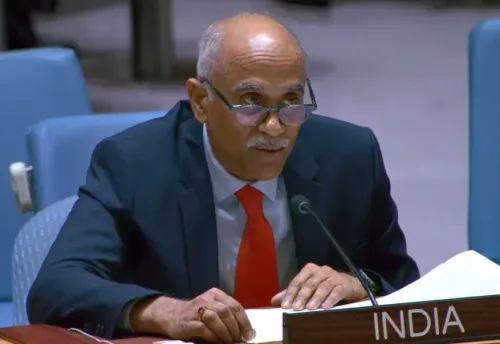
India delivered a sharp rebuke to the Organisation of Islamic Cooperation (OIC) at the United Nations General Assembly's Sixth Committee on 7 October, accusing the bloc of failing to distinguish between 'victim and perpetrator' in its statements on Kashmir and New Delhi's counterterror operations against Pakistan-based terror infrastructure.
India's Core Charge
Bharatiya Janata Party (BJP) MP and former Tripura Chief Minister Biplab Kumar Deb, part of India's delegation to the ongoing UN General Assembly session, responded directly to a statement delivered by Saudi Arabia on behalf of the OIC. 'India retains the right to defend its people against cross-border terrorism emanating from Pakistan,' Deb stated. He added a pointed warning: 'Indeed, there will be consequences for indulging in terrorism.'
Deb specifically called out the OIC for what he described as 'wilful blindness,' saying the bloc's inability to 'separate fact from fiction' amounted to 'bigotry and intolerance.' He was addressing India's 'focused and measured actions against terror infrastructure in Pakistan and Pakistan-occupied Jammu and Kashmir, from where terrorist attacks against India were planned and directed.'
What the OIC Statement Said
The OIC statement, delivered by its current chair Saudi Arabia, did not directly name India but made identifiable references to New Delhi's retaliatory strikes against terrorist bases in Pakistan. The strikes followed the Pahalgam massacre, carried out by a Pakistan-based terror organisation. The statement also referenced Kashmir, which India characterised as an unwarranted intrusion into its internal affairs.
India's Counter: Focus on Pakistan-Occupied Kashmir
Deb turned the OIC's own framing back on the bloc, urging it to address conditions in Pakistan-occupied Jammu and Kashmir (PoJK). 'The OIC chair would do better to focus on Pakistan's illegal occupation, especially in Rawalakot, where wanton killings, brutal violence, and the denial of basic rights to the people living there are so visible,' he said.
According to human rights groups, over 90 people have been killed in recent months in Pakistan-occupied Kashmir. The Pakistan government has reportedly suppressed a popular movement for economic rights, against demographic changes, and against alleged election manipulation — with critics arguing the military has been the driving force behind the crackdown.
Broader Context
This is not the first time India has clashed with the OIC at multilateral forums over Kashmir. The OIC has historically taken positions aligned with Pakistan's claims on the territory, a stance New Delhi consistently rejects as interference in its sovereign affairs. This latest exchange comes amid heightened India-Pakistan tensions following the Pahalgam attack and India's subsequent counterterror response, which drew international attention and varying reactions from global bodies. Notably, India's decision to respond at the Sixth Committee — which deals with international legal matters — signals a deliberate effort to frame the counterterror operations within the legal right to self-defence.
With the General Assembly session ongoing, further exchanges between India and OIC member states on these issues are widely expected.
Point of View
But Deb's counter-move flipping attention to Rawalakot is sharper than the usual boilerplate. The real gap in mainstream coverage is the human rights dimension inside Pakistan-occupied Kashmir — over 90 deaths reported by rights groups in recent months — which the OIC has conspicuously not condemned. That silence undermines the bloc's credibility as a principled voice and hands India a durable rhetorical weapon at every future multilateral encounter.
NationPress
7 Oct 2026
Frequently Asked Questions
Why did India criticise the OIC at the United Nations?
India criticised the OIC at the UN General Assembly's Sixth Committee on 7 October after the bloc's chair, Saudi Arabia, made references to India's counterterror operations in Pakistan and to Kashmir. BJP MP Biplab Kumar Deb accused the OIC of 'wilful blindness' for failing to distinguish between the victim of terrorism and its perpetrators.
What did Biplab Kumar Deb say at the UN?
Deb said India 'retains the right to defend its people against cross-border terrorism emanating from Pakistan' and warned that 'there will be consequences for indulging in terrorism.' He also called the OIC's stance 'bigotry and intolerance' and urged the bloc to focus on conditions in Pakistan-occupied Jammu and Kashmir instead.
What is the OIC's position on Kashmir?
The OIC has historically supported Pakistan's position on Kashmir and periodically raises the issue at multilateral forums. In its latest statement at the UN Sixth Committee, the bloc referenced India's post-Pahalgam counterterror strikes and the situation in Kashmir without directly naming India.
What is happening in Pakistan-occupied Kashmir?
According to human rights groups, over 90 people have been killed in recent months in Pakistan-occupied Kashmir amid a crackdown on a popular movement for economic rights. The movement has also been protesting against alleged demographic changes and election manipulation, with critics pointing to the military as the driving force behind the suppression.
What was the Pahalgam massacre?
The Pahalgam massacre was a terrorist attack carried out by a Pakistan-based terror organisation, after which India launched what it described as focused and measured counterterror strikes against terror infrastructure in Pakistan and Pakistan-occupied Jammu and Kashmir. The attack and India's response have been a flashpoint in subsequent international diplomatic exchanges.