India re-elected to ITU Council at PP-26 Plenipotentiary Conference in Doha
Synopsis
India has secured a fresh seat on the ITU Council at the Plenipotentiary Conference 2026 in Doha — the latest marker of New Delhi's accelerating push from telecom consumer to global standard-setter. Coming after hosting ITU-WTSA 2024 and launching 5G in 2022, the re-election reinforces India's intent to shape the rules of the global digital order.
Key Takeaways
India was re-elected to the ITU Council at the ITU Plenipotentiary Conference 2026 (PP-26) in Doha, Qatar on 16 November 2026 .
The re-election was confirmed by the Permanent Mission of India to the UN in Geneva via a post on social media platform X.
India hosted the ITU-WTSA 2024 in New Delhi and launched 5G in 2022 , underlining its growing telecom credentials.
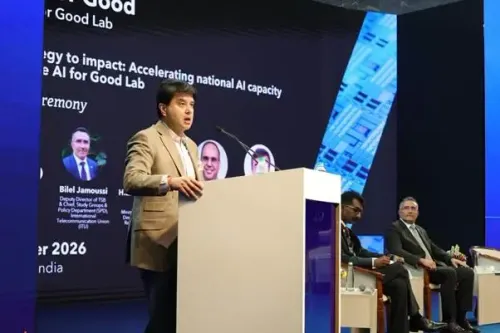
Union Minister Jyotiraditya Scindia said India had proposed 'groundbreaking resolutions' at the 2024 assembly, earning widespread endorsement from member nations.
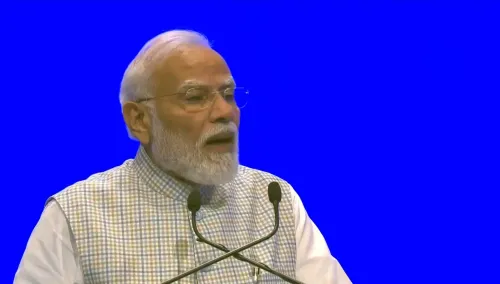
PM Modi described the mobile phone as 'a tool of good governance' at the 10th India Mobile Congress 2026 on 8 October 2026 .
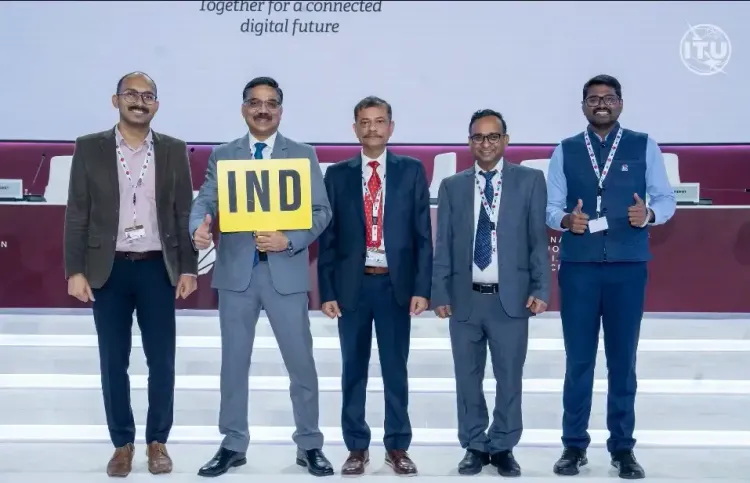
India has been re-elected to the International Telecommunication Union (ITU) Council for the next term at the ITU Plenipotentiary Conference 2026 (PP-26) held in Doha, Qatar, the Permanent Mission of India to the UN in Geneva confirmed on 16 November 2026. The re-election signals renewed international confidence in India's role in shaping global telecommunications and ICT governance.
What the Re-Election Means
The ITU Council serves as the governing body of the ITU between Plenipotentiary Conferences, overseeing the organisation's policy, budget, and strategic direction. Securing a fresh mandate on the Council places India at the centre of decisions on global digital standards, spectrum management, and internet governance for the coming term.
The Permanent Mission of India to the UN in Geneva said in a post on social media platform X: 'India re-elected to the ITU Council for the next term at ITUPP26 in Doha, Qatar. This renewed mandate reflects the trust and confidence of the international community in India's continued contribution to global telecommunications and ICT development.'
The Mission further reaffirmed India's intent, stating: 'India remains committed to working with all Member States towards a connected, inclusive, secure and sustainable digital future for everyone.'
India's Growing Footprint in Global Telecom Governance
The re-election builds on a string of recent milestones that have cemented India's standing in international telecommunications. In October 2024, New Delhi hosted the ITU World Telecommunication Standardisation Assembly (ITU-WTSA 2024) — a rare honour that underlined India's emergence as a standard-setting nation rather than merely a standard-adopting one.
At the conclusion of that assembly, Union Minister of Communications Jyotiraditya Scindia noted that India had 'successfully proposed groundbreaking resolutions and contributed to the modification of existing ones, receiving widespread endorsement from member nations.' He added that India was 'ready to play its part in this shared journey' and would 'champion international collaboration and actively contribute to the development of global standards.'
PM Modi's Vision for Telecom as a Governance Tool
Prime Minister Narendra Modi, addressing the 10th India Mobile Congress (IMC) 2026 on 8 October 2026, framed India's telecom ambitions in terms of democratic access rather than pure technology. 'Mobile phone has become a tool of good governance,' Modi said, noting that the sector had evolved well beyond networks and spectrum into a key enabler of public service delivery.
Modi pointed to the Covid-19 pandemic as a proof of concept, arguing that India's digital ecosystem allowed offices, banks, and educational institutions to remain operational even as large parts of the world ground to a halt. He also recalled India's hosting of the ITU in 2024 and the launch of 5G in 2022 as landmark moments in the country's telecom journey.
What Comes Next
India's renewed Council seat will allow it to influence ITU's agenda on emerging areas such as AI-driven network management, satellite broadband regulation, and digital inclusion frameworks for the Global South. With the Centre increasingly positioning India as a rule-maker — rather than a rule-taker — in multilateral technology forums, the PP-26 outcome aligns with a broader diplomatic strategy that spans the G20, Quad, and bilateral digital partnerships. Watch for India to push its Digital Public Infrastructure model as a template for ITU-endorsed standards in the term ahead.
Point of View
Launched 5G in 2022, and is now exporting its Digital Public Infrastructure model as a template for other nations. The strategic intent is clear: shift from rule-taker to rule-maker in multilateral technology governance. The real test will be whether India uses its Council seat to advance binding standards on digital inclusion and AI-driven networks, or whether the seat remains a credential on a shelf. With the Global South looking for an alternative to both US Big Tech and Chinese state-driven standards, India's window to lead is genuine — and time-limited.
NationPress
17 Nov 2026
Frequently Asked Questions
What is the ITU Council and why does India's re-election matter?
The ITU Council is the governing body of the International Telecommunication Union between its Plenipotentiary Conferences, overseeing policy, budget, and strategic direction for global telecommunications. India's re-election at PP-26 in Doha gives it a continued voice in shaping international digital standards, spectrum regulation, and ICT development frameworks.
Where was the ITU Plenipotentiary Conference 2026 held?
The ITU Plenipotentiary Conference 2026 (PP-26) was held in Doha, the capital of Qatar. It is the ITU's supreme decision-making body and convenes every four years to set the organisation's direction and elect Council members.
What has India contributed to the ITU in recent years?
India hosted the ITU World Telecommunication Standardisation Assembly (ITU-WTSA 2024) in New Delhi and launched 5G commercially in 2022. At WTSA 2024, India proposed several new resolutions and contributed to modifying existing ones, earning widespread endorsement from member nations, according to Union Minister Jyotiraditya Scindia.
What did PM Modi say about India's telecom role?
Speaking at the 10th India Mobile Congress on 8 October 2026, PM Modi said India's telecom sector had evolved beyond networks and spectrum, with the mobile phone becoming 'a tool of good governance.' He cited the Covid-19 pandemic as evidence that India's digital ecosystem kept public services running when much of the world stalled.
What will India focus on during its new ITU Council term?
India is expected to push its Digital Public Infrastructure model, advocate for digital inclusion frameworks for the Global South, and contribute to emerging standards on AI-driven network management and satellite broadband — consistent with its broader strategy of positioning itself as a rule-maker in multilateral technology forums.