Skyroot Aerospace reaches orbit: India's private space sector outpaces Europe
Synopsis
While Europe's private space sector still struggles to deliver operational orbital launches, India's Skyroot Aerospace quietly crossed a frontier in July 2025 — becoming the first Indian private company to reach orbit with homegrown hardware. A report now urges European operators to treat India as a credible launch partner, not just an emerging market.
Key Takeaways
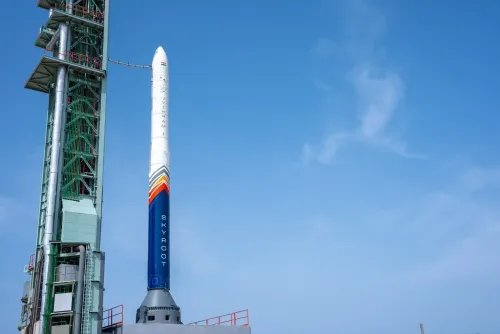
Skyroot Aerospace became the first Indian private company to reach orbit in July 2025 , using the domestically developed Vikram-1 rocket.
The launch placed multiple payloads into low Earth orbit, a feat Europe's private sector has yet to replicate.
The European Space Agency faces a potential launch capacity crunch for Galileo and Copernicus programmes between 2029 and 2031 .
India now hosts over 400 space startups and targets a space economy worth $44 billion by 2033 , including $11 billion in exports .
India opened its space sector to private companies in 2020 and completed policy reforms in 2023 via IN-SPACe .
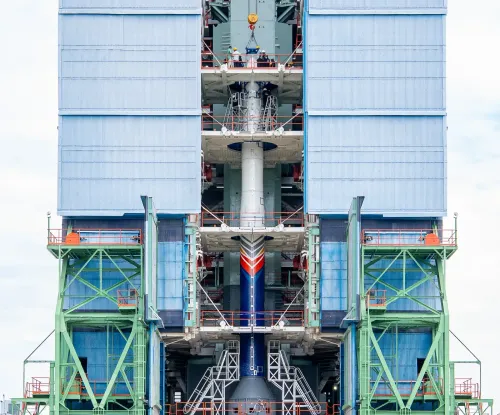
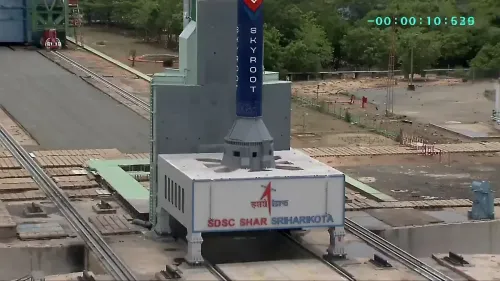
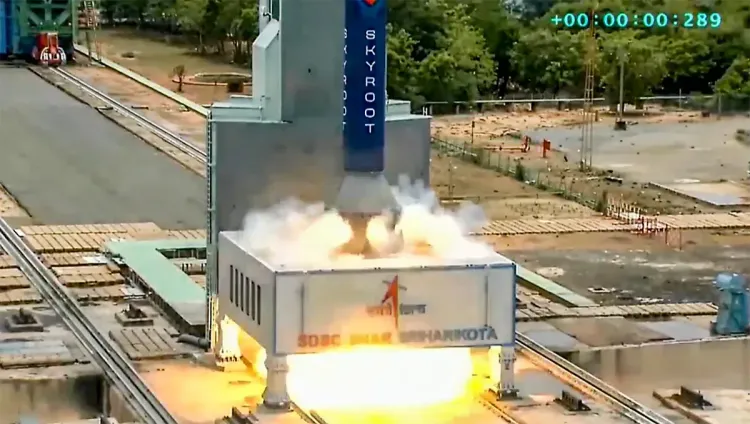
Skyroot Aerospace made history in July 2025 by becoming the first Indian private company to place multiple payloads into low Earth orbit using a domestically developed launcher — a milestone that Europe's private space sector has yet to achieve, according to a report by The European Conservative. The feat marks a turning point for India's private space industry, which has grown rapidly since the government opened the sector to commercial players in 2020.
The Vikram-1 Achievement
Skyroot Aerospace's Vikram-1 rocket successfully carried multiple payloads to orbit, making it the first orbital launch by an Indian private entity using indigenous hardware. The report noted that 'the achievement is significant despite the vehicle's relatively modest size compared with launch systems operated by competitors in China, Russia, or the United States.' The milestone signals that the commercial space race now has a credible new entrant beyond the traditional powers.
Why Europe Should Take Note
The report argued that India can offer 'competition, additional capacity and a new reference point for the European space industry.' It recommended that European operators consider collaborating with India for certain commercial, university, or scientific payloads — a move that could help diversify a global launch market currently dominated by the United States and China. Notably, despite increased launches in 2025 following the introduction of Ariane 6 and Vega-C, Europe still commands only a small fraction of the global market.
Europe's Capacity Crunch Concern
The European Space Agency (ESA) faces a potential capacity crunch for strategic programmes such as Galileo and Copernicus between 2029 and 2031, as new requirements could exceed available launch capacity. Several state-backed private launcher projects in Europe have yet to deliver an operational orbital service, leaving the continent strategically exposed at a critical juncture.
India's Space Reform Journey
India's space programme was dominated by the state for over half a century. The Indian Space Research Organisation (ISRO) took the country from its first experiments in the 1960s to developing indigenous launch vehicles, reaching Mars in 2014 and landing near the Moon's south pole with Chandrayaan-3 in 2023. In 2020, the government opened the sector to private companies and established IN-SPACe to facilitate access to public facilities, testing infrastructure, and launch sites. The 2023 space policy completed the reform by separating ISRO's research role, public commercial activity, and the emerging private ecosystem.
India's $44 Billion Space Economy Target
That long-term strategy is now bearing fruit. India hosts over 400 space startups and is targeting growth of its space economy from approximately $8.4 billion in 2022 to $44 billion by 2033, including $11 billion in exports, according to the report. As the United States and China no longer remain the only contenders in the commercial space race, India's trajectory positions it as an increasingly consequential player in the global launch market.
Point of View
And it has done so with a policy architecture that is cleaner and more deliberate than most. Europe's problem is not just capacity; it is that its state-backed launcher projects have repeatedly missed delivery timelines, leaving it dependent on US providers at precisely the moment geopolitical risk makes that dependency uncomfortable. The recommendation to collaborate with India on commercial and scientific payloads is pragmatic, but European operators will need to move quickly — India's launch cadence and cost competitiveness are only going to improve from here.
NationPress
25 Aug 2026
Frequently Asked Questions
What did Skyroot Aerospace achieve in July 2025?
Skyroot Aerospace became the first Indian private company to reach orbit using a domestically developed launcher, the Vikram-1 rocket, successfully placing multiple payloads into low Earth orbit. The milestone is one that Europe's private space sector has yet to match.
Why does this matter for Europe's space industry?
A report by The European Conservative argued that India now offers competition, additional launch capacity, and a new reference point for European operators. With the European Space Agency facing a potential capacity crunch for Galileo and Copernicus programmes between 2029 and 2031, India could serve as a credible alternative launch partner.
How did India open its space sector to private companies?
In 2020, the Indian government opened the space sector to private players and created IN-SPACe to facilitate access to ISRO's facilities, testing infrastructure, and launch sites. The 2023 space policy completed the reform by separating ISRO's research role from public commercial activity and the private ecosystem.
What is India's space economy target by 2033?
India is targeting growth of its space economy from approximately $8.4 billion in 2022 to $44 billion by 2033, which includes $11 billion in export revenue, according to the report. The country currently hosts over 400 space startups.
How does India's private space progress compare to China and the United States?
While the United States and China have long dominated the commercial space race with larger and more established launch systems, India has now entered it with its own hardware. The Vikram-1 is smaller than rival systems, but its successful orbital delivery marks India as a third credible player in the global commercial launch market.