Jaishankar at NDTV World Summit: World of choke points needs steady hand
Synopsis
At the NDTV World Summit 2026, EAM Jaishankar described today's world as one of 'hostage-taking' by nations wielding leverage without restraint — and said India's answer is capability-building, not alignment. On the India-US trade deal, he was pointed: 'It's never done till it's done.' The remarks offer a rare window into how India's top diplomat reads the fracturing global order.
Key Takeaways
EAM S Jaishankar spoke at the NDTV World Summit 2026 in New Delhi on 22 October 2026 .
He described today's world as one of 'choke points' where countries deploy leverage with 'much less reticence and even responsibility.' On the India-US trade deal , he said both sides are moving toward it but warned 'it's never done till it's done,' citing last-mile challenges.
Jaishankar cautioned that a 'weaponisation mentality' in diplomacy ends up converting all instruments of statecraft into tools of coercion.
He stressed that capability-building — including in semiconductors — is India's primary hedge, arguing 'the world respects capability.' His remarks signal India's intent to maintain strategic autonomy in an increasingly fragmented multipolar order.
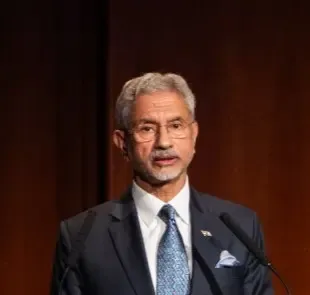
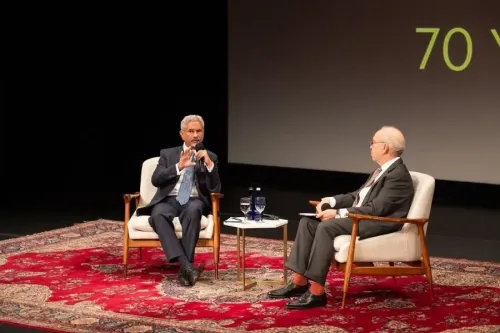
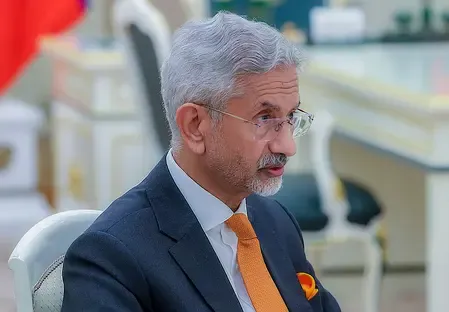
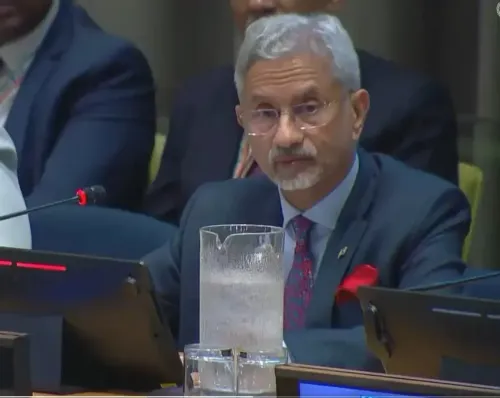
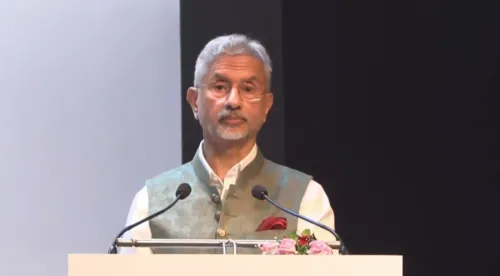
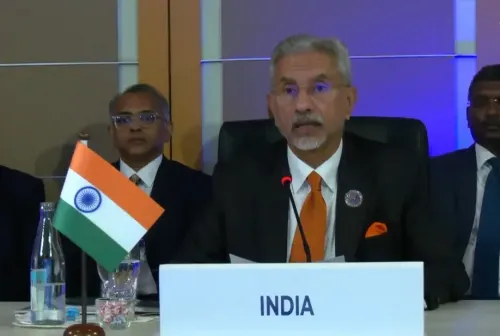
External Affairs Minister S Jaishankar on Thursday, 22 October 2026 said that navigating today's volatile global order — defined by 'choke points' and coercive leverage — demands good judgment, a steady hand, and deep experience. He was speaking at the NDTV World Summit 2026 in New Delhi.
A World of Choke Points and Weaponisation
Jaishankar painted a stark picture of the current international environment, warning that nations are deploying leverage and pressure instruments with far less restraint than before. 'This is today a world of choke points. It is a world of, if I were to dramatise it a bit, I would say almost hostage-taking, that countries are using leverages and instruments that they have with much less reticence and even responsibility. And that's what we have to prepare for,' he said.
He cautioned that once a 'weaponisation mentality' takes hold, it spreads to every domain of statecraft. 'You get into that weaponisation mentality, then everything starts to be weaponised. And that unfortunately is what we have seen this decade,' Jaishankar added. The remarks reflect a broader Indian diplomatic concern about the erosion of norms in multilateral and bilateral dealings.
On the India-US Trade Deal
Asked whether India could place its trust in a trade agreement with the United States given the Trump administration's repeated shifts on tariffs, Jaishankar acknowledged the inherent unpredictability but said countries must now treat foreign policy like portfolio management. 'People will make sure not just that you don't put your eggs in one basket, you look for multiple baskets and spread that around. So it's like a kind of a portfolio management in a very volatile market. That's the way today international relations is looking,' he said.
On the status of the India-US trade deal specifically, Jaishankar said the two sides were moving in the right direction but was measured in his optimism, noting that 'it's never done till it's done' and that the final stretch of negotiations typically posed the steepest challenges, which both teams were actively working through.
Building Capability as India's Strategic Answer
Responding to questions about whether India lacked the kind of leverage that larger powers routinely deploy, Jaishankar pushed back — arguing that capability-building is India's most durable strategic currency. 'At the end of the day, world respects capability,' he said.
He outlined a two-pronged rationale: first, domestic capability acts as a defensive shield, making India less susceptible to external coercion; second, it provides cards to play on the international stage. He cited India's push into semiconductor manufacturing as a concrete example of this doctrine in action.
What the Remarks Signal
Jaishankar's address at the summit comes at a moment when India is simultaneously managing its trade posture with the US, calibrating ties with China following recent border agreements, and positioning itself as a swing-state in a fragmenting multipolar order. His emphasis on 'experience' and 'judgment' — without naming any country directly — is widely seen as a signal that New Delhi intends to stay strategically autonomous rather than tilt decisively toward any bloc. The summit remarks reinforce the doctrine of multi-alignment that has defined Indian foreign policy across his tenure.
Point of View
But it also quietly acknowledges a structural vulnerability: India's leverage is still a work in progress. The semiconductor citation is instructive — it is aspirational rather than operational. The remarks on the India-US trade deal — guarded, non-committal — suggest New Delhi is not yet certain it can lock in a durable deal with an administration that has demonstrated willingness to reset terms mid-play. What Jaishankar did not say is as significant as what he did: there was no triumphalism, no claim that India has already built the cards it needs. That honesty is both the strength and the subtext of the speech.
NationPress
22 Oct 2026
Frequently Asked Questions
What did EAM Jaishankar say at the NDTV World Summit 2026?
Jaishankar said the world has entered an era of 'choke points' where nations use leverage and pressure instruments with little restraint, and that navigating it requires good judgment, a steady hand, and deep experience. He also addressed the India-US trade deal and India's capability-building strategy.
What is the current status of the India-US trade deal according to Jaishankar?
Jaishankar said both sides are moving toward a deal but cautioned that 'it's never done till it's done,' noting that the final stages of negotiation often present the hardest challenges. He said negotiating teams on both sides are actively working through those issues.
What did Jaishankar mean by a 'world of choke points'?
He used the phrase to describe a global environment in which countries increasingly weaponise their economic, technological, and geopolitical leverage against others with fewer inhibitions. He warned this 'weaponisation mentality' turns even routine activities into instruments of coercion.
How does Jaishankar say India should respond to global volatility?
Jaishankar advocated for building domestic capability — citing semiconductors as an example — as a two-pronged strategy: it makes India resilient against external coercion and gives it stronger cards to play internationally. He also called for treating foreign policy like 'portfolio management in a very volatile market,' diversifying dependencies across multiple partners.
Why are Jaishankar's remarks significant for India's foreign policy?
The remarks signal that India intends to remain strategically autonomous rather than align decisively with any bloc. His framing of global relations as volatile and coercive reinforces New Delhi's multi-alignment doctrine and reflects its approach to simultaneously managing ties with the US, China, and others.