Munir's Kashmir rhetoric masks Pakistan's domestic crisis, analysts say
Synopsis
Pakistan Army chief Asim Munir's talk of fighting ten more wars for Kashmir and a planned diplomatic blitz in the UK and Europe is being called out as domestic distraction — not strategy. With Balochistan, Khyber Pakhtunkhwa, and PoJK all in turmoil, a retired Indian Army officer argues Munir is reaching for the Kashmir 'bogey' precisely because he has no answers at home.
Key Takeaways
Retired Indian Army officer Nilesh Kunwar argues in Eurasia Review that General Asim Munir's Kashmir rhetoric is designed to divert attention from Pakistan's domestic crises.
Pakistan faces simultaneous unrest in Khyber Pakhtunkhwa , Balochistan , and Pakistan-occupied Jammu and Kashmir (PoJK) , including Pakistan-occupied Gilgit-Baltistan (PoGB) .
Munir previously declared that Pakistan would fight 10 more wars for Kashmir — a claim Kunwar describes as undelivered posturing.
Pakistan is reportedly planning a fresh diplomatic campaign on Kashmir targeting the UK and Europe , despite a consistent record of failure in such efforts.
Kunwar contends Munir knows the diplomatic push will fail but pursues it to 'enthrall the masses' amid mounting internal pressure.
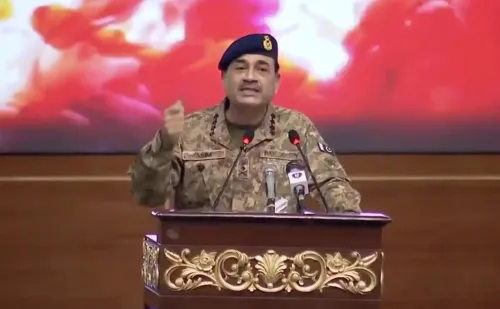
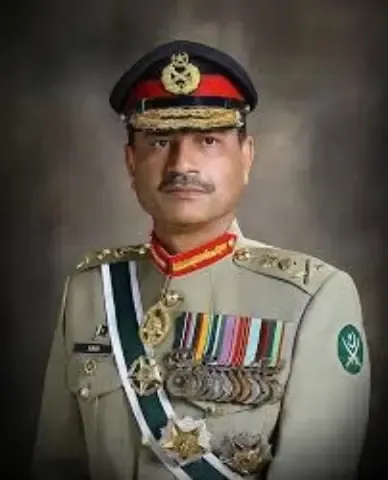
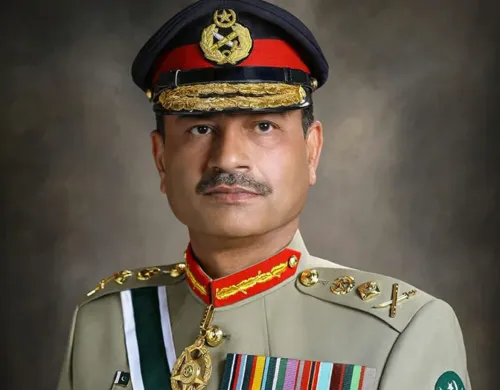
Pakistan Army chief General Asim Munir's renewed push to internationalise the Kashmir issue is widely seen as a calculated attempt to deflect public attention from deepening domestic crises, according to an analysis published in Eurasia Review. The assessment, authored by retired Indian Army officer Nilesh Kunwar, argues that Islamabad's diplomatic offensive on Kashmir is less a strategic initiative and more a pressure-relief valve for a military establishment under siege at home.
Pakistan's Domestic Fault Lines
Pakistan is currently grappling with a constellation of internal crises: home-grown terrorism in Khyber Pakhtunkhwa, an active armed secessionist movement in Balochistan, and mounting public discontent in Pakistan-occupied Jammu and Kashmir (PoJK) — including Pakistan-occupied Gilgit-Baltistan (PoGB). Critics argue that this volatile internal landscape makes Islamabad's outward-facing Kashmir campaign look less like principled advocacy and more like strategic distraction.
Notably, Pakistan has also reportedly escalated tensions with Afghanistan, adding a second front to an already overstretched security establishment. Against this backdrop, reports of a planned Pakistani diplomatic campaign targeting the UK and Europe on the Kashmir issue have drawn sharp scrutiny.
Kunwar's Assessment of Munir's Rhetoric
Kunwar was pointed in his criticism of General Munir, arguing that the absence of meaningful domestic dissent has emboldened the army chief to make increasingly reckless statements. He took particular aim at Munir's claim that 'What India labels as terrorism is, in fact, a legitimate and lawful struggle for freedom, recognised by international law,' describing it as evidence of a 'skewed mindset.'
'Since no one in Pakistan dares to question the country's 'failed' Field Marshal, he probably thinks that silence is an endorsement of his astute thinking. Perhaps this is why he indulges in immature rhetoric so often,' Kunwar wrote.
The retired officer also referenced Munir's earlier statement that 'Three wars have already been fought for Kashmir, and if 10 more are needed, we will fight them' — a declaration Kunwar characterised as empty posturing that went undelivered, consistent with what he described as a pattern of unfulfilled bravado.
The Strategic Logic Behind the Kashmir 'Bogey'
Kunwar's central argument is that Pakistan's repeated return to the Kashmir narrative — despite its 'uninterrupted record of failure' on the international stage — serves a domestic political function rather than a diplomatic one. 'Having precipitated a crisis of gargantuan domestic proportions and started a war with Afghanistan, Field Marshal Munir needs to divert public attention and so he has fallen back on his favourite stratagem — raising the Kashmir bogey,' he wrote.
This framing positions the diplomatic offensive not as a genuine bid for international support, but as political theatre aimed at a domestic audience. Kunwar argued that Munir is 'cunning' enough to know the outreach will 'end with a whimper, not a bang' — but that it will nonetheless 'enthrall the masses.'
What the Diplomatic Push Signals
Pakistan's reported plan to mount a fresh Kashmir campaign in the UK and Europe follows a long line of similar initiatives that have failed to shift international opinion. India has consistently maintained that Jammu and Kashmir is an integral part of the country and has rejected third-party mediation. Western governments have largely declined to internationalise the dispute in the manner Islamabad seeks.
Analysts tracking the region will be watching whether Pakistan's diplomatic outreach gains any traction in European capitals, or whether — as Kunwar predicts — it dissipates without consequence, leaving the underlying domestic pressures in Pakistan unaddressed.
Point of View
An armed insurgency in Balochistan, and rare public protests in PoJK all unfolding at once. Munir's 'fight 10 more wars' declaration, now recycled into a European diplomatic push, follows this playbook precisely. The harder question mainstream coverage sidesteps is whether Western governments — already fatigued by the region — will give the campaign even perfunctory attention, or whether the silence itself becomes Pakistan's next domestic embarrassment.
NationPress
25 Jul 2026
Frequently Asked Questions
Why is Pakistan launching a diplomatic campaign on Kashmir in the UK and Europe?
Pakistan is reportedly planning a diplomatic push to internationalise the Kashmir issue in the UK and Europe, according to reports. Analysts, including retired Indian Army officer Nilesh Kunwar, argue the move is primarily aimed at diverting domestic public attention from internal crises rather than achieving genuine diplomatic gains.
What domestic crises is Pakistan currently facing?
Pakistan is simultaneously dealing with home-grown terrorism in Khyber Pakhtunkhwa, an armed secessionist movement in Balochistan, widespread public discontent in Pakistan-occupied Jammu and Kashmir (PoJK) and Pakistan-occupied Gilgit-Baltistan (PoGB), and reportedly escalating tensions with Afghanistan.
What did General Asim Munir say about Kashmir?
General Munir has claimed that 'What India labels as terrorism is, in fact, a legitimate and lawful struggle for freedom, recognised by international law.' He also previously declared that Pakistan would fight ten more wars for Kashmir if needed — a statement Kunwar characterised as empty rhetoric.
Who is Nilesh Kunwar and why does his analysis matter?
Nilesh Kunwar is a retired Indian Army officer who published the analysis in Eurasia Review, an international affairs journal. His assessment provides a military-strategic lens on Pakistan's Kashmir posturing and is cited as an expert perspective on the motivations behind Islamabad's diplomatic offensive.
Has Pakistan's international diplomatic push on Kashmir succeeded before?
According to the analysis, Pakistan's repeated efforts to internationalise the Kashmir dispute have an 'uninterrupted record of failure.' India has consistently rejected third-party mediation, and Western governments have largely declined to take up the issue in the manner Islamabad has sought.