Pakistan's 'hard state' governance: Dissent securitised, PoK crackdown deepens
Synopsis
Pakistan isn't just responding to crises — it's institutionalising the response. From the JAAC's terrorist designation to communications blackouts in PoK and anti-terrorism laws turned on journalists, a new analysis argues that Islamabad has crossed a threshold: security is no longer a policy tool but the state's primary claim to legitimacy. The danger, the report warns, is not repression alone — it's its normalisation.
Key Takeaways
Pakistan designated the Joint Awami Action Committee (JAAC) a terrorist organisation on 5 June , triggering mass arrests and communications blackouts in Pakistan-occupied Kashmir (PoK) .
Legislative elections in PoK on 27 July were held amid violence, with clashes resulting in deaths and injuries and drawing international concern.
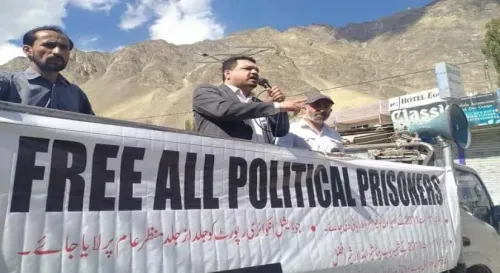
Anti-terrorism laws have been applied against political actors and journalists , effectively moving political dissent from the democratic arena to the security apparatus.
Analyst Dimitra Staikou , writing in International Policy Digest , warns that the 'hard state' approach is becoming a permanent governance feature , not an episodic crisis response.
The report cautions that the normalisation of emergency powers — entrenched through bureaucracies and budgets — poses a deeper systemic risk than repression itself.
Pakistan's evolving political trajectory signals that the 'hard state' approach — marked by the use of security apparatus to suppress political opposition — is solidifying into a permanent governance model rather than a temporary response to isolated crises, according to an analysis published in International Policy Digest. The report, authored by Greek lawyer, writer, and journalist Dimitra Staikou, documents a pattern of escalating state coercion that critics argue is fundamentally redrawing the boundaries between democratic governance and emergency rule.
Key Developments: From JAAC Designation to PoK Elections
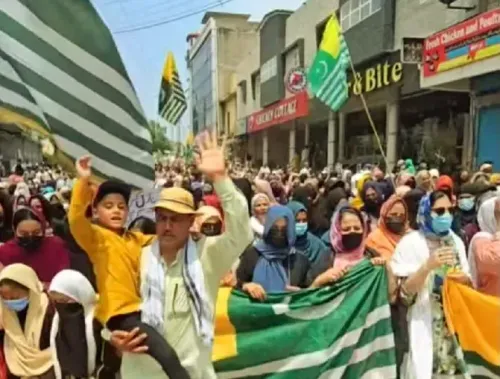
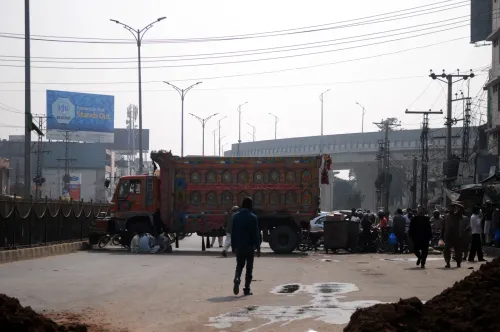
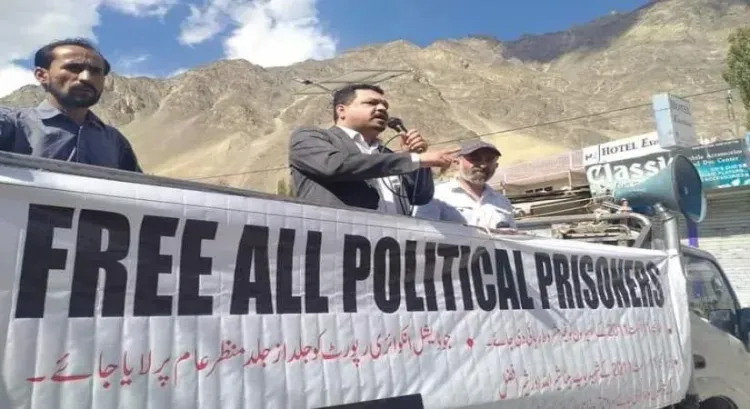
On 5 June, Islamabad designated the Joint Awami Action Committee (JAAC) — a movement that had emerged as a leading voice for social and political grievances in Pakistan-occupied Kashmir (PoK) — as a terrorist organisation, invoking anti-terrorism legislation against it. The move was swiftly followed by mass arrests, communications blackouts, restrictions on public gatherings, and a heavy deployment of security forces across the region.
Then, on 27 July, legislative elections were held in the occupied territory against a backdrop of deep polarisation and violence. Clashes between protesters and security forces resulted in deaths and injuries, prompting international organisations to raise concerns over the excessive use of force and the deployment of anti-terrorism laws to silence political dissent.
Securitisation of Opposition: What the Pattern Reveals
Staikou argues that the cumulative effect of these measures points to a structural shift rather than a series of discrete policy decisions. The designation of the JAAC, the application of anti-terrorism laws against political actors and journalists, communications shutdowns, and tightening restrictions on civil society collectively indicate, she writes, that 'opposition is no longer merely being contested; it is being securitised.'
'Officials may defend each measure as a proportionate answer to a discrete threat. Taken together, however, they point to a more consequential transformation. Security is functioning not simply as a policy objective but as the state's dominant claim to legitimacy,' Staikou noted in her analysis.
She further cautioned: 'Yet the broader the definition of threat becomes, the easier it is to treat protest, journalism, and political organisation as dangers rather than essential features of public life.'
The Normalisation Risk: Emergency Powers Becoming Entrenched
Staikou identifies the normalisation of repression — rather than repression itself — as the deeper systemic danger. She warns that exceptional powers, once deployed, tend to become entrenched through bureaucracies, budgets, and vested interests, creating self-reinforcing security machinery.
'Each new crisis then validates the machinery built to address the last one. Over time, the distinction between governing through law and governing through emergency blurs, while citizens are asked to accept diminished freedom as the unavoidable price of stability,' she wrote.
This pattern, she notes, fits a familiar trajectory in Pakistan — a country simultaneously confronting militancy, economic instability, regional rivalry, and chronically weak civilian institutions. The convergence of these pressures, she argues, makes the security legitimacy claim especially potent and politically difficult to contest.
Implications Beyond South Asia
The analysis places Pakistan's governance shift in a wider global context, arguing that the country's experience raises fundamental questions about the evolution of statehood itself. 'Pakistan's significance, therefore, extends beyond South Asia. Its experience cannot be reduced to another familiar story of democratic backsliding or authoritarian consolidation. It raises a larger question about the evolution of statehood,' Staikou wrote.
As Pakistan heads deeper into this governance model, the international community's response — particularly from organisations that have already flagged the PoK crackdown — is likely to become an increasingly important variable in the country's political calculus.
Point of View
But the speed at which exceptional measures are acquiring institutional permanence. Anti-terrorism budgets expand, security agencies accumulate jurisdiction, and each new protest becomes justification for the apparatus built after the last one. The PoK crackdown is particularly telling: it targeted a movement articulating economic and political grievances, not violence. When that distinction collapses, the 'hard state' has effectively redefined citizenship itself — from a rights-bearing status to a security-contingent one. Mainstream coverage tends to frame this as Pakistan-specific dysfunction; the more uncomfortable read is that it reflects a global trend of democracies outsourcing legitimacy to security narratives.
NationPress
22 Aug 2026
Frequently Asked Questions
What is Pakistan's 'hard state' approach?
The 'hard state' approach refers to Pakistan's increasing use of security laws, anti-terrorism legislation, and state force to suppress political dissent, journalists, and civil society — rather than engaging opposition through democratic processes. According to an analysis in International Policy Digest, this approach is shifting from an episodic crisis response to a permanent governance model.
Why was the JAAC designated a terrorist organisation?
The Joint Awami Action Committee (JAAC) was designated a terrorist organisation by Islamabad on 5 June, with the government invoking anti-terrorism legislation against the movement. The JAAC had emerged as a leading force articulating social and political grievances in Pakistan-occupied Kashmir (PoK). Critics argue the designation was aimed at silencing legitimate political opposition rather than addressing genuine security threats.
What happened during the PoK elections on 27 July?
Legislative elections held in Pakistan-occupied Kashmir on 27 July took place against a backdrop of deep polarisation and violence. Clashes between protesters and security forces resulted in deaths and injuries, and international organisations raised concerns about excessive use of force, communications shutdowns, and the use of anti-terrorism laws to suppress political dissent.
What is the broader risk of Pakistan's security-first governance?
Analyst Dimitra Staikou warns that the real danger is the normalisation of emergency powers, which become entrenched through bureaucracies, budgets, and vested interests. Over time, the distinction between governing through law and governing through emergency blurs, and citizens are asked to accept diminished freedoms as the price of stability.
Why does Pakistan's governance model matter beyond South Asia?
The analysis argues that Pakistan's experience raises broader questions about the global evolution of statehood — where political, social, and economic disputes are increasingly recast as national security threats, enabling governments to claim mandates for extraordinary measures and narrower space for dissent. Pakistan is described as an extreme but illustrative case of a wider pattern.