Bonded labour in Pakistan: Generational exploitation persists despite 1992 law
Synopsis
Despite a constitutional ban and a three-decade-old abolition law, bonded labour thrives in Pakistan — with over 210,000 documented kiln workers in Punjab alone and enforcement that kicks in only after media pressure or court orders. A scathing Dawn editorial lays bare how poverty, feudal power, and political complicity keep generations locked in debt bondage.
Key Takeaways
Pakistan's Punjab has over 210,000 documented kiln workers ; more than 2,900 forced labour victims were recorded nationally last year.
In Sindh , 1,311 labourers were rescued from brick kilns and the farm sector in 2025 , per The State of Peasant Rights in Sindh, 2025 .
The Bonded Labour System (Abolition) Act, 1992 criminalises the practice, yet enforcement remains reactive and largely absent on the ground.
The National Commission for Human Rights has found that women in bonded labour routinely face sexual abuse and forced marriages.
Law enforcement and political quarters are accused of protecting perpetrators rather than victims, according to the Dawn editorial.
The UN Committee on Economic, Social and Cultural Rights recently praised Pakistan for raising the minimum marriageable age to 18 , but high rates of child brides and bonded labour undercut the commendation.
Bonded labour continues to function as a system of generational exploitation in Pakistan, sustained by abject poverty, crushing debt cycles, and entrenched feudal power structures, according to a report by Pakistani daily Dawn. The failure to enforce existing legislation has left tens of thousands of poor families trapped in a life of bondage, with children inheriting debt and abuse across generations.
Scale of the Crisis
The numbers are stark. Punjab alone has over 210,000 documented kiln workers, while more than 2,900 victims of forced labour were recorded across the country last year. In Sindh, according to The State of Peasant Rights in Sindh, 2025, 1,311 labourers were rescued from brick kilns and the farm sector — figures that experts argue represent only a fraction of the actual problem.
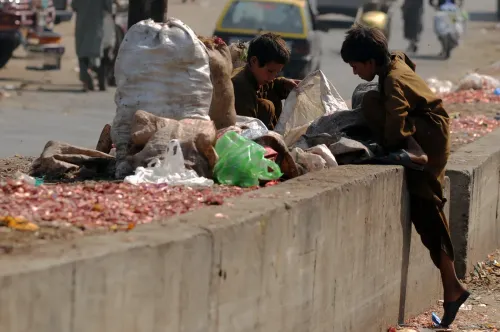
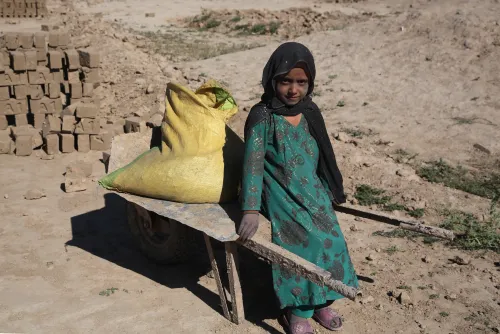
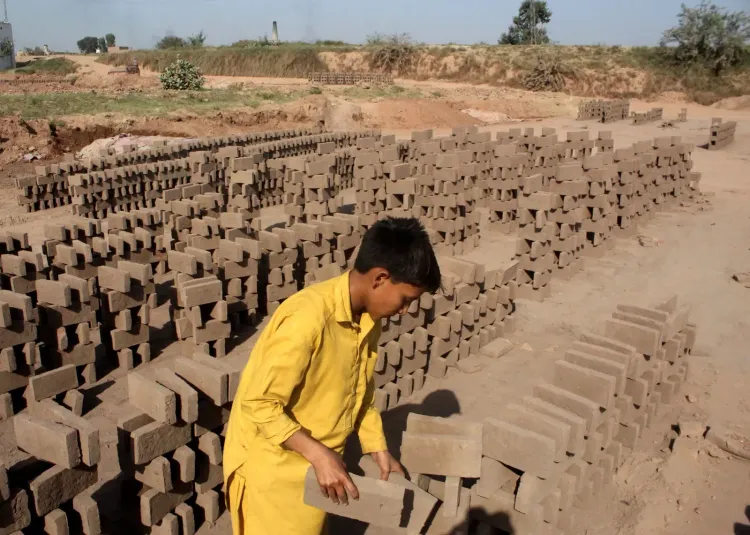
Entire families, including children, reportedly toil under inhuman working and living conditions for sums far below the legally mandated minimum wage. 'Lifespans rarely outlast the loans driven up by interest charges. Generations inherit a cycle of debt and abuse,' the Dawn editorial noted.
Laws Exist — Enforcement Does Not
Pakistan's Constitution explicitly outlaws all forms of forced labour and slavery. The Bonded Labour System (Abolition) Act, 1992 criminalises the practice. Yet, according to the Dawn report, the gap between constitutional guarantees and ground reality remains vast and largely unaddressed.
'The failure to enforce the law and insufficient efforts to bridge the distance between constitutional rights and their fulfilment have forced poor people into a life of bondage,' the editorial stated. Notably, enforcement patterns are described as reactive — typically triggered by media attention or judicial intervention rather than proactive policing.
Women and Children Among the Most Vulnerable
The National Commission for Human Rights has documented that women in bonded labour routinely face sexual abuse and forced marriages, according to the report. Children begin their lives in conditions described as inhuman, with no access to education or legal recourse.
The Dawn editorial also flagged that the UN Committee on Economic, Social and Cultural Rights recently praised Pakistan for raising the minimum marriageable age to 18. However, persistent high rates of child brides and bonded labour significantly overshadow that progress, critics argue. 'Underage marriage is enslavement, while the purchase of bricks produced through debt bondage by construction companies and government groups continues to sustain the curse of bonded labour,' the report added.
Systemic Complicity and What Must Change
The report directly indicts political and law-enforcement structures, stating that 'law enforcement and political quarters are notorious for protecting the perpetrators, instead of ensuring legal implementation.' Spot inspections are described as absent, allowing abuses — including verbal abuse, beatings, torture, and murder — to persist unchecked.
Construction companies and even government entities reportedly continue purchasing bricks produced through debt bondage, embedding the system into formal economic activity. Unless structural reforms are implemented and enforcement is made proactive, observers warn that Pakistan will remain far from meeting its own constitutional commitments on human rights.
Point of View
Legally prohibited, and politically tolerated one. The existence of the 1992 Abolition Act alongside 210,000-plus kiln workers in a single province exposes an enforcement vacuum that is not accidental. When construction firms and government entities purchase debt-bondage-produced bricks without consequence, the state becomes a participant in the system it officially bans. The UN's praise for raising the marriage age to 18 risks providing diplomatic cover for a country that has yet to demonstrate it can convert statutory rights into lived reality. The harder question mainstream coverage sidesteps: why do political incentives consistently align with protecting feudal perpetrators rather than bonded workers?
NationPress
7 Nov 2026
Frequently Asked Questions
What is bonded labour and why does it persist in Pakistan?
Bonded labour is a form of modern slavery where workers are forced to work to repay a debt that is often inflated by interest charges, trapping families for generations. It persists in Pakistan due to abject poverty, feudal power structures, and systemic failure to enforce the Bonded Labour System (Abolition) Act, 1992.
How many bonded labourers are there in Pakistan?
Punjab alone has over 210,000 documented kiln workers, and more than 2,900 victims of forced labour were recorded nationally last year. In Sindh, 1,311 labourers were rescued from brick kilns and the farm sector in 2025, according to The State of Peasant Rights in Sindh, 2025.
Is bonded labour illegal in Pakistan?
Yes. Pakistan's Constitution prohibits all forms of forced labour and slavery, and the Bonded Labour System (Abolition) Act, 1992, specifically criminalises the practice. However, enforcement is described as reactive and largely absent, with spot inspections rarely carried out.
Who are the most vulnerable victims of bonded labour in Pakistan?
Children and women are among the most vulnerable. Children are born into debt bondage and begin life in inhuman working conditions with no access to education. The National Commission for Human Rights has documented that women routinely face sexual abuse and forced marriages within the bonded labour system.
What has the international community said about Pakistan's human rights record on this issue?
The UN Committee on Economic, Social and Cultural Rights recently praised Pakistan for raising the minimum marriageable age to 18. However, critics argue that persistently high rates of child brides and bonded labour significantly undercut that recognition, and systemic reforms remain unimplemented.