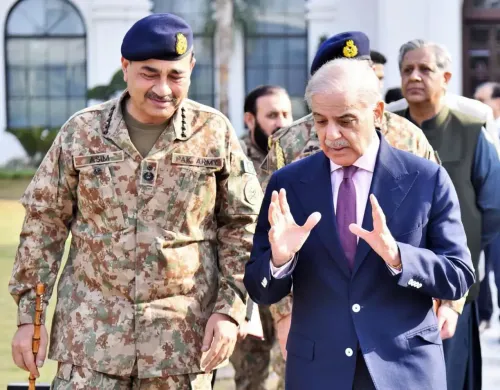
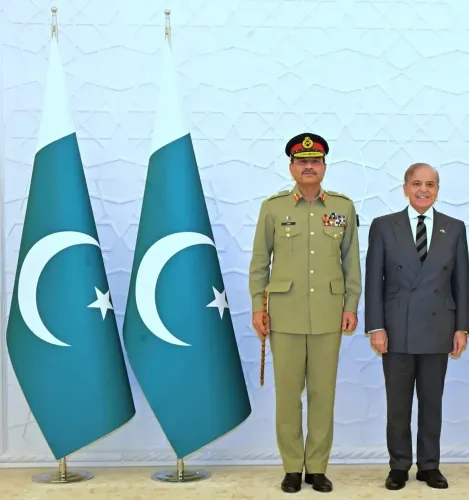
Asim Munir's Strategic Missteps: The Fall of Pakistan's Islamic NATO Dream
Synopsis
As Pakistan's ambitions for an Islamic NATO crumble, Field Marshal Asim Munir faces scrutiny over his handling of regional tensions. The nation's strategic failures reveal a lack of commitment and trust, raising concerns about future actions in Afghanistan and beyond.
Key Takeaways
Pakistan's Islamic NATO ambitions have failed .
Field Marshal Asim Munir faces internal scrutiny .
Internal divisions influence foreign policy decisions .
The US-Israel-Iran conflict impacts Pakistan's alliances .
Future military actions in Afghanistan are anticipated .
New Delhi, April 7 (NationPress) Pakistan has aimed to establish itself as a principal security provider in the Middle East, even contemplating the formation of an Islamic NATO. As a nuclear nation, Pakistan believed it was well-positioned to lead this coalition, with the potential Islamic NATO poised to become a focal point in the region.
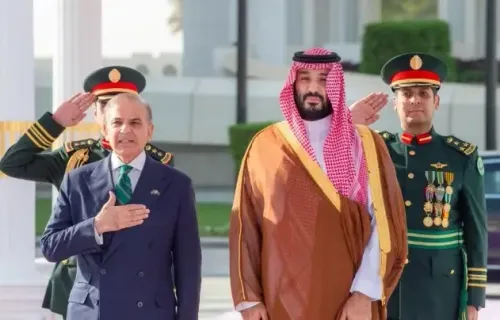
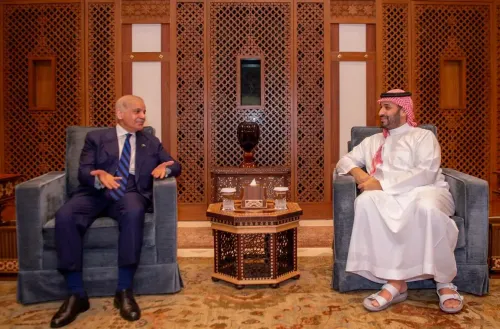
The country entered into a defensive agreement with Saudi Arabia, prompting Turkey to seek a similar pact with Islamabad. Pakistan envisioned including Egypt and Somalia in this alliance. However, the situation shifted dramatically with the onset of the US-Israel-Iran conflict.
As Iran initiated strikes on US installations across multiple Gulf states, particularly impacting Saudi Arabia, there was an expectation that Pakistan would uphold its defensive commitment. Yet, officials indicate that Pakistan is facing internal conflicts, leading to its withdrawal from supporting Saudi Arabia due to the fear of alienating the 15% Shia population, which is present within the military.
Additionally, aligning with the US and Israel could incite backlash from the Sunni majority, who perceive the ongoing conflict as a religious war between Muslims and the Christian-Jewish alliance.
Another official remarked that Pakistan, initially buoyed by its improved relations with the US and its defense pact with Saudi Arabia, has emerged as an opportunistic state. Recent developments have highlighted a global perception of Pakistan as lacking in trustworthiness and reliability during crises.
Officials noted that Pakistan's desperate attempts to establish the Islamic NATO and assume a leadership role have faltered. This lack of commitment in critical situations has dashed Islamabad's aspirations in the region.
As the vision of the Islamic NATO crumbled, Field Marshal Asim Munir attempted to mediate between the US and Iran, but his overtures were dismissed by Tehran, which harbors significant distrust towards Pakistan. Notably, in January 2025, Iran targeted bases of the Jaish-al-Adal terrorist group in Balochistan with missile strikes and drone attacks.
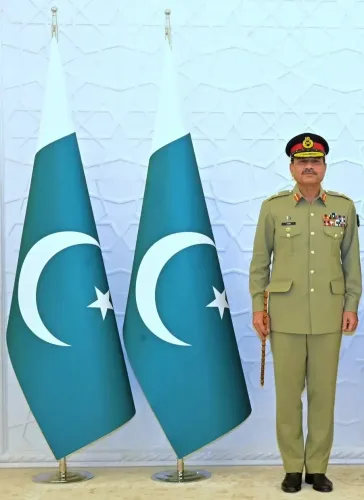
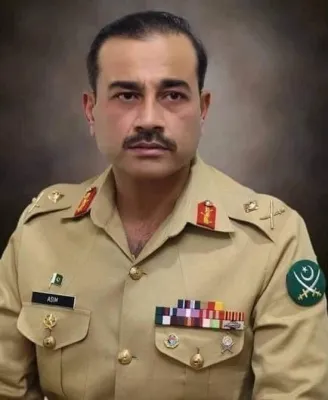
Observers of Pakistan's political landscape assert that with a series of unsuccessful policies, Munir now intends to intensify actions in Afghanistan. Experts claim that Munir, who had positioned himself as a transformative leader for Pakistan, has failed significantly.
After maneuvering his way to the position of Field Marshal following the setbacks faced by his terrorist factions during Operation Sindoor, Munir is undergoing scrutiny at home. Recently, he has been making unilateral decisions without consulting political leaders, focusing more on enhancing his own image than on Pakistan's national interests.
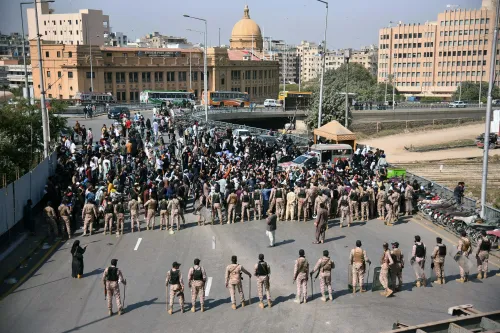
An official from the Intelligence Bureau indicated that Munir is likely to escalate operations in Afghanistan and engage in severe actions in Balochistan and Khyber Pakhtunkhwa (KP), where security forces are confronting the Balochistan Liberation Army (BLA) and the Tehreek-e-Taliban Pakistan (TTP).
In Afghanistan, Pakistan has been implicated in atrocities, including a bombing that resulted in the deaths of over 400 children at a school in Kabul. Officials also warn that Indian security agencies need to remain vigilant as Munir may direct his forces to raise tensions along the border. Field Marshal Asim Munir, facing multiple failures both domestically and internationally, is likely to resort to reckless actions.
Point of View
Raising questions about the nation's reliability in regional alliances.
NationPress
10 Oct 2026
Frequently Asked Questions
What led to Pakistan's attempt to create an Islamic NATO?
Pakistan aimed to position itself as a security provider in the Middle East, leveraging its nuclear status to lead a coalition known as Islamic NATO.
Why did Pakistan withdraw support from Saudi Arabia?
Internal divisions, particularly the need to appease the Shia population, led Pakistan to reconsider its commitment to Saudi Arabia amidst rising tensions.
What were the implications of the US-Israel-Iran conflict for Pakistan?
The conflict complicated Pakistan's diplomatic landscape, forcing it to navigate between its alliances with the US and concerns over domestic Sunni and Shia sentiments.
How has Asim Munir's leadership been perceived?
Munir's leadership has faced criticism for its opportunism and failure to establish a reliable foreign policy, raising doubts about his capability to guide Pakistan.
What actions is Asim Munir expected to take next?
Experts suggest Munir may escalate military actions in Afghanistan and increase tensions in Balochistan and KP, potentially leading to further conflict.