Pax Silica vs WAICO: Tech bloc rivalry risks splitting the digital world
Synopsis
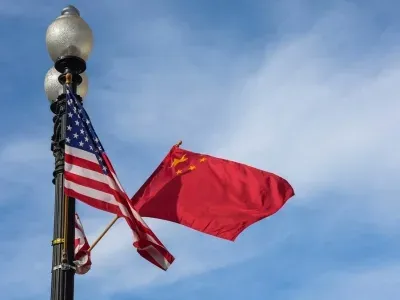
Washington and Beijing are each building rival technology coalitions — Pax Silica with 24 signatories and WAICO with 29 — that analysts say could fracture the global digital order along Cold War lines, with AI and semiconductors as the new instruments of power. The question is whether middle powers like India can prevent a binary split.
Key Takeaways
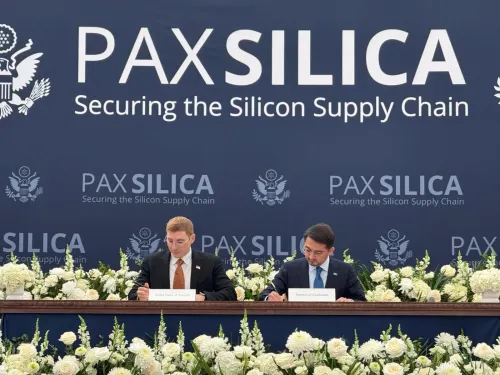
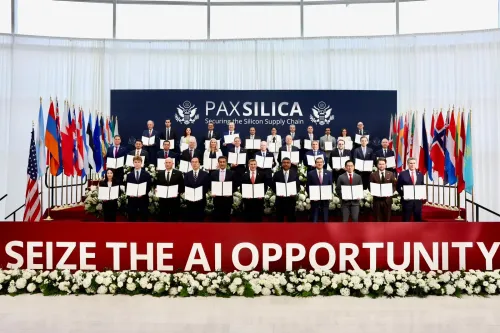
Pax Silica , launched in December 2025 by the US Department of State , had 24 signatories by mid-2026, including India , Japan , the EU , and Australia .
WAICO , China's rival initiative, was signed by 29 nations in Shanghai on 16 July , with membership reportedly including Russia , Pakistan , and Iran .
President Xi Jinping pledged 5,000 AI training slots for developing nations and a 30-country weather AI system under WAICO.
Kazakhstan is a member of both initiatives, suggesting some nations may seek to straddle both blocs.
Analysts warn the rivalry risks a Cold War-style bifurcation of the global technology stack, with semiconductors and AI as the new instruments of geopolitical power.
The emergence of Pax Silica and the World AI Cooperation Organisation (WAICO) may signal a new era of bloc politics centred on technology, with the United States and China each rallying rival coalitions around competing visions of AI governance, semiconductor supply chains, and digital sovereignty. Though both powers frame their initiatives as 'positive-sum', analysts warn the rivalry risks fracturing the global digital order into parallel worlds — one anchored in Washington, the other in Beijing.
What Pax Silica Represents
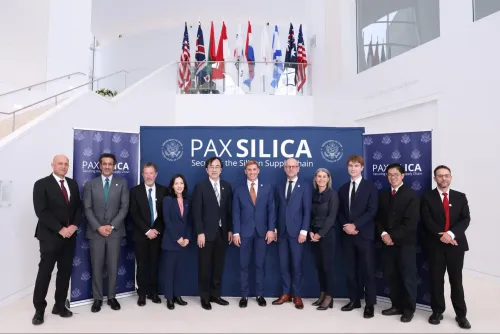
Launched in December 2025 by the US Department of State, Pax Silica is framed as an economic-security initiative reportedly designed to reduce reliance on China across critical technologies. Its scope spans semiconductors, artificial intelligence, rare earths, advanced manufacturing, and energy inputs. The name deliberately evokes 'Pax Americana', signalling Washington's ambition to anchor a stable, US-centred technological order.
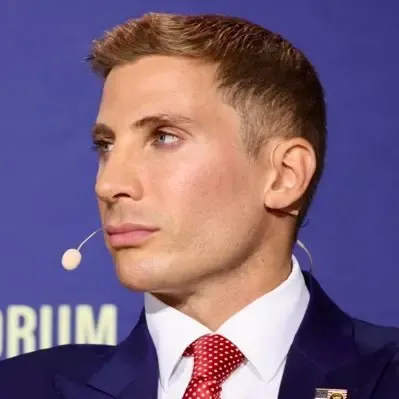
US Under Secretary for Economic Affairs Jacob Helberg stated: 'If the 20th century ran on oil and steel, the 21st century runs on compute and the minerals that feed it. This historic declaration hails a new economic security consensus ensuring aligned partners build the AI ecosystem of tomorrow — from energy and critical minerals to high-end manufacturing and models.'
By mid-2026, Pax Silica had attracted 24 signatories, including the United States, United Kingdom, Japan, India, Australia, Germany, South Korea, Singapore, and the European Union. Canada, Estonia, and Taiwan are also said to have endorsed its principles as observers.
China's Counter: WAICO
In response, China advanced WAICO, with 29 nations signing its charter in Shanghai on 16 July. According to Beijing, WAICO will function as an intergovernmental organisation upholding the purposes of the UN Charter, with a people-centred approach emphasising consultation, joint contribution, and shared benefits.
President Xi Jinping has described WAICO as China's answer on behalf of the Global South, promising 5,000 AI training slots for developing countries, new AI application centres with ASEAN, the African Union, the Arab League, BRICS, and a 30-country weather AI system. His remarks implied that certain nations have been locked out of the AI economy by an unnamed power — widely interpreted as a reference to the United States.
WAICO's membership reportedly includes Russia, Pakistan, Iran, several Central Asian states, and nations across Africa and Latin America — countries that are often seen as wary of or excluded from US-led frameworks. Independent analyses note that WAICO is considered less transparent than Pax Silica, and that it emphasises digital sovereignty and AI ethics aligned with Chinese standards.
The Cold War Parallel — and Its Limits
Observers draw a sharp parallel with the Cold War: where that era's divide was ideological, today's is centred on technological sovereignty versus dependency, with semiconductors and AI replacing nuclear arsenals as the decisive instruments of power. Pax Silica and WAICO are, in this reading, not merely trade clubs but strategic ecosystems shaping standards, investments, and values around digital governance.
This comes amid growing concern that nations may be compelled to align exclusively with one camp, producing a Cold War-style bifurcation of the global technology stack. Notably, Kazakhstan is a member of both initiatives — a signal, according to some reports, that other countries may also seek to straddle both blocs rather than commit to one.
The Role of Middle Powers
Independent analyses suggest the future may be 'less about direct confrontation and more about fragmented spheres of influence, with countries pressured to align with one or the other.' Middle powers such as India are seen as potentially capable of forging a balancing role that could prevent a binary split — though the structural pressures pushing nations toward one bloc or the other are intensifying.
As both initiatives deepen their institutional footprints, the contest over AI standards, supply chain architecture, and digital infrastructure is set to define the geopolitical landscape of the coming decade.
Point of View
Rival blocs rarely remain benign when membership decisions carry strategic consequences. What is underreported is the coercive dimension: smaller economies may face quiet pressure on trade, financing, or technology access depending on which camp they join. Kazakhstan's dual membership is an early test of whether non-alignment remains viable in a technology-defined geopolitical order. India's position — a Pax Silica signatory with deep economic ties to China — will be the real stress test of whether middle powers can genuinely balance, or whether they will eventually be forced to choose.
NationPress
7 Aug 2026
Frequently Asked Questions
What is WAICO and who has signed it?
The World AI Cooperation Organisation (WAICO) is a China-proposed intergovernmental body whose charter was signed by 29 nations in Shanghai on 16 July. Its membership reportedly includes Russia, Pakistan, Iran, and several Central Asian, African, and Latin American states. China frames it as a Global South-oriented alternative to US-led technology frameworks.
How do Pax Silica and WAICO differ?
Pax Silica emphasises secure supply chains and AI innovation among trusted partners aligned with US standards, while WAICO focuses on digital sovereignty, infrastructure financing, and AI ethics aligned with Chinese standards. Independent analyses consider WAICO less transparent than Pax Silica.
Is India a member of both initiatives?
India is a signatory of Pax Silica. There is no indication in current reports that India has joined WAICO. Kazakhstan is the notable example of a country that is a member of both initiatives.
Why does this rivalry matter for smaller nations?
Nations may face pressure to align exclusively with one bloc, which could determine their access to AI technology, semiconductor supply chains, and digital infrastructure financing. Analysts warn this risks a Cold War-style bifurcation of the global technology order, with middle powers seen as key to preventing a binary split.