Pentagon eyes deep-cover spy network for economic warfare against China
Synopsis
The Washington Post reports that the Pentagon is building a covert network of NOC spies — operatives posing as business executives — to conduct economic warfare on China. The Defence Department denies it, congressional committees haven't been briefed, and a 39-year CIA veteran is reportedly running the show from inside the Defence Department. If true, it would mark a significant expansion of US spy tradecraft into commercial cover territory.
Key Takeaways
The Pentagon is reportedly planning a deep-cover spy programme using 'nonofficial cover officers' (NOCs) to conduct economic warfare against China , according to The Washington Post .
Operatives would pose as private-sector businesspeople with no visible US government affiliation.
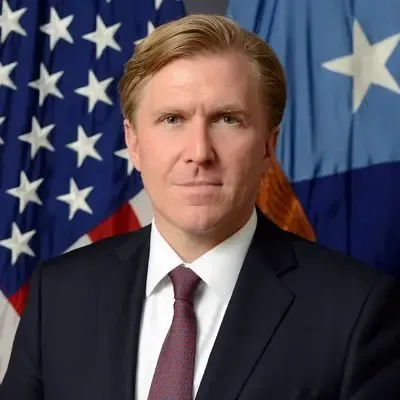
Tom Rakusan , a 39-year CIA veteran and senior adviser to Deputy Defence Secretary Steve Feinberg , is reportedly overseeing the initiative.
The Pentagon denied the report, calling the claims 'simply not true'; the CIA declined to comment.
Congressional oversight committees have reportedly not been briefed on the programme.
The Pentagon's Economic Defence Unit has already invested $750 million in a rare earth mine in Brazil as part of a broader economic statecraft push.
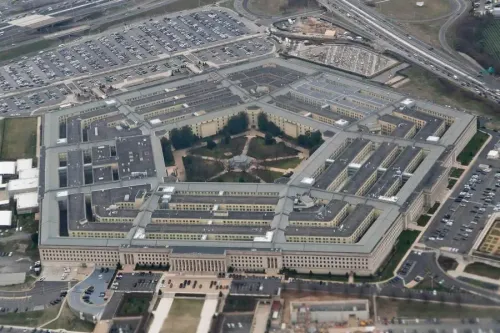
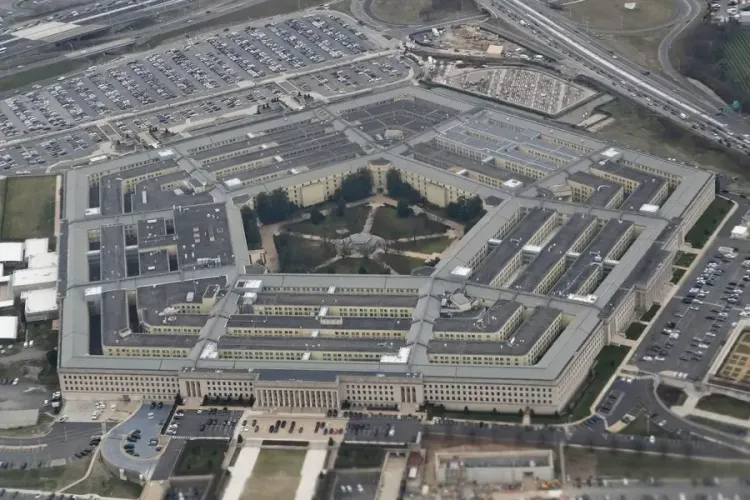
The United States Department of Defence is reportedly planning to build an expanded deep-cover espionage programme designed to conduct economic warfare against China and other American strategic competitors, according to a report by The Washington Post, which cited roughly half a dozen people familiar with the initiative. The Pentagon, however, has flatly denied that any such effort is underway.
How the Programme Would Work
Under the proposed framework, US operatives would be deployed under commercial cover — posing as businesspeople or other private-sector professionals — with no visible ties to the US government. The scheme is described as a covert component of the Pentagon's broader economic warfare campaign against rival states.
The initiative involves what intelligence circles term 'nonofficial cover officers', or NOCs — among the most difficult and legally complex categories of covert operatives to deploy and protect. The programme is currently in its planning phase and is not yet operational, the people cited in the report said.
The Man at the Centre
The programme is reportedly being overseen by Tom Rakusan, a 39-year CIA veteran who now serves as senior adviser to Deputy Defence Secretary Steve Feinberg. Rakusan, who retired from the Central Intelligence Agency (CIA) in 2021, rose to the position of deputy director of operations in 2017 — the agency's top spy-running post. He is also credited with leading the CIA's response to Russia's interference in the 2016 US presidential election.
A former senior CIA official, speaking to the Post, accused Rakusan of attempting to construct a parallel intelligence infrastructure — effectively a CIA replica — within the Defence Department, a characterisation that adds a layer of institutional tension to the story.
Pentagon Pushes Back
The Defence Department issued a pointed rejection of the reporting. Pentagon deputy press secretary Jacob Bliss said in a statement: 'This query appears to be built on information that is simply not true. Whoever is feeding you these claims are either badly misinformed or deliberately leading you astray to paddle [sic] their fantasies.'
The CIA declined to comment, and Rakusan did not respond to a request for comment, according to the Post. Congressional oversight committees do not appear to have been briefed on the initiative, the report added — a detail that critics argue raises serious accountability concerns.
The Broader Economic Warfare Push
The reported programme fits within a wider pattern of aggressive economic statecraft under the Trump administration, which has deployed tariffs, export controls, and strategic investment in critical technologies and raw materials as tools of geopolitical competition. In a September 2026 speech, CIA Deputy Director Michael Ellis said the United States was broadening its espionage activities against China, with a focus on Chinese companies operating in artificial intelligence, biotechnology, and advanced semiconductors.
The Pentagon also established an Economic Defence Unit this year, which has directed capital into oil and mineral ventures — including a $750 million investment toward a major rare earth mine in Brazil. Early discussions reportedly explored placing the spy programme under that unit, but the idea was shelved amid escalating media attention and congressional scrutiny.
Operational and Legal Hurdles
Former officials who spoke to the Post flagged several structural challenges. Military service records are notoriously difficult to conceal, and the proliferation of biometrics and what sources described as 'digital dust' has made operating under an alias increasingly risky in a surveillance-saturated world.
The legal authority under which the programme might operate also remains undefined, according to those familiar with the discussions. The CIA has historically treated overseas human intelligence as its exclusive operational domain, and any Pentagon encroachment would likely trigger inter-agency friction that could undermine the mission before it begins.
Where precisely the programme would be housed within the Pentagon's sprawling organisational structure also remains unresolved — it could function as a standalone deep-cover unit or as an expansion of existing clandestine human intelligence capabilities, the Post noted. All eyes will now be on Capitol Hill, where the absence of congressional briefings may prompt oversight hearings.
Point of View
A bureaucratic balloon floated to test reactions, or deliberate disinformation is a question the denial alone cannot resolve.
NationPress
23 Oct 2026
Frequently Asked Questions
What is the Pentagon's reported deep-cover spy programme against China?
It is a planned covert initiative, reported by The Washington Post, under which US operatives would pose as businesspeople or private-sector professionals — with no visible government ties — to conduct economic warfare against China and other American rivals. The programme is described as being in its planning phase and not yet operational.
Who is Tom Rakusan and what is his role?
Tom Rakusan is a 39-year CIA veteran who retired from the agency in 2021 and now serves as senior adviser to Deputy Defence Secretary Steve Feinberg. He reportedly rose to CIA deputy director of operations in 2017 and later led the agency's response to Russian interference in the 2016 US presidential election. According to the Post's sources, he is overseeing the planned programme.
Has the Pentagon confirmed the spy programme?
No. Pentagon deputy press secretary Jacob Bliss denied the report in a statement, calling the underlying information 'simply not true' and suggesting sources were either misinformed or misleading the newspaper. The CIA declined to comment, and Rakusan did not respond to a request for comment.
Why has Congress not been briefed on the programme?
Congressional oversight committees do not appear to have been briefed, according to the Post's reporting — a gap that legal and accountability experts say could be problematic. The legal authority under which the programme might operate also remains undefined, adding to concerns about oversight.
How does this fit into the broader US economic warfare strategy against China?
The Trump administration has made economic statecraft a centrepiece of its China policy, deploying tariffs, export controls, and strategic investments in critical minerals and technology. The CIA has also reportedly expanded espionage targeting Chinese companies in AI, biotechnology, and semiconductors. The Pentagon's Economic Defence Unit, set up this year, has already committed $750 million to a rare earth mine in Brazil as part of this broader effort.