Rubio: Iran talks not near breakthrough, Tehran demands 'outrageous'
Synopsis
US Secretary of State Marco Rubio delivered his sharpest public assessment yet of Iran diplomacy, calling Tehran's demands 'outrageous and ridiculous' while insisting Washington would still pursue a deal if one became possible. The statement — made hours before a G7 Foreign Ministers' meeting — signals that the gap between the two sides remains wide, and that the Trump administration is now willing to say so out loud.
Key Takeaways
US Secretary of State Marco Rubio said on 9 November 2026 that Iran talks were not close to a breakthrough and had not been productive.
Rubio called Iran's negotiating demands 'outrageous and ridiculous and really not realistic.' President Donald Trump still prefers a diplomatic resolution, Rubio said, but acknowledged it may not always be possible.
On 31 October , Rubio had confirmed talks with Iran were ongoing but declined to assess progress — Sunday's briefing was a notably sharper shift.
Rubio described US military activity in the region as purely defensive, tied to threats against American forces and shipping.
Rubio departs for a G7 Foreign Ministers' meeting in France , where Iran is expected to feature in discussions.
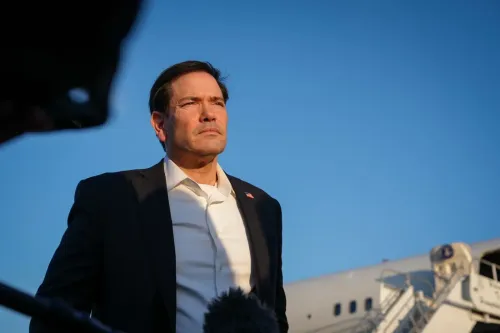
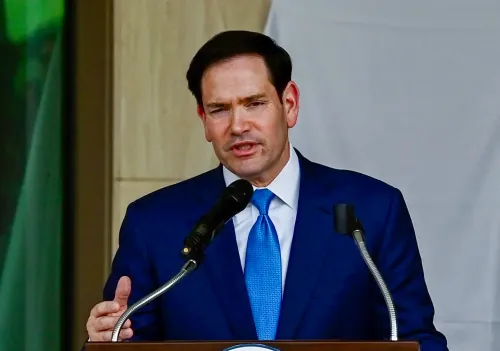
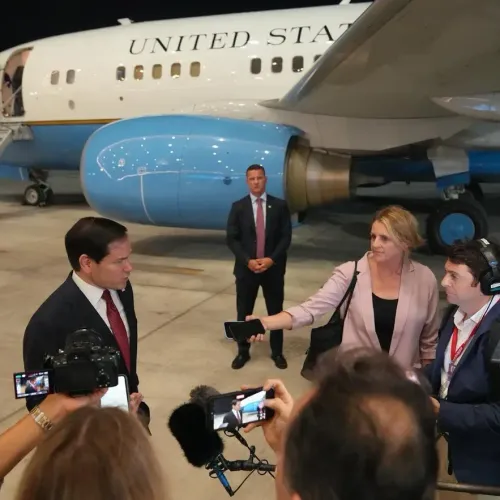
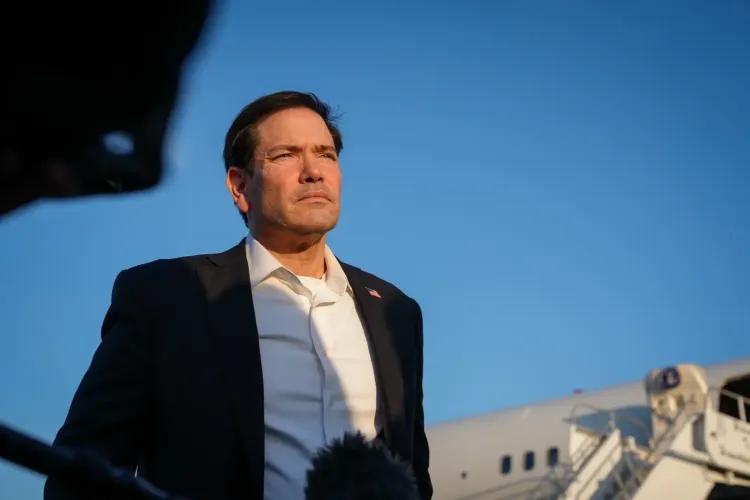
US Secretary of State Marco Rubio on Sunday, 9 November 2026, declared that diplomatic efforts with Iran were neither close to a breakthrough nor productive, squarely blaming Tehran's negotiating positions while leaving the door open to a future deal. The remarks, made at Homestead Air Reserve Base in Homestead, Florida, before Rubio departed for a G7 Foreign Ministers' meeting in France, marked a noticeably sharper tone than he had struck just a week earlier.
What Rubio Said
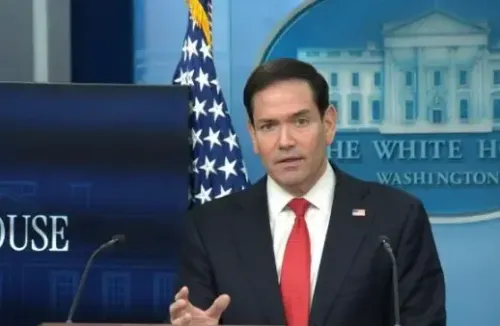
'I don't have any progress to report to you,' Rubio told reporters. 'I think you see some of these things that are out there; you have a number of countries that continue to engage them with different ideas. But I wouldn't say we're on the verge of a breakthrough.'
He went on to characterise Iranian demands in unusually blunt terms. 'Right now it hasn't been very productive, because the Iranian demands are simply not just unacceptable but, in some cases, outrageous and ridiculous and really not realistic,' he said.
Washington's Diplomatic Posture
Despite the stark language, Rubio insisted that President Donald Trump retained a preference for a negotiated resolution. 'The President would always prefer to solve this and every problem diplomatically. Sometimes that's not possible, unfortunately. But if there's a chance to do it, we'll explore it,' he said.
This comes amid a broader pattern: on the sidelines of the G-20 Foreign Ministers' meeting in Atlanta on 31 October, Rubio had acknowledged that talks with Iran had never formally stopped but declined to assess progress or offer a timeline. Sunday's briefing represented a marked escalation in public candour.
The Nuclear Iran Argument
Rubio also defended the administration's decision to confront what he described as the long-standing threat of a nuclear-armed Iran, framing it as a bipartisan national security imperative that previous American presidents had neglected. 'At the end of the day I think we all can agree — I think there's bipartisan — I would hope there's bipartisan — maybe not anymore — but there used to be bipartisan acknowledgement that a nuclear Iran would be completely unacceptable and dangerous for the United States — not just Israel, not just the Middle East — the whole world and the United States,' he said.
Notably, Rubio framed Trump's willingness to engage this issue as a form of political courage, saying 'presidents are elected to do the hard things — sometimes difficult things, but necessary things.'
Military Activity and US Defensive Posture
When asked about military activity linked to the Iran standoff, Rubio described US action as strictly defensive. 'The US acts defensively. If there's a threat to our forces in the region, we will act against those. If there's a threat to shipping, we've been defending shipping for a while,' he said, declining to announce any new strikes. He added that the threshold for action was tied directly to assessed threat levels.
What Happens Next
Rubio's departure for the G7 Foreign Ministers' summit in France means Iran will likely feature in multilateral discussions among the world's leading democracies in the days ahead. With Washington publicly characterising Tehran's positions as 'outrageous,' the room for near-term de-escalation appears narrow. Analysts and regional partners will be watching whether Rubio's tougher framing signals a policy shift or is designed to apply pressure ahead of a resumed negotiating round.
Point of View
It typically serves one of two purposes: to pressure the other side into concessions, or to begin building a public case for escalation. The fact that he simultaneously kept the diplomatic door technically open suggests the Trump administration is not yet at the latter stage — but is plainly setting the terms for when it might be. What is missing from mainstream coverage is the significance of the tonal shift between 31 October and 9 November: in nine days, Washington moved from studious ambiguity to pointed accusation. That acceleration, more than any single quote, is the story.
NationPress
9 Nov 2026
Frequently Asked Questions
What did Marco Rubio say about Iran talks on 9 November 2026?
Rubio said diplomatic efforts with Iran were not close to a breakthrough and had not been productive, calling Tehran's demands 'outrageous and ridiculous and really not realistic.' He made the remarks at Homestead Air Reserve Base before departing for a G7 Foreign Ministers' meeting in France.
Is the United States still open to a diplomatic deal with Iran?
Yes, according to Rubio. He said President Donald Trump would 'always prefer to solve this and every problem diplomatically' and that Washington would explore a negotiated solution if one presented itself, even as he criticised Iran's current positions as unacceptable.
How does this statement differ from what Rubio said previously?
On 31 October, at the G-20 Foreign Ministers' meeting in Atlanta, Rubio confirmed that talks with Iran had never stopped but refused to characterise their progress. His 9 November remarks were sharply more critical, publicly labelling Iranian demands as unrealistic — a notable escalation in public tone.
What is the US position on military action related to Iran?
Rubio described US military activity as defensive. He said Washington would act if there were threats to American forces in the region or to shipping, but he did not announce any new strikes and framed the threshold for action as dependent on assessed threat levels.
Why does the US consider a nuclear Iran unacceptable?
Rubio argued that a nuclear-armed Iran would pose a danger not just to Israel and the Middle East but to the United States and the entire world. He described the issue as a longstanding bipartisan national security concern that previous administrations had failed to address decisively.