US senators urge DHS to exempt rural doctors from $100,000 H-1B fee
Synopsis
A $100,000 H-1B surcharge designed to deter Silicon Valley body-shopping is now squeezing rural American hospitals that depend on foreign surgeons. With over 200,000 applicants already paying the fee for faster processing, a bipartisan push for a medical carve-out could reshape how the US prices access to its scarcest doctors — and directly affect Indian physicians staffing small-town America.
Key Takeaways
US senators urged DHS Secretary Markwayne Mullin to consider exempting rural doctors from the $100,000 H-1B fee .
Senator Susan Collins cited a Presque Isle, Maine hospital that paid the fee to recruit a surgeon.
DHS received about 286,000 H-1B applications in FY 2026 ; over 200,000 paid the surcharge.
Paid applications are processed in about 15 days ; exemption routes take roughly 7.5 months .
Collins also pushed for H-2B reforms, including exemptions for returning seasonal workers.
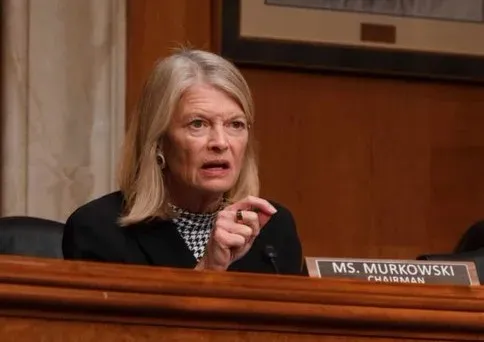
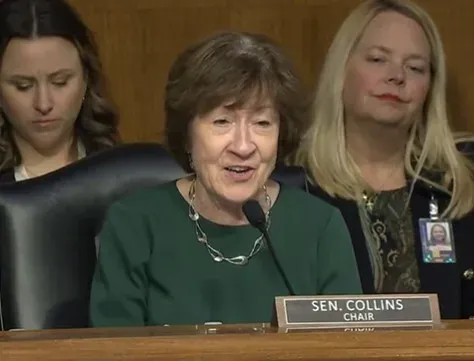
US senators from both parties on Tuesday pressed Homeland Security Secretary Markwayne Mullin to consider relief from the $100,000 H-1B visa fee for foreign doctors recruited by rural American hospitals, warning that the surcharge is straining already understaffed healthcare providers in remote communities. The exchange took place at a Senate Appropriations Subcommittee hearing in Washington on the Department of Homeland Security's fiscal year 2027 budget request.
Maine senator flags rural healthcare crunch
Senator Susan Collins of Maine told the hearing that a hospital in Presque Isle, in the state's rural north, was recently forced to pay the full fee to bring in a much-needed surgeon from overseas. She argued that providers serving underserved areas should not be treated on par with employers tapping deep domestic talent pools in tech.
“Would you be willing to consider carving out an exemption for medical professionals from this fee when a community can demonstrate that there is not a medical professional available?” Collins asked.
What DHS said
Mullin acknowledged the staffing pressure in rural America and signalled openness to targeted relief, while cautioning that a sweeping exemption may not be feasible under current statute.
“We do have some authority and flexibility to be able to waive some of this on a case by case,” Mullin said, adding that the department was “happy to look into it, look at language, try to get it better, because I agree. From a very rural area, I understand how hard it is to get doctors.”
The numbers behind the fee
According to Mullin, DHS has received roughly 286,000 H-1B applications so far in fiscal year 2026, with more than 200,000 applicants opting to pay the $100,000 surcharge for faster processing. Paid filings clear in about 15 days, he said, while those routed through exemptions or alternative pathways can wait around seven and a half months.
Why it matters for Indian professionals
Indian nationals consistently account for the largest share of H-1B beneficiaries, including a significant slice of physicians serving small-town America under J-1 waiver and H-1B pathways. Any carve-out for rural medical hires would disproportionately ease costs for Indian-origin doctors and the hospitals that rely on them. Critics argue, however, that piecemeal exemptions risk creating a two-tier system that could be gamed by intermediaries.
Broader visa reform on the table
Collins also urged DHS to revisit the H-2B seasonal worker visa programme, including possible exemptions for returning workers and employers with strong compliance records. Mullin said he was open to streamlining the process but noted that some changes would require congressional action. Sectoral guidance on any medical-professional carve-out is expected to depend on follow-up legislative drafting in the coming weeks.
Point of View
000 surcharge was framed as a curb on tech outsourcing, but its blunt design is now hitting the very hospitals Washington claims to want to protect. Collins's Maine-versus-Silicon-Valley framing exposes the policy's central contradiction: a flat fee assumes employer wealth and worker substitutability, neither of which holds for a rural surgeon. For India — the largest single-country source of H-1B doctors — a carve-out would be quiet but consequential. The real test is whether Congress codifies a healthcare exemption or leaves it to DHS's case-by-case discretion, which historically has been opaque and uneven.
NationPress
20 Oct 2026
Frequently Asked Questions
What is the $100,000 H-1B fee being debated?
It is a surcharge that H-1B sponsoring employers can pay to fast-track visa processing, with paid applications cleared in about 15 days versus roughly 7.5 months for other pathways. US senators are now questioning whether rural hospitals recruiting foreign doctors should be exempt.
Why are senators seeking an exemption for rural doctors?
Senator Susan Collins of Maine argued that rural hospitals face acute shortages of specialists and cannot compete with deep-pocketed tech employers in absorbing the $100,000 cost. She cited a Presque Isle hospital that had to pay the fee to secure a surgeon.
How many H-1B applications has DHS received in FY 2026?
DHS Secretary Markwayne Mullin told the hearing the department has received about 286,000 H-1B applications in fiscal year 2026. More than 200,000 of those applicants chose to pay the $100,000 surcharge for faster processing.
How does this affect Indian doctors and professionals?
Indian nationals are the largest group of H-1B beneficiaries, including many physicians in underserved US areas. A medical carve-out would lower costs for hospitals hiring Indian-origin doctors and could expand recruitment from India into rural America.
What happens next on H-1B and H-2B reform?
Mullin said DHS is willing to work with lawmakers on revised language for both H-1B medical exemptions and H-2B seasonal worker reforms. However, he cautioned that broader structural changes would require congressional action rather than executive discretion alone.