South Korea reaffirms 'realistic, practical' denuclearisation approach amid North's defiance
Synopsis
As Kim Yo-jong vowed North Korea's nuclear arsenal will advance 'without a momentary stagnation,' Seoul's Unification Ministry held its ground on a 'realistic and practical' path — even as its own Unification Minister confirmed the government has quietly buried the CVID framework that underpinned a decade of multilateral strategy.
Key Takeaways
South Korea's Unification Ministry reaffirmed its 'realistic and practical' denuclearisation stance on 27 July , saying its nuclear-free peninsula goal remains unchanged.
Kim Yo-jong rejected the ASEAN Regional Forum (ARF) joint statement from Manila calling for North Korea's complete denuclearisation.
Kim Yo-jong declared North Korea's 'nuclear capability will be updated steadily without a momentary stagnation.' Unification Minister Chung Dong-young confirmed the Lee Jae Myung government has shifted from the previous CVID policy to a 'peace-first' approach.
Foreign Minister Cho Hyun outlined a phased denuclearisation strategy at the Jeju Forum for Peace and Prosperity in June.
South Korea's Unification Ministry on Monday, 27 July reaffirmed its commitment to a 'realistic and practical' approach to denuclearisation on the Korean Peninsula, stating that its core position of pursuing a nuclear-free peninsula in cooperation with the international community remains unchanged. The ministry's remarks came directly in response to a sharp rejection by Kim Yo-jong, sister of North Korean leader Kim Jong-un, of a multilateral call for North Korea's complete denuclearisation.
Ministry's Stance
Yoon Min-ho, spokesperson for the Unification Ministry, said at a regular briefing that the ministry's position had not shifted. 'The ministry's position has not budged from seeking a nuclear-free Korean Peninsula in cooperation with the international community,' he said. He added that the ministry would 'focus on halting North Korea's nuclear programs and seek to find realistic and practical solutions,' given the gravity of the nuclear issue.
Kim Yo-jong's Rejection
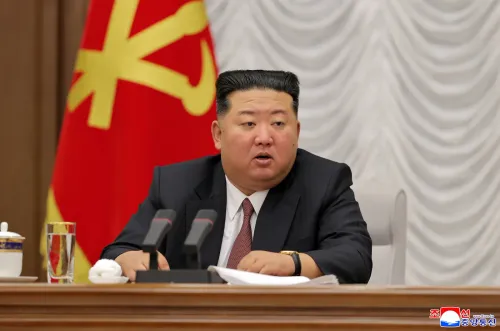
Kim Yo-jong's statement, carried by the state-run Korean Central News Agency (KCNA), flatly rejected a joint communiqué issued on Saturday following the annual foreign ministers' meeting of the ASEAN Regional Forum (ARF) in Manila. The ARF statement had reaffirmed member nations' commitment to the 'complete denuclearisation' of North Korea. In response, Kim Yo-jong declared that North Korea's 'nuclear capability will be updated steadily without a momentary stagnation.'
Seoul's Policy Shift Under Lee Jae Myung Government
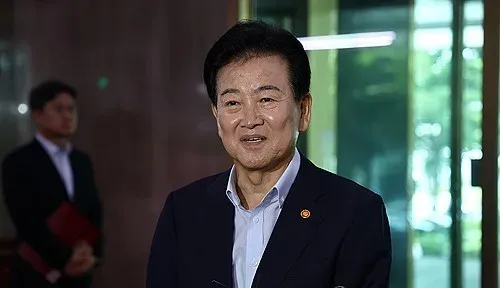
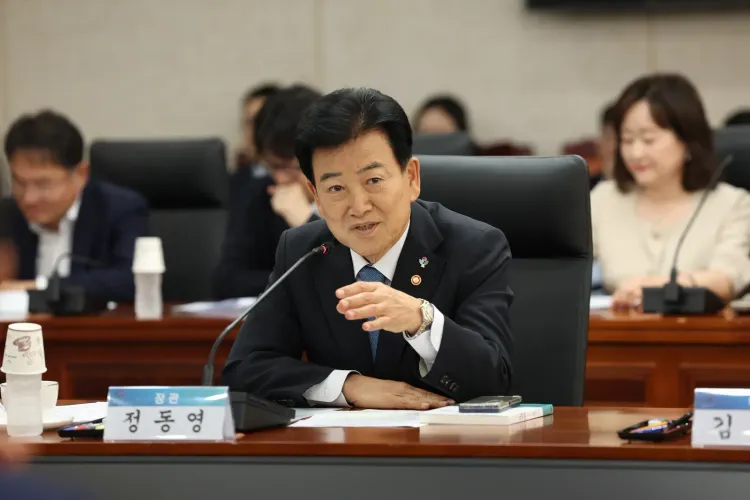
The ministry's clarification comes amid a broader recalibration of South Korea's North Korea policy. Unification Minister Chung Dong-young said last week that the current Lee Jae Myung government had moved away from the previous administration's CVID (Complete, Verifiable and Irreversible Denuclearisation) framework, pivoting instead toward a 'peace-first' posture as a prerequisite for reviving stalled inter-Korean dialogue.
'For the past year, the Lee Jae Myung government has practically abolished the previous government's stance centred on achieving denuclearisation first… and shifted toward a peace-first policy,' Chung said. Critics argue this shift represents a significant departure from the longstanding multilateral consensus on North Korea's nuclear disarmament.
Foreign Minister Outlines Phased Approach
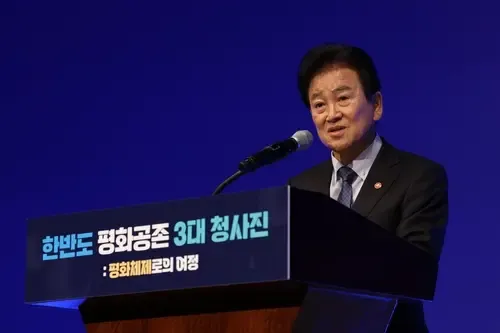
Earlier in June, South Korea's Foreign Minister Cho Hyun had outlined a phased strategy during the 21st Jeju Forum for Peace and Prosperity on Jeju Island. 'We will pursue sustainable peace and coexistence, while taking a phased and practical approach toward the goal of denuclearising the Korean Peninsula,' he said, underscoring conflict prevention and peaceful coexistence as immediate priorities.
Cho also reaffirmed Seoul's commitment to strengthening its defence capabilities through the South Korea-US alliance, expanding ties with the Group of Seven (G7) and Global South nations, and contributing to global challenges including climate change, public health, and Artificial Intelligence (AI) governance.
What Comes Next
The divergence between Pyongyang's defiant posture and Seoul's incremental diplomacy underscores the deepening impasse on the Korean Peninsula. With North Korea openly pledging to advance its nuclear arsenal and South Korea recalibrating away from CVID, the prospect of a resumption of formal denuclearisation talks remains distant. How Washington and other ARF members respond to Seoul's policy evolution will be a key variable in the months ahead.
Point of View
Not the ARF bloc, and certainly not Pyongyang. The Lee Jae Myung government's 'peace-first' reframing may open dialogue channels, but it also risks legitimising North Korea's nuclear status by deprioritising disarmament as a precondition. Kim Yo-jong's blunt rejection of the ARF statement the same day Seoul sought to clarify its stance is a signal that Pyongyang reads the policy shift not as an olive branch but as a concession to exploit. The harder question — whether phased engagement without CVID can produce any verifiable rollback — remains conspicuously unanswered.
NationPress
25 Oct 2026
Frequently Asked Questions
What is South Korea's current stance on denuclearisation of the Korean Peninsula?
South Korea's Unification Ministry reaffirmed on 27 July that it seeks a nuclear-free Korean Peninsula through international cooperation, focusing on halting North Korea's nuclear programmes via 'realistic and practical' solutions. The current Lee Jae Myung government has, however, moved away from the previous CVID (Complete, Verifiable and Irreversible Denuclearisation) framework toward a 'peace-first' policy.
Why did Kim Yo-jong reject the ARF joint statement?
Kim Yo-jong, sister of North Korean leader Kim Jong-un, rejected the ASEAN Regional Forum's joint statement issued in Manila on Saturday, which called for the complete denuclearisation of North Korea. She declared that North Korea's nuclear capability would be 'updated steadily without a momentary stagnation,' signalling Pyongyang's firm refusal to negotiate away its arsenal.
What is the CVID policy and has South Korea abandoned it?
CVID stands for Complete, Verifiable and Irreversible Denuclearisation — the multilateral framework that made North Korea's full disarmament a precondition for engagement. Unification Minister Chung Dong-young confirmed last week that the Lee Jae Myung government has 'practically abolished' this stance and shifted to a peace-first approach aimed at reviving stalled inter-Korean talks.
What did South Korea's Foreign Minister say about the phased approach?
Foreign Minister Cho Hyun, speaking at the 21st Jeju Forum for Peace and Prosperity in June, said South Korea would pursue 'sustainable peace and coexistence' through a phased and practical approach to denuclearisation. He also stressed strengthening the South Korea-US alliance and expanding ties with G7 and Global South nations.
What does North Korea's stance mean for Korean Peninsula diplomacy?
North Korea's open pledge to continuously advance its nuclear capability, combined with its rejection of international denuclearisation calls, signals that formal talks remain unlikely in the near term. The divergence between Pyongyang's defiance and Seoul's incremental diplomacy deepens the existing impasse on the Korean Peninsula.