Trump Cancels Scheduled Military Strikes Against Iran
Synopsis
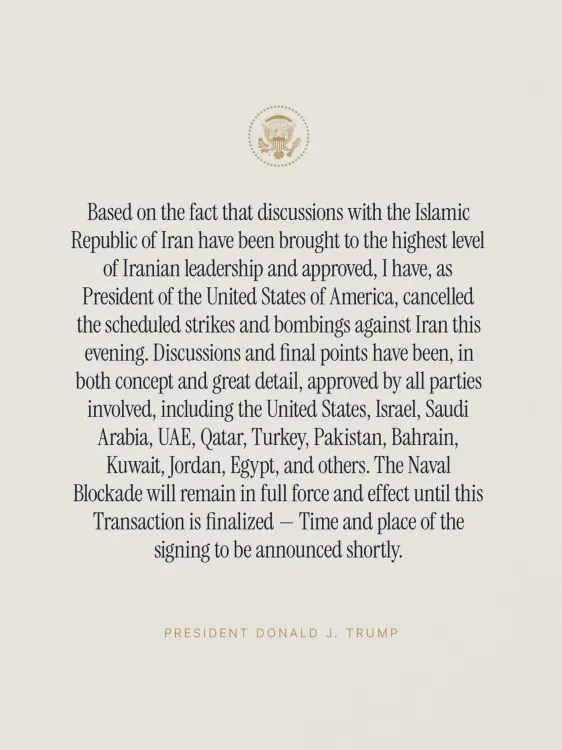
President Donald J. Trump has cancelled scheduled military strikes against Iran, the White House announced on June 11, 2026. The terse statement offers no details on the reason for cancellation, raising urgent questions about US-Iran tensions and the administration's next move.
Key Takeaways
Trump cancelled scheduled military strikes against Iran , the White House announced on June 11, 2026 .
The official statement provided no explanation for the cancellation, leaving the reasons and diplomatic context undisclosed.
Trump 's Iran policy history includes the 2018 JCPOA withdrawal and the January 2020 drone strike killing General Qasem Soleimani .
The cancellation does not explicitly rule out future military action; the Department of Defense 's follow-up posture will be closely watched.
India , with major Gulf energy and diaspora interests, is among the countries monitoring the US-Iran situation closely.
The announcement continues a decades-long pattern of US-Iran adversarial dynamics marked by escalation, threats of force, and periodic de-escalation.
President Donald J. Trump announced on Thursday, June 11, 2026 that he had cancelled scheduled military strikes against Iran, in a statement shared by the White House on its official communications channel. The announcement marks a significant moment in the long-running adversarial relationship between Washington and Tehran.
Context
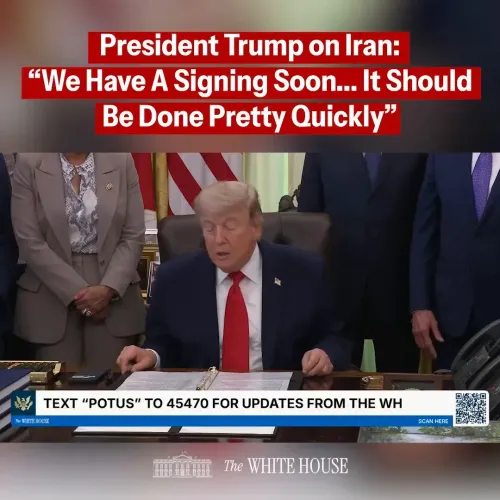
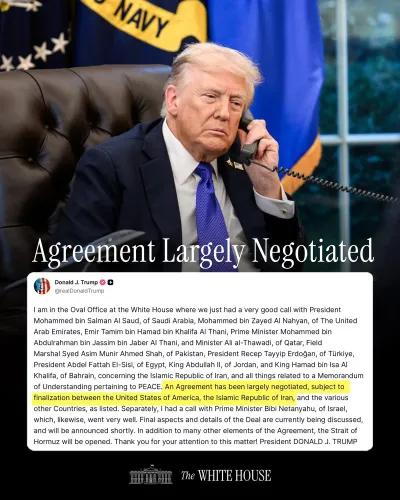
The White House post, flagged with an alert emoji, stated: 'President Donald J. Trump on cancelled scheduled strikes against Iran.' No additional details were provided in the post itself regarding the nature of the strikes, the timeline, or the reasons for the cancellation. The terse announcement was accompanied by a linked image.
The decision to call off a planned military operation against Iran is a consequential executive action, given the decades-long state of hostility between the two countries dating back to the 1979 Iranian Revolution.
Policy Backdrop
Trump's relationship with Iran has been defined by escalation and brinkmanship across both his terms in office. In May 2018, during his first term, Trump withdrew the United States from the Joint Comprehensive Plan of Action (JCPOA) — the landmark nuclear agreement — and reimposed sweeping sanctions on Tehran under a 'maximum pressure' strategy.
In January 2020, Trump ordered a drone strike that killed senior Iranian military commander General Qasem Soleimani near Baghdad, bringing the two countries to the brink of direct conflict. Iran retaliated with ballistic missile strikes on US military bases in Iraq, though no American fatalities were reported. The episode underscored how rapidly US-Iran tensions can escalate into kinetic action.
The broader pattern of US-Iran relations across multiple administrations has been one of cyclical escalation, sanctions pressure, and periodic de-escalation — with military force consistently on the table as a policy option, particularly regarding Iran's nuclear programme and its support for regional proxy forces.
Stakeholders and Impact
US armed forces stationed in the Persian Gulf region are directly affected by any shift in military posture toward Iran. A cancellation of planned strikes, if confirmed by the Department of Defense, would represent a significant stand-down with immediate implications for force deployment and readiness in the region.
Iranian leadership, which has historically responded to US military threats with a combination of defiance and back-channel diplomacy, would be closely monitoring the announcement and any follow-up signals from Washington. Regional allies of both countries — including Israel, Saudi Arabia, and Iran-aligned groups across the Middle East — will also be watching for indications of whether this represents a durable shift or a temporary pause.
For India, which maintains significant economic and diplomatic ties with both Washington and Tehran, any military escalation in the Gulf carries direct consequences for energy supply lines, the Indian diaspora in the region, and New Delhi's carefully calibrated foreign policy balancing act.
What's Next
The White House statement offers no explanation for the cancellation, leaving open critical questions: whether diplomatic channels have been activated, whether the strikes remain a contingency option, and what conditions prompted the original scheduling of military action. Follow-up statements from the Department of Defense and any congressional notifications regarding military actions will be closely scrutinised.
The announcement signals that the Trump administration continues to view military force as a live instrument of pressure against Iran, even as this particular operation was stood down. Whether this cancellation leads to renewed diplomatic engagement or a return to escalatory pressure remains the defining question for US-Iran relations in the days ahead.
Point of View
Without offering any diplomatic rationale. This mirrors Trump's first-term playbook of using the threat of force as leverage, a strategy that produced both the Soleimani strike and several near-miss escalations. The absence of detail is itself a message: to Tehran, to Congress, and to regional allies, that the military option remains live. For India, which has navigated US-Iran tensions carefully to protect its Gulf energy interests and diaspora, any shift in this volatile equation demands close diplomatic attention.
NationPress
28 Jul 2026
Frequently Asked Questions
Why did Trump cancel strikes against Iran?
The White House has not provided a reason for the cancellation. The official statement on June 11, 2026 confirmed only that President Trump cancelled scheduled strikes against Iran, with no explanation of the circumstances or diplomatic context.
What were the planned US strikes on Iran about?
The specific nature and targets of the cancelled strikes have not been disclosed by the White House or the Department of Defense as of the announcement on June 11, 2026.
What is the history of US military action against Iran under Trump?
Trump ordered the drone strike that killed Iranian General Qasem Soleimani in January 2020, and withdrew the US from the JCPOA nuclear deal in May 2018. His administration pursued a 'maximum pressure' sanctions strategy against Tehran across both terms.
How does the Iran strike cancellation affect India?
India has significant energy and trade ties with the Persian Gulf region and maintains diplomatic relationships with both the US and Iran. Any military escalation in the Gulf directly affects India's oil supply lines, the large Indian diaspora in the region, and New Delhi's foreign policy balancing.
Will the US still take military action against Iran?
The White House statement does not rule out future military action. Analysts note that the cancellation signals the option remains on the table, and follow-up statements from the Department of Defense will be watched for indications of US force posture in the Persian Gulf.