Trump Warns Iran: 'Make a Deal or Face Elimination'
Synopsis
The White House shared President Donald J. Trump's blunt warning to Iran's leadership — 'You better make a deal. You're not going to have anybody left' — in an interview with journalist Trey Yingst, escalating public pressure on Tehran amid stalled nuclear negotiations rooted in the 2018 JCPOA withdrawal.
Key Takeaways
President Trump warned Iran's leadership to reach a deal or face being eliminated, in remarks shared by the White House on July 14, 2026 .
The warning was delivered in an interview with journalist Trey Yingst and published on the official White House X account.
The Trump administration withdrew from the JCPOA nuclear agreement in May 2018 and reimposed sweeping sanctions on Iran .
The White House described Iran's leadership as 'what's left,' implying the regime is in a significantly weakened state.
Any escalation in U.S.–Iran tensions carries implications for India 's energy ties, the Chabahar port project, and regional stability.
Diplomatic observers will watch for Iranian responses through IAEA or UN channels and potential new U.S. sanctions designations.
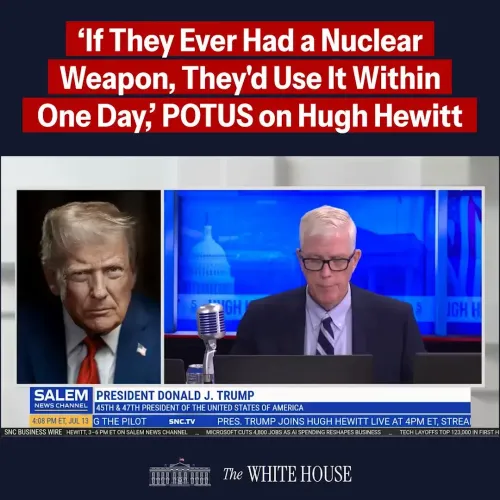
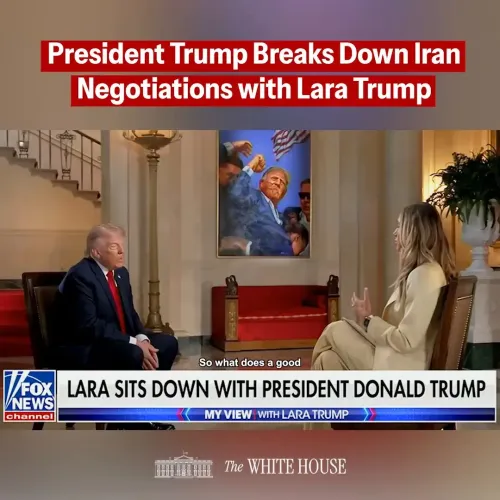
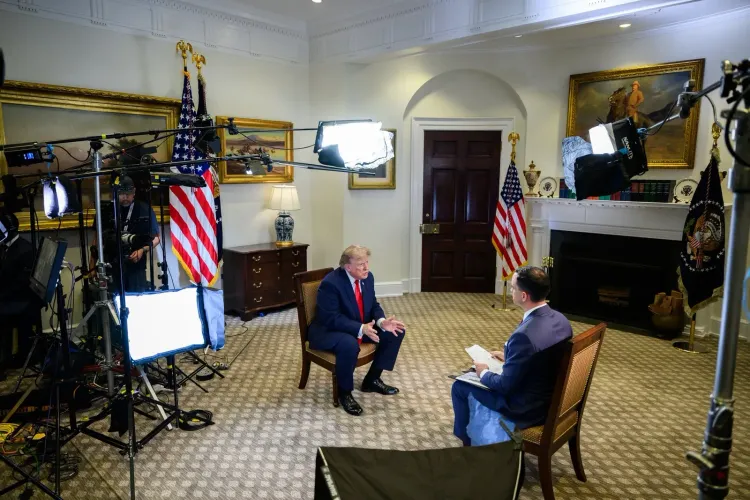
Washington DC, July 15, 2026 — The White House on Tuesday, July 14 shared a clip of President Donald J. Trump sitting down with journalist Trey Yingst to discuss ongoing negotiations with Iran, issuing a stark warning to Tehran's leadership to reach a diplomatic agreement or face consequences.
Context
In the interview, Trump delivered a blunt message to what the White House described as 'what's left of the Iranian regime's leadership': 'You better make a deal. You're not going to have anybody left.' The statement signals an intensification of pressure rhetoric aimed directly at Iran's top officials.
The warning comes amid a broader diplomatic push by the Trump administration to bring Iran to the negotiating table on its nuclear programme and regional activities. The White House framing — referencing 'what's left' of the Iranian leadership — suggests the administration believes the regime is in a weakened position.
Policy Backdrop
The current pressure campaign traces its roots to May 2018, when the first Trump administration withdrew the United States from the Joint Comprehensive Plan of Action (JCPOA), the multilateral 2015 nuclear agreement that had offered Iran sanctions relief in exchange for limits on its nuclear activities.
Following that exit, Washington reimposed sweeping economic sanctions on Tehran under a 'maximum pressure' strategy designed to force Iran back to the table on broader terms — covering not just nuclear enrichment but also ballistic missile development and support for regional proxy forces. That policy architecture remains the foundation of the current administration's Iran posture.
Iran has long rejected what it characterises as coercive diplomacy, and the JCPOA itself has remained in limbo since the U.S. withdrawal, with subsequent multilateral efforts to revive it failing to produce a binding agreement.
Stakeholders and Impact
The most immediate audience for Trump's remarks is Iran's leadership, which faces compounding economic pressure from sanctions alongside whatever military and political strains the White House allusion to 'what's left' implies. The statement will also be closely watched by U.S. regional allies, including Israel and Gulf states, who have long advocated a harder line on Tehran.
For India, which has historically maintained energy and trade ties with Iran while navigating U.S. sanctions exposure, any escalation in the Washington–Tehran standoff carries implications for oil supply chains, the Chabahar port project, and broader Indian Ocean geopolitics. Indian policymakers will be monitoring the trajectory of these negotiations carefully.
What's Next
Observers will watch for any formal diplomatic response from Tehran, either through IAEA channels, the United Nations, or direct back-channel communications. New sanctions designations or additional public statements from the Trump administration in the coming weeks could signal whether this represents an opening gambit or a hardening of the final negotiating position.
The pressure-first approach has historically produced mixed results with Iran, and whether the current leadership in Tehran — under whatever constraints it now faces — opts to engage remains the central question shaping the next phase of U.S.–Iran relations.
Point of View
Now delivered with a rhetorical edge that suggests the administration believes Tehran's leverage has significantly eroded. The phrase 'what's left of the Iranian regime's leadership' is notable — it frames Iran not as a peer negotiating partner but as a diminished actor, a posture designed to extract concessions rather than build diplomatic reciprocity. For India, which has carefully balanced sanctions compliance with strategic interests in Chabahar and Iranian energy, any acceleration toward confrontation narrows the space for that balancing act. The statement's public nature — broadcast via the White House's official account — signals this is as much a message to domestic audiences and regional allies as it is to Tehran.
NationPress
15 Jul 2026
Frequently Asked Questions
What did Trump say to Iran in the July 2026 interview?
President Trump warned Iran's leadership: 'You better make a deal. You're not going to have anybody left,' signalling that the U.S. views the Iranian regime as significantly weakened and under pressure to negotiate.
Who is Trey Yingst and why did Trump give him this interview?
Trey Yingst is a journalist known for covering Middle East conflicts and U.S. diplomatic engagements. The White House shared the interview on its official X account on July 14, 2026, as part of its public communications on Iran policy.
What is the JCPOA and why did the US leave it?
The JCPOA, signed in 2015, was a multilateral agreement limiting Iran's nuclear activities in exchange for sanctions relief. The Trump administration withdrew from it in May 2018, arguing the deal was insufficient to address Iran's ballistic missile programme and regional activities, and reimposed sweeping sanctions.
How does the US–Iran standoff affect India?
India has maintained energy and trade ties with Iran while managing exposure to U.S. sanctions. Any escalation in U.S.–Iran tensions could affect India's oil imports, the strategically important Chabahar port project, and India's broader positioning in the region.
What happens next in US–Iran negotiations?
Observers are watching for Iranian responses through IAEA or UN channels, potential new U.S. sanctions designations, and any back-channel diplomatic contacts that could signal whether formal talks are imminent or further away.