PoK unrest lays bare contradictions in Pakistan's Kashmir narrative, report finds
Synopsis
Pakistan has spent decades telling the world that PoK is free while Jammu and Kashmir under India suffers — but a new report says the opposite is true. With over 70 civilians reportedly killed, 150 protesters branded 'terrorists', and a full communications blackout in place, the unrest in PoK is dismantling Islamabad's carefully constructed global narrative from within.
Key Takeaways
A report by the International Centre for Peace Studies says Pakistan-occupied Kashmir (PoK) has been politically restricted and economically neglected since 1947 .
Ongoing protests have reportedly claimed more than 70 civilian lives and left over 200 injured.
Authorities have reportedly invoked anti-terror laws, with around 150 protesters declared 'terrorists'.
Pakistan 's military has allegedly imposed a complete internet and communications blackout in PoK, disrupting food and essential supplies.
The report accuses Pakistani authorities of 'settler colonialism', with PoK's electricity and resources diverted to other provinces, particularly Punjab .
The findings directly contradict Pakistan 's long-standing global narrative championing 'self-determination' for Kashmiris.
Ongoing unrest in Pakistan-occupied Kashmir (PoK) has exposed a fundamental contradiction at the heart of Islamabad's long-standing Kashmir narrative on global platforms, according to a report by the International Centre for Peace Studies. While Pakistan publicly champions the principle of 'self-determination' for Kashmiris, the political framework it has imposed in PoK since 1947 effectively permits only one outcome — alignment with Pakistan.
Pakistan's Narrative vs Ground Reality
For decades, Pakistan has waged an extensive propaganda campaign against India on global platforms, projecting PoK as a territory enjoying complete freedom and autonomy. The International Centre for Peace Studies report directly challenges that framing.
'It has been selling this narrative to the international community and media for decades, presenting the situation as if everything is settled and fine there, with people happy and fully satisfied, while portraying that problems exist in Jammu and Kashmir in India and using propaganda to advance this narrative. However, the reality is quite the opposite,' the report stated.
According to the report, PoK has remained politically restricted, economically neglected, and heavily dependent on Islamabad and Rawalpindi for administrative affairs since Pakistan's illegal occupation of the region in 1947.
Protests, Casualties, and Anti-Terror Laws
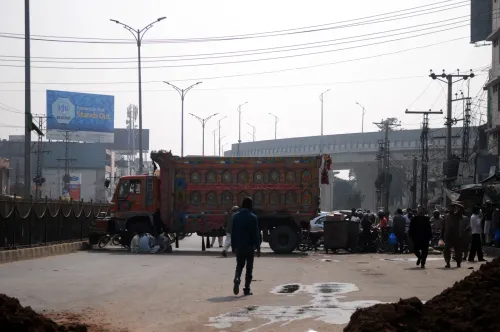
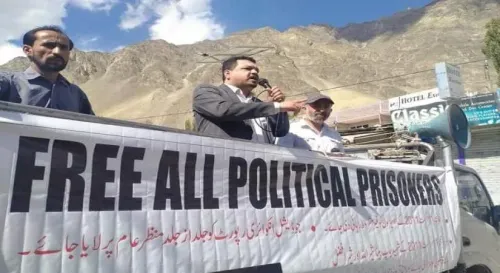
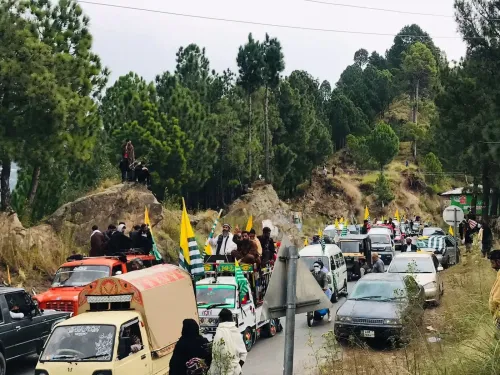
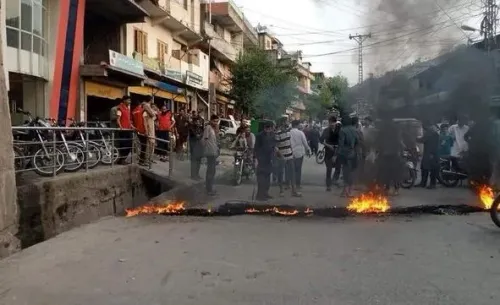
Mass protests against Pakistani governance have reportedly claimed more than 70 civilian lives and left over 200 others injured, according to the report. The demonstrations have now entered their second week, with authorities reportedly invoking anti-terror laws against protesters.
'Recently, around 150 protesters have been declared 'terrorists' amid the agitation. This reflects an increasingly coercive approach toward dissent, where even large-scale civilian protests over economic grievances and political rights are being framed through a security lens, further deepening repression in the region,' the report noted.
Communications Blackout and Supply Disruptions
The report further alleged that Pakistan's military-controlled state machinery has imposed a complete internet and communications blackout in PoK, severely limiting external access to information. Army-imposed restrictions have reportedly disrupted the supply of food and other essential items to residents.
'Deliberately depriving civilians of essential supplies needed for bare survival is profoundly inhumane and amounts to collective punishment of an entire population. Such actions violate fundamental humanitarian principles and raise serious concerns that they may reflect a genocidal intent, as well as potentially amount to a crime against humanity under international law,' the report stressed.
Settler Colonialism and Resource Extraction
Pakistani authorities have pursued a model of 'settler colonialism' in PoK since the outset, according to the report, keeping the region 'deliberately impoverished' while denying residents basic economic, civil, and political rights. Despite the region's abundant natural resources, the benefits are reportedly transferred to other Pakistani provinces, particularly Punjab.
The report cited electricity as a telling example: power generated within PoK is distributed elsewhere, while local residents endure heavy load shedding and high tariffs. This pattern of resource extraction, the report argued, underscores the structural disempowerment that has defined PoK's relationship with the Pakistani state for over seven decades.
Implications for Pakistan's Global Standing
The findings place Pakistan in an increasingly difficult position on the international stage, where its advocacy for Kashmiri self-determination sits in direct tension with its conduct in the territory it controls. As the protests intensify and casualty figures rise, the contradiction between Islamabad's stated principles and its actions in PoK is drawing renewed scrutiny from analysts and rights observers. How Pakistan responds to the ongoing unrest is likely to shape international perceptions of its Kashmir position in the months ahead.
Point of View
If its figures hold up to independent scrutiny, collapses that pillar. Branding over 150 protesters as terrorists while imposing a communications blackout is precisely the playbook Islamabad accuses New Delhi of running — and the symmetry will not be lost on international observers. The deeper issue is structural: seven decades of resource extraction and political exclusion in PoK have created a grievance base that periodic crackdowns will not extinguish. Islamabad's ability to sustain its Kashmir advocacy on global forums now depends on how quickly it can suppress the evidence of what it does at home.
NationPress
24 Jun 2026
Frequently Asked Questions
What is the current situation in Pakistan-occupied Kashmir (PoK)?
Ongoing mass protests in PoK have reportedly claimed more than 70 civilian lives and left over 200 injured, according to a report by the International Centre for Peace Studies. Authorities have allegedly invoked anti-terror laws and declared around 150 protesters 'terrorists', while a communications blackout has been imposed in the region.
What contradiction does the PoK unrest expose in Pakistan's Kashmir narrative?
Pakistan publicly champions 'self-determination' for Kashmiris on global platforms, but the political framework it has imposed in PoK since 1947 allows only one outcome — alignment with Pakistan. The report argues this directly contradicts Islamabad's stated principles, as PoK residents face political restriction, economic neglect, and now violent crackdowns.
What does the report say about human rights conditions in PoK?
The International Centre for Peace Studies report alleges that Pakistan's military has imposed a complete internet and communications blackout in PoK and disrupted supplies of food and essential items. It states these actions 'amount to collective punishment' and raise concerns about potential crimes against humanity under international law.
How has Pakistan allegedly exploited PoK's natural resources?
According to the report, Pakistani authorities have pursued a model of 'settler colonialism', keeping PoK deliberately impoverished while transferring its resources to other provinces, particularly Punjab. Electricity generated in PoK is distributed elsewhere, while local residents face heavy load shedding and high tariffs.
Who published the report on PoK unrest and Pakistan's narrative?
The report was published by the International Centre for Peace Studies. It examines the gap between Pakistan's international advocacy on Kashmir and the political and economic conditions it has maintained in Pakistan-occupied Kashmir since 1947.