US ends Operation Inherent Resolve in Iraq after decade-long anti-IS campaign
Synopsis
After more than a decade of military operations, the US-led coalition has formally shut down Operation Inherent Resolve in Iraq — handing security responsibility to Baghdad on 30 September. It is the most significant shift in the US military footprint in the Middle East in years, and the real test now is whether Iraqi forces can hold IS remnants at bay without coalition backing.
Key Takeaways
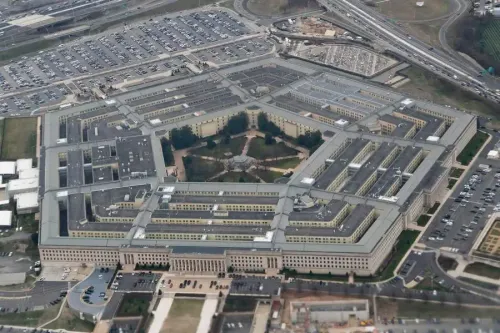
The US and allied coalition formally ended Operation Inherent Resolve in Iraq on 30 September , the Pentagon confirmed.
Pentagon spokesman Sean Parnell said Iraqi Security Forces , including the Peshmerga , will now lead counter-IS efforts.
The US will continue providing 'targeted training and intelligence support' to Iraqi partners.
Iraqi Prime Minister Ali al-Zaidi independently confirmed the coalition mission's conclusion on the same day.
Iraq signed an agreement to take over the US Embassy's diplomatic support centre at Baghdad International Airport , formalising the handover.
The coalition campaign launched in 2014 ; Iraq declared full IS liberation in 2017 ; a withdrawal framework was agreed in 2024 .
The United States and its coalition partners formally concluded Operation Inherent Resolve — their decade-long military campaign against the Islamic State (IS) in Iraq — on 30 September, the Pentagon announced. The closure marks a significant shift in the security architecture of the region, transferring primary responsibility for counter-IS operations to Baghdad.
What the Pentagon Said
Pentagon chief spokesman Sean Parnell confirmed in an official statement that the Iraqi Security Forces, including the Peshmerga and other security elements within the Iraqi Kurdistan region, will now 'lead the continuing effort to secure Iraq and keep IS remnants suppressed.' Washington, however, has pledged to continue providing 'targeted training and intelligence support' to its Iraqi partners, signalling a transition rather than a complete disengagement.
Baghdad's Parallel Announcement
Iraqi Prime Minister Ali al-Zaidi independently confirmed the conclusion of the international coalition's mission on the same day. The announcement aligned with a deadline that al-Zaidi had publicly set as far back as August, when he declared 30 September the firm cutoff for ending the coalition's military presence. Separately, Iraq's Foreign Ministry confirmed that the country officially signed an agreement to take over the US Embassy's diplomatic support centre at Baghdad International Airport, formalising the handover as part of the broader drawdown. The agreement was signed by Iraqi Deputy Foreign Minister Mohammed Hussein Bahr Al-Uloom and US Embassy charge d'affaires Steven Fagin.
A Decade in the Making
The coalition's campaign traces its origins to 2014, when the United States and allied nations mobilised forces to counter the IS militants who had seized vast swathes of territory across Iraq and neighbouring Syria. By the end of 2017, the Iraqi government declared full liberation from IS control. A formal agreement between Washington and Baghdad for a gradual US troop withdrawal was reached in 2024 — seven years after that declaration — setting the stage for the conclusion now formalised.
Broader Regional Context
The drawdown comes amid active diplomatic maneuvering by Baghdad. Last week, the Iraqi government disclosed it was in direct dialogue with the United States to secure sanctions exemptions for certain Iraqi airports, allowing flights with Iran to resume on humanitarian grounds — covering medical treatment, education, religious visits, and civilian interests. This followed recent US Department of the Treasury measures against Iranian airlines operating in the region. Iraq has publicly called on all parties to resolve conflicts through dialogue, stressing its role as a de-escalation actor in a region still marked by deep tensions.
What Comes Next
With coalition forces formally out, the onus of preventing an IS resurgence falls squarely on Iraqi security institutions — some of which have historically struggled with coordination and resource gaps. Analysts note that IS remnants remain active in remote areas, and the group has demonstrated a capacity for guerrilla-style attacks even after territorial defeat. The US commitment to 'targeted training and intelligence support' will be closely watched as a measure of how substantive the partnership remains in practice.
Point of View
Dispersed, and resurged before, most notably between 2017 and 2019. The US pledge of 'targeted training and intelligence support' is deliberately vague, leaving open the question of how quickly Washington could re-engage if the security situation deteriorates. For Iraq, the handover is a sovereignty milestone, but it arrives as Baghdad simultaneously navigates US sanctions pressure over Iran ties — a contradiction that underscores how complex the bilateral relationship remains even after the coalition's formal end.
NationPress
30 Sept 2026
Frequently Asked Questions
What was Operation Inherent Resolve?
Operation Inherent Resolve was the US-led military campaign launched in 2014 to combat Islamic State militants in Iraq and neighbouring Syria. It involved coalition forces from multiple countries and concluded formally on 30 September, with primary security responsibility now transferred to Iraqi forces.
Why did the US-led coalition end its mission in Iraq now?
The conclusion follows a 2024 agreement between Washington and Baghdad on a gradual US troop withdrawal, set against a firm deadline of 30 September declared by Iraqi Prime Minister Ali al-Zaidi. Iraq declared full liberation from IS territorial control as far back as 2017, making the formal drawdown a long-negotiated outcome.
Will the US maintain any military presence in Iraq after the coalition ends?
Yes, but in a reduced capacity. The Pentagon confirmed the US will continue to provide 'targeted training and intelligence support' to Iraqi partners, though frontline combat operations under the coalition framework have ceased.
Who is now responsible for security against IS in Iraq?
The Iraqi Security Forces, including the Peshmerga and other security elements in the Iraqi Kurdistan region, are now the primary actors responsible for suppressing IS remnants, according to the Pentagon statement.
What other developments accompanied the coalition's conclusion?
On the same day, Iraq signed an agreement to take over the US Embassy's diplomatic support centre at Baghdad International Airport. Separately, Baghdad disclosed it is seeking US sanctions exemptions to allow humanitarian flights to Iran, highlighting the complex bilateral relationship that persists beyond the military mission.