Can Trust Be Rebuilt After Damage? Insights on the India-US Trade Deal
Synopsis
The recent trade deal between the U.S. and India marks a significant step forward after months of tension. However, experts like Evan A. Feigenbaum warn that trust, once damaged, takes time to rebuild. This article delves into the nuances of the agreement and its implications for future relations.
Key Takeaways
The U.S.-India trade deal reduces tariffs significantly to 18%.
Trust rebuilding will be a slow process following months of tension.
Comparatively, the EU deal is more formal than the U.S.-India deal.
India's relationship with Russia complicates trade dynamics.
Projected trade figures should be viewed as ambitious rather than guaranteed.
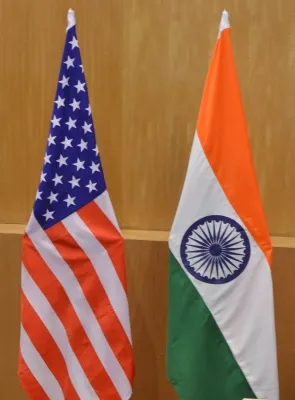
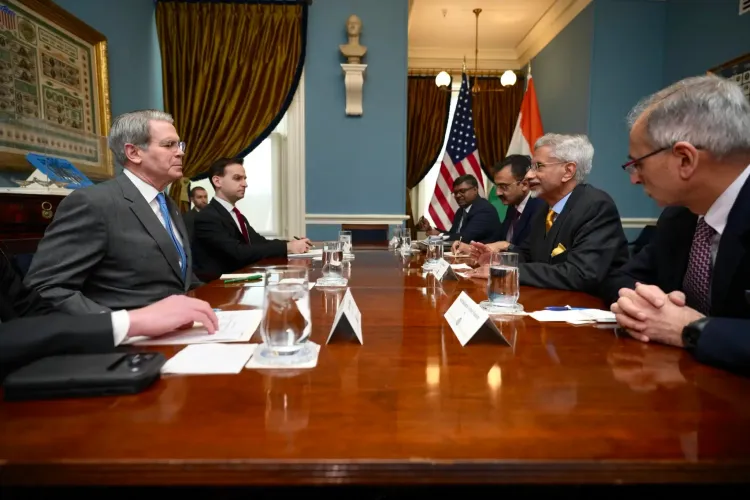
Washington, Feb 4 (NationPress) Following several months of tension and unpredictability, the United States and India have revealed an initial trade agreement. While this arrangement alleviates a standoff that had become increasingly untenable for both parties, it does not automatically restore trust, according to a former high-ranking official from the U.S. government.
This perspective is shared by Evan A. Feigenbaum, Vice President for Studies at the Carnegie Endowment for International Peace, who expressed his views in an opinion piece featured on the think tank's blog this past Wednesday.
The timing of this announcement is crucial. The understanding between the U.S. and India emerged just one week after India and the European Union finalized a long-discussed Free Trade Agreement. Feigenbaum highlighted a stark contrast: the EU's deal is a formal trade agreement, whereas the arrangement between Washington and New Delhi is merely a trade 'deal,' suggesting flexibility and the possibility of reversal.
U.S. President Donald Trump noted that this deal reduces tariffs on Indian exports to 18 percent, down from a previous combined rate of 50 percent. This earlier rate consisted of a 25 percent base tariff plus an additional 25 percent penalty related to India’s imports of Russian oil. Trump also mentioned that India is expected to purchase $500 billion worth of U.S. goods and services over time.
The White House characterized the deal as including a specific Indian commitment to cease purchasing Russian oil.
Feigenbaum remarked that the prior tariff structure was untenable as it hindered progress within the bilateral relationship, making a rollback necessary. Allowing the relationship to deteriorate further would have caused even greater harm.
The new tariff rate provides India with a relative competitive advantage. Most ASEAN nations face tariffs averaging about 19 percent, with Vietnam's rate at 20 percent. Additional penalties exist for circumstances involving Chinese transshipment. In this context, an 18 percent tariff appears favorable for Indian exporters.
However, Feigenbaum warned against overstating this advantage. Tariffs are just one component in trade and investment decisions. Variations of one or two percentage points are unlikely to overshadow the stronger supply chains and manufacturing capabilities found in Southeast Asia.
He also raised concerns regarding the anticipated scale of trade. U.S. goods exports to India were valued at $41.5 billion in 2024, while services exports reached $41.8 billion. Achieving the target of $500 billion would necessitate a substantial increase, which he deemed aspirational.
Energy remains a sensitive topic. Feigenbaum noted that India has been gradually decreasing its imports of Russian crude oil. However, he suggested that New Delhi is unlikely to make such commitments public. India's relationships with Russia and its focus on strategic autonomy make a public break politically challenging.
Most critically, he stated that recent months have politicized a relationship that had largely been depoliticized since the 2000s. The earlier oil-linked tariff tied to third-country choices has set a precedent that could endure.
Feigenbaum concluded that Washington and New Delhi are in a better position than they were a few months ago. Both sides should recognize this progress. Yet, trust, once compromised, is a slow process to rebuild.
Point of View
The evolving trade dynamics between the U.S. and India are crucial. While the recent agreement signals progress, it is essential to recognize that rebuilding trust is a gradual process. The nations must navigate complex geopolitical landscapes to ensure a strong partnership moving forward.
NationPress
11 Oct 2026
Frequently Asked Questions
What is the significance of the recent U.S.-India trade deal?
The trade deal is significant as it eases months of tension and opens new avenues for economic cooperation, though rebuilding trust will take time.
What are the new tariff rates established in the deal?
The new agreement reduces tariffs on Indian exports to 18%, down from a previous combined rate of 50%.
How does this deal compare to the EU trade agreement?
Unlike the formal EU trade agreement, the U.S.-India understanding is labeled a trade 'deal,' suggesting more flexibility and potential for reversal.
What challenges remain for U.S.-India relations?
Challenges include the need to address political sensitivities, particularly regarding energy imports from Russia and the quest for strategic autonomy.
Is the projected trade volume of $500 billion realistic?
Experts believe the $500 billion target is aspirational and would require a significant increase in current trade volumes.