US urges world to act on Ebola outbreak in DRC and Uganda
Synopsis
Washington is no longer just responding to the Ebola outbreak in the DRC and Uganda — it is now publicly pressuring the rest of the world to match its effort. With the FIFA World Cup looming and the virus active across two borders, the US has framed this as a global security issue, not just an African health crisis.
Key Takeaways
The US on 9 June urged all countries to intensify efforts to contain the Ebola outbreak in the DRC and Uganda .
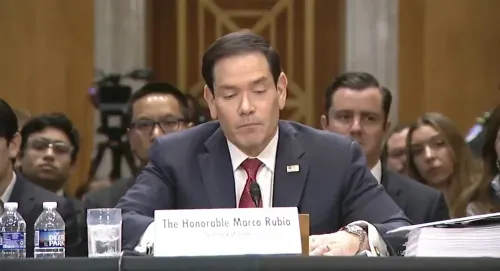
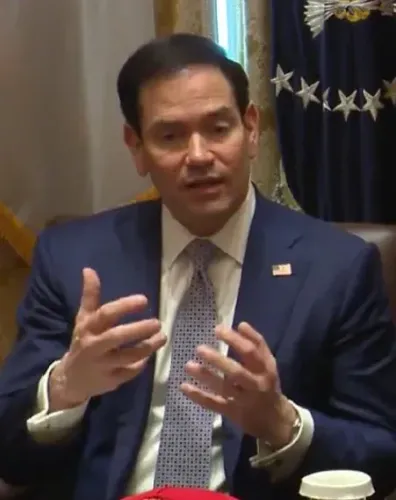
Secretary of State Marco Rubio spoke with European Commission President Ursula von der Leyen to coordinate a joint US-EU response.
The Trump administration claims it responded within 24 hours of the first confirmed case and describes itself as the largest financial contributor to the Ebola response.
Washington has imposed travel restrictions and screening on individuals arriving from Ebola-affected countries.
The FIFA World Cup has been cited as a specific risk factor, prompting diplomatic outreach to coordinate protective measures for international travellers.
The United States on Tuesday, 9 June called on countries worldwide to intensify efforts to contain the Ebola outbreak in the Democratic Republic of the Congo (DRC) and Uganda, asserting that Washington has already deployed extensive resources and that broader international action is now urgently required to prevent the virus from spreading further.
Rubio-Von der Leyen Call
Secretary of State Marco Rubio held a call with European Commission President Ursula von der Leyen to discuss coordinated US-European response efforts, according to the State Department. State Department Spokesperson Thomas Pigott confirmed the conversation, stating: 'Secretary of State Marco Rubio spoke with European Commission President Ursula von der Leyen to discuss US and European coordination and response efforts to the Ebola outbreak in the Democratic Republic of the Congo and Uganda.'
Pigott further noted that 'the Department's highest priority and focus remains protecting the health of the American people and preventing this Ebola outbreak from reaching our shores.'
What the Trump Administration Claims It Has Done
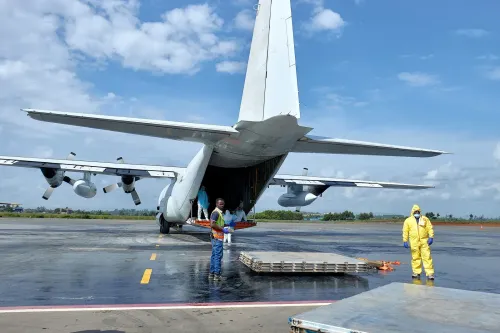
The Trump administration characterised its response as unprecedented in speed and scope. 'President Trump has taken unprecedented steps to address the Ebola outbreak. We responded within 24 hours of the first confirmed case, mobilising a wide range of medical, humanitarian, operational and consular resources to rapidly respond,' a State Department official said.
The official also asserted that 'the United States continues to be the largest financial contributor to the Ebola response.' Washington has additionally imposed travel restrictions and screening measures on individuals who have recently visited affected countries, citing national security and public health imperatives.
The Call for Global Action
Beyond its own measures, the US explicitly pressed other nations to follow suit. 'The United States has stepped up. Now the world must do more to step up as well. Other countries must do their part to ensure this outbreak does not spread further. Action is required now,' the official said, adding that this includes 'financial contributions and implementing commonsense restrictions on travel from the affected area.'
This comes amid heightened concern over large-scale international gatherings. Washington specifically flagged the upcoming FIFA World Cup, noting that diplomatic engagement is under way to coordinate a common approach 'to protect our citizens, including the millions of visitors, fans, athletes and tourists expected' at the tournament.
Background on the Outbreak
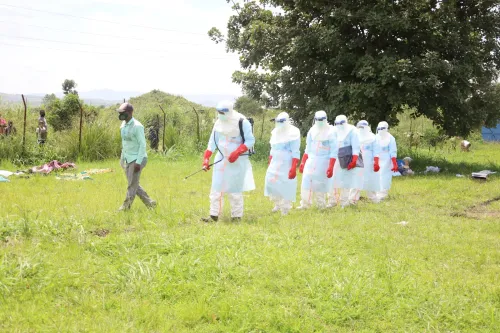
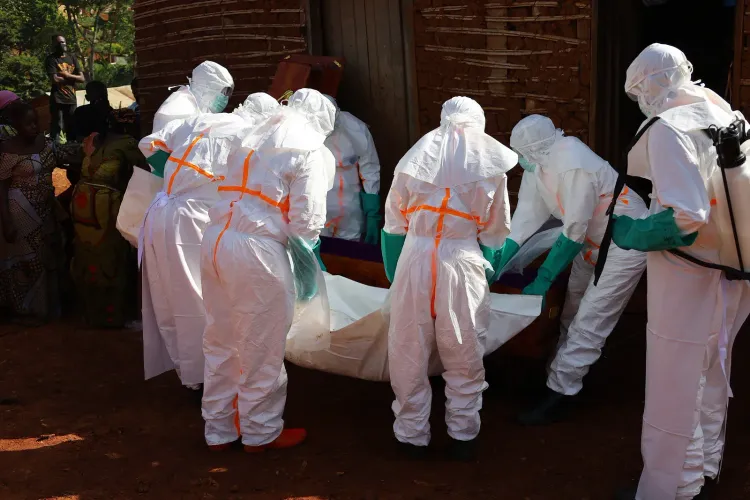
Ebola is a severe viral haemorrhagic fever that spreads through direct contact with infected bodily fluids. The disease has triggered multiple deadly outbreaks across Africa over several decades. Public health authorities typically rely on surveillance, contact tracing, dedicated treatment centres, and vaccination campaigns to bring outbreaks under control. The simultaneous presence of the virus in both the DRC and Uganda has raised the complexity of the current response, as it requires cross-border coordination between governments with differing health infrastructure capacities.
What Comes Next
The State Department said it is actively engaging governments around the world to align on a shared strategy. The pressure on other countries to increase financial contributions and enforce travel-related restrictions is expected to intensify in the coming days, particularly as the FIFA World Cup draws closer and the risk of international transmission remains a concern for health authorities.
Point of View
The assertion functions more as political positioning than a verifiable benchmark.
NationPress
24 Oct 2026
Frequently Asked Questions
What is the current Ebola outbreak situation in the DRC and Uganda?
An active Ebola outbreak is ongoing in both the Democratic Republic of the Congo and Uganda as of June 2025, prompting an international response led by the United States. The simultaneous spread across two countries has complicated containment efforts and raised concerns about cross-border transmission.
What steps has the US taken in response to the Ebola outbreak?
The US says it responded within 24 hours of the first confirmed case, deploying medical, humanitarian, operational, and consular resources. It has also imposed travel restrictions and screening on individuals arriving from Ebola-affected countries, and claims to be the largest financial contributor to the international response.
Why did Secretary Rubio call European Commission President Von der Leyen?
Secretary of State Marco Rubio called Ursula von der Leyen to coordinate US and European response efforts to the Ebola outbreak in the DRC and Uganda, according to the State Department. The call reflects Washington's push for broader allied participation in containing the virus.
How does the FIFA World Cup factor into the Ebola response?
The US has flagged the FIFA World Cup as a heightened transmission risk, given the millions of visitors, athletes, and tourists expected to travel internationally for the event. Washington says it is engaging governments diplomatically to coordinate protective measures for travellers.
What is Ebola and how does it spread?
Ebola is a severe viral haemorrhagic fever that spreads through direct contact with the bodily fluids of an infected person. It has caused multiple deadly outbreaks in Africa over several decades, and public health responses typically involve surveillance, contact tracing, treatment centres, and vaccination campaigns.