Bangladesh media questions Yunus-era US trade deal, urges BNP govt to rethink
Synopsis
Bangladesh's Yunus-era trade pact with the US is facing its sharpest media scrutiny yet — with The Daily Star calling it the most lopsided of the 10 ARTs signed globally, pointing to 179 binding 'shall' clauses mostly directed at Dhaka, zero-tariff promises that remain vague, and billions in Boeing and LNG commitments already locked in. The BNP government is caught between domestic pressure to renegotiate and the diplomatic cost of confronting Washington.
Key Takeaways
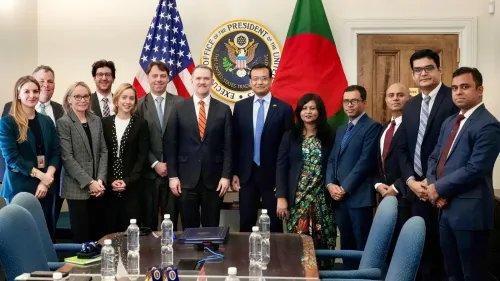
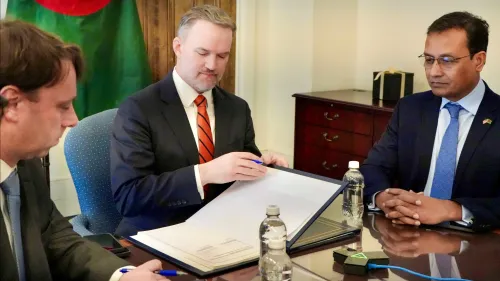
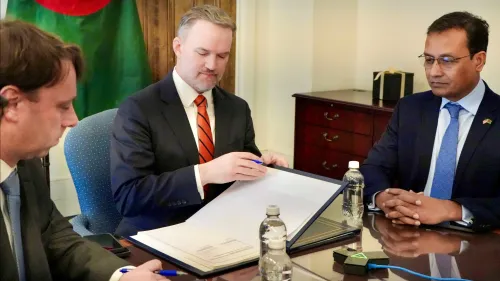
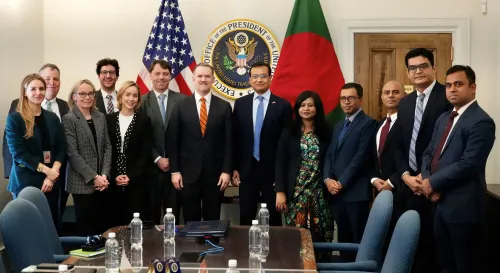
Bangladesh signed an Agreement on Reciprocal Trade (ART) with the United States under the Muhammad Yunus -led interim government, just three days before the national election that replaced it.
The Daily Star argues Bangladesh's ART is the most one-sided among the 10 countries that have signed such deals, citing 179 'shall' clauses mostly tied to Bangladeshi obligations.
Bangladesh's garment exports — its largest trade sector — face effective tariffs in the mid-20 per cent range , while the US has only promised a vague 'mechanism' for zero-tariff access.
A 12-year LNG deal with Gunvor USA covering 117 cargoes (~ 7.5 million tonnes ) through 2038 was cleared without competitive bidding, according to reports.
Independent MP Rumeen Farhana and student unions have called for parliamentary scrutiny; the BNP government has not yet announced a position on renegotiation.
More than seven months after Bangladesh — then governed by the Muhammad Yunus-led interim administration — signed an Agreement on Reciprocal Trade (ART) with the United States, scrutiny of the deal continues to intensify. Bangladeshi media outlets and political voices are now urging current Prime Minister Tarique Rahman's Bangladesh Nationalist Party (BNP) government to reconsider the treaty, citing both its terms and the circumstances under which it was signed.
The Case Against the ART
An analysis published in The Daily Star on Tuesday, 22 September 2026 argued that among the 10 countries that have actually signed an ART with the US, Bangladesh's agreement carries 'the strongest claim to being the most one-sided.' The article clarified that this assessment rests not on any single unusual clause but on 'the aggregate — how the obligations stack up and the peculiar circumstances under which Dhaka signed at all.'
A textual count cited in the Bangladeshi press found that the ART uses 179 instances of the mandatory word 'shall', most of which are attached to Bangladeshi commitments. The Daily Star acknowledged this is 'an imperfect measure of substantive burden' but concluded that the broader text 'leaves little doubt about the direction of the obligations: Bangladesh promises considerably more than Washington does.'
The Timing Controversy
Critics have zeroed in on when the agreement was inked. The interim administration reportedly signed the ART just three days before the national election that would replace it — without an elected Parliament debating or ratifying the text. The Daily Star questioned what the haste achieved: 'Looking back, it's hard to identify what that haste bought.'
Independent Parliamentarian Rumeen Farhana has called for parliamentary scrutiny of the deal, arguing it should have waited for an elected government to take office. The new Parliament has not formally examined the treaty since assuming power, according to reports.
Public Protests and Political Pushback
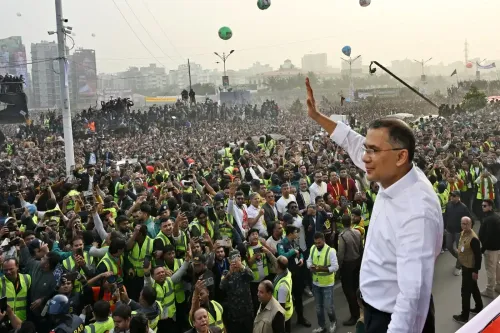
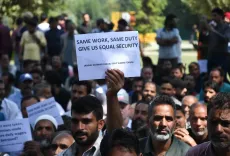
In mid-April, student unions and several civil society organisations held protests in Dhaka, denouncing the ART as a 'treaty of subjugation.' Protesters alleged the agreement undermines Bangladesh's autonomy in tariff-setting and labour regulation. The BNP government has reportedly been cautious about reopening negotiations, fearing that any renegotiation bid could strain bilateral relations with Washington.
Boeing Purchases and the LNG Deal
The trade deal's backdrop includes significant procurement commitments. In July 2025, Bangladesh was reported to have raised its planned Boeing aircraft purchase from 14 to 25 planes, though Bangladeshi officials subsequently clarified that no separate agreement beyond Biman Bangladesh Airlines's existing 14-aircraft order had been signed. US envoy Sergio Gor said in late August that Bangladesh had committed 'billions of dollars' to procure additional Boeing aircraft — 'significantly increasing' the initial order — without specifying numbers.
Separately, Bangladesh's Cabinet last month cleared a 12-year liquefied natural gas (LNG) deal with Gunvor USA, covering 117 cargoes — nearly 7.5 million tonnes — through 2038. The Daily Star reported that 'the contract was awarded without competitive bidding, through an unusual state-to-state pricing formula negotiated with a private trading firm.' The government has defended the deal as a hedge against supply risks from Qatar amid regional tensions.
The Reciprocal Gap
At the heart of the concern is whether Bangladesh is receiving commensurate benefits. The country's garment exports — its largest trade sector — reportedly face effective tariffs in the mid-20 per cent range due to stacked duties under current arrangements. The US has offered only a 'mechanism' for zero-tariff access tied to US cotton sourcing, with no firm guarantees attached.
'Bangladesh is executing binding, multi-billion-dollar purchase commitments in real time against a promise that, more than half a year after signing, remains entirely undrawn and vague,' The Daily Star concluded. The article also flagged unresolved legal and political dimensions of the agreement. With the BNP government yet to announce a formal position on renegotiation, pressure from domestic media, civil society, and Parliament appears to be building ahead of any diplomatic decision.
Point of View
Not procedural: an unelected caretaker government locked in binding, multi-billion-dollar commitments days before it was voted out — and the successor administration has neither ratified nor rejected them. The 179 mandatory 'shall' clauses directed overwhelmingly at Dhaka suggest this was less a reciprocal trade deal and more a procurement arrangement dressed in treaty language. Bangladesh's garment sector, the engine of its export economy, sits exposed with mid-20 per cent effective tariffs while the US side offers only a vague cotton-linked promise. The BNP government's reluctance to renegotiate reflects a real diplomatic dilemma — but silence is also a choice that cements asymmetric obligations by default.
NationPress
22 Sept 2026
Frequently Asked Questions
What is the Bangladesh-US Agreement on Reciprocal Trade (ART)?
The ART is a bilateral trade agreement signed between Bangladesh — then under the Muhammad Yunus-led interim government — and the United States. It is one of 10 such agreements the US has signed globally, and has drawn criticism for placing significantly more obligations on Bangladesh than on the US side.
Why is the timing of the Bangladesh ART controversial?
The interim government signed the ART just three days before the national election that replaced it, meaning no elected Parliament debated or approved the treaty before it was inked. The new BNP-led Parliament has also not formally scrutinised it since taking office, according to reports.
What are Bangladesh's main concerns about the trade deal?
Critics argue the deal is heavily skewed toward US interests, with 179 binding 'shall' clauses mostly attached to Bangladeshi commitments. Bangladesh's garment exports face effective tariffs in the mid-20 per cent range, while the US has only promised a vague 'mechanism' for zero-tariff access tied to US cotton, with no firm guarantees.
What are the Boeing and LNG commitments linked to the ART?
Bangladesh has reportedly made large-scale purchases alongside the deal: a planned Boeing order was said to have been raised from 14 to 25 aircraft in July 2025, though officials later said no separate order beyond the existing 14-aircraft deal had been signed. Bangladesh's Cabinet also cleared a 12-year LNG deal with Gunvor USA covering 117 cargoes — nearly 7.5 million tonnes — through 2038, awarded without competitive bidding.
Is the BNP government considering renegotiating the US trade deal?
As of now, the BNP government has not announced any plan to renegotiate. Officials have reportedly expressed concern that reopening the terms could strain Bangladesh's relationship with Washington, even as domestic pressure from media, civil society, and parliamentarians continues to mount.