Bhupender Yadav Flags Delhi-NCR Pollution Fight as Winter Looms
Synopsis
Union Environment Minister Bhupender Yadav has signalled that the government's fight against Delhi-NCR air pollution is unrelenting, posting a video message as the region enters its most dangerous pollution window — October through February — with GRAP and the CAQM as the key institutional tools.
Key Takeaways
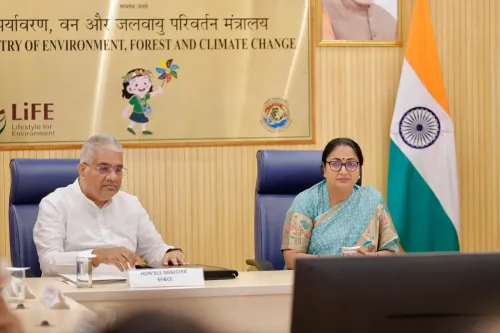
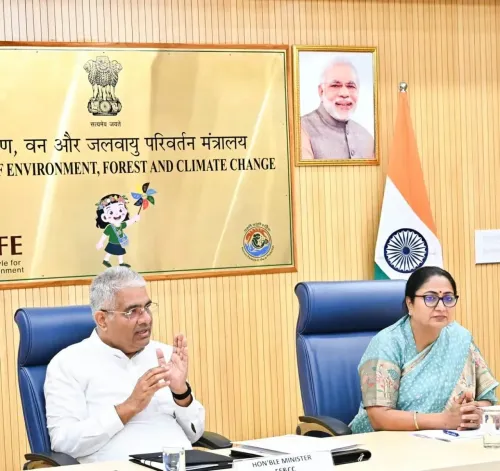
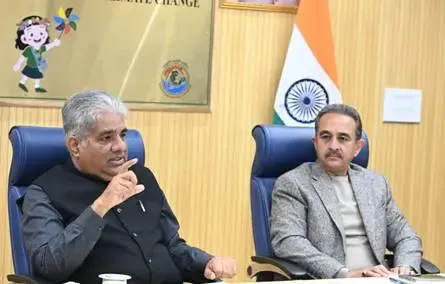
Union Environment Minister Bhupender Yadav posted on October 13, 2026 , reaffirming the government's continued campaign against Delhi-NCR air pollution.
Delhi-NCR air quality typically deteriorates sharply between October and February due to meteorological conditions, stubble burning, and local emissions.
The Commission for Air Quality Management (CAQM) , set up under a 2021 Act, coordinates pollution control across NCR states.
The Graded Response Action Plan (GRAP) , revised in 2017 , provides staged emergency restrictions that activate as AQI crosses defined thresholds each winter.
The Supreme Court and National Green Tribunal remain active oversight bodies, capable of issuing fresh directions mid-season.
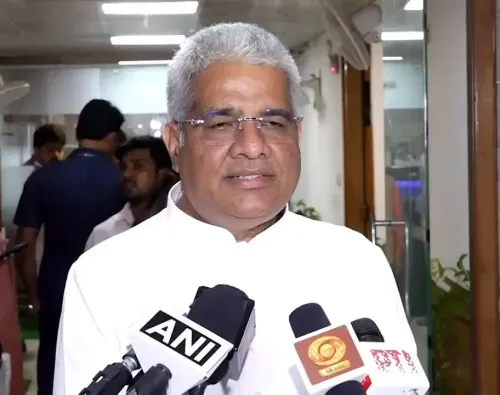
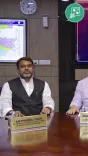
As October temperatures ease and the Delhi-NCR airshed braces for its annual toxic winter, Union Environment Minister Bhupender Yadav on Tuesday, October 13 signalled that the government's campaign against air pollution in the national capital region remains firmly on — posting a pointed reminder that the battle is ongoing.
'Delhi-NCR mein pradushan ke khilaf ladai lagatar jaari hai…' ('The fight against pollution in Delhi-NCR continues without pause…'), the minister wrote, accompanied by a video — an assertion that carries weight precisely because it comes at the hinge moment of the year: the weeks when crop residue fires, falling wind speeds, and cooler nights conspire to trap pollutants over the region.
Why October Is the Crunch Month
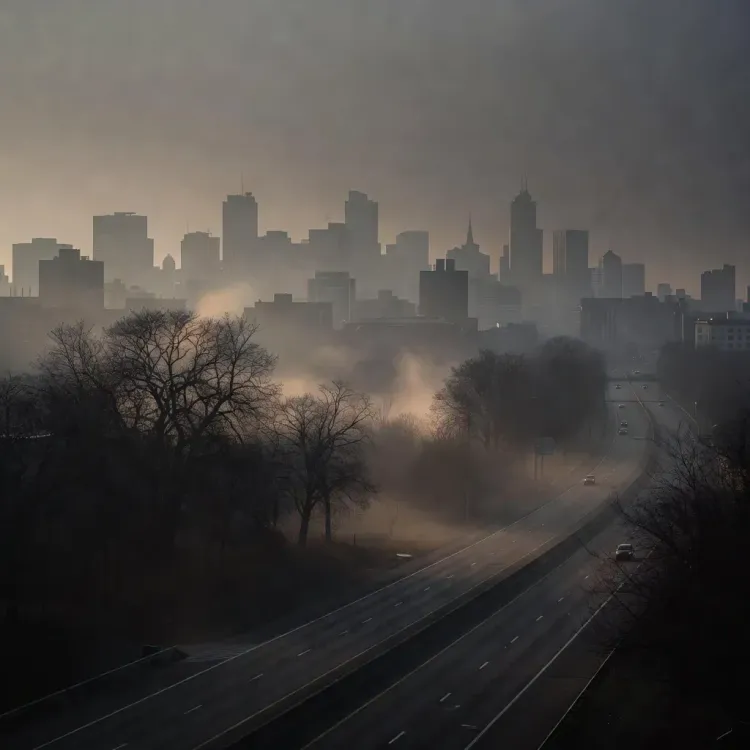
Delhi-NCR's air quality historically nosedives between October and February. The meteorological shift — falling temperatures, lower wind speeds, and a sinking boundary layer — acts like a lid over the region, trapping emissions from traffic, industry, construction dust, and, critically, the seasonal burning of paddy stubble by farmers in Punjab, Haryana, and western Uttar Pradesh. The result is an annual public-health emergency that courts, regulators, and successive governments have struggled to resolve.
The timing of Yadav's post is not incidental. By mid-October the region is typically on the cusp of the first serious pollution spikes of the season — exactly the window when regulatory machinery must be most alert.
GRAP and the CAQM: The Machinery Behind the Message
The institutional backbone of the government's response rests on two pillars. The Commission for Air Quality Management (CAQM) — established first by ordinance in 2020 and given statutory permanence by an Act in 2021 — coordinates pollution control across NCR states, replacing earlier fragmented bodies. Alongside it, the Graded Response Action Plan (GRAP), revised in 2017 and activated every winter since, provides a staged escalation framework: as the Air Quality Index climbs through defined thresholds, progressively stricter restrictions snap into place — covering truck entry, construction activity, school operations, and industrial output.
The Supreme Court and the National Green Tribunal have historically played an active oversight role, issuing directions that can tighten or extend GRAP stages mid-season. Watching whether the 2026–27 winter draws fresh judicial intervention will be a key indicator of how seriously enforcement holds.
A Recurring Crisis, a Reaffirmed Commitment
For millions of Delhi-NCR residents — commuters breathing through masks, parents keeping children indoors on red-alert days, patients with respiratory conditions monitoring AQI apps — the minister's signal matters less as a headline and more as a prompt: is the machinery actually running? The CAQM's inter-state coordination, the state pollution boards' monitoring networks, and the on-ground enforcement of stubble-burning bans will determine whether the commitment translates into breathable air.
The fight, as Yadav puts it, is lagatar jaari — unceasing. The next few weeks will show whether the machinery matches the message.
Point of View
Areas where institutional gaps have historically undermined political intent. Whether the 2026–27 winter season delivers tighter enforcement than its predecessors will ultimately define how the commitment is judged.
NationPress
13 Oct 2026
Frequently Asked Questions
What is GRAP and how does it work in Delhi-NCR?
The Graded Response Action Plan (GRAP) is a staged emergency framework for Delhi-NCR that imposes progressively stricter restrictions on trucks, construction, schools, and industries as the Air Quality Index rises through defined thresholds each winter.
What is the Commission for Air Quality Management?
The Commission for Air Quality Management (CAQM) is a statutory body established by an Act of Parliament in 2021 to coordinate air pollution control measures across Delhi and the NCR states of Haryana, Uttar Pradesh, and Rajasthan.
Why does Delhi-NCR pollution spike every October?
From October onward, falling temperatures and lower wind speeds trap pollutants close to the ground. This coincides with the paddy-stubble burning season in Punjab and Haryana, sharply worsening air quality across the national capital region.
What has Bhupender Yadav said about Delhi air pollution?
On October 13, 2026, Union Environment Minister Bhupender Yadav posted that the fight against pollution in Delhi-NCR is ongoing, reinforcing the government's commitment as the region entered the high-risk winter pollution window.
Can the Supreme Court intervene in Delhi pollution control?
Yes. The Supreme Court and the National Green Tribunal have historically issued binding directions on GRAP enforcement, truck entry bans, and construction restrictions, and can step in with fresh orders at any point during the winter season.