Bhupender Yadav Inaugurates 13 CAAQMS, Reviews Delhi ICCC

Synopsis
Union Environment Minister Bhupender Yadav, Delhi CM Rekha Gupta, and Environment Minister M.S. Sirsa inaugurated 13 new CAAQMS and reviewed the AI-powered Integrated Command and Control Centre at Shastri Park, bolstering Delhi's real-time pollution surveillance as the winter smog season begins.
Key Takeaways
13 new CAAQMS were inaugurated on October 13, 2026 to monitor PM2.5 and PM10 levels across Delhi.
The Integrated Command and Control Centre (ICCC) at Shastri Park uses AI-powered cameras, GPS technology, and real-time data for round-the-clock pollution surveillance.
Union Environment Minister Bhupender Yadav reviewed operations alongside Delhi CM Rekha Gupta and Delhi Environment Minister M.S.
The initiative builds on the National Clean Air Programme (NCAP, 2019) and the Commission for Air Quality Management (CAQM, 2021) framework for Delhi-NCR.
The launch coincides with the start of Delhi's high-risk winter air quality period driven by stubble burning, low temperatures, and urban emissions.
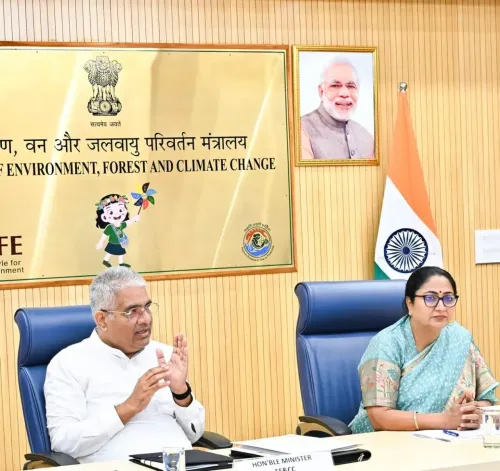
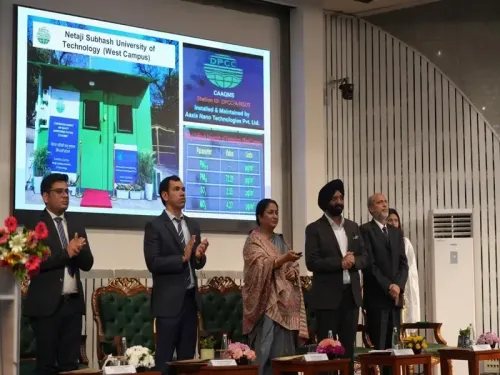
Delhi's war on winter smog just got a high-tech nerve centre. Union Environment Minister Bhupender Yadav visited the Integrated Command and Control Centre (ICCC) at Shastri Park, Delhi, on Tuesday, October 13, 2026, alongside Delhi Chief Minister Rekha Gupta and Delhi Environment Minister M.S. Sirsa — and the trio inaugurated 13 new Continuous Ambient Air Quality Monitoring Stations (CAAQMS) designed to track PM2.5 and PM10 concentrations in real time.
What the Shastri Park centre can now see — and act on
The ICCC is not a dashboard on a wall. As Yadav described it, the centre is equipped with AI-powered cameras, real-time data feeds and GPS technology, giving operators round-the-clock visibility over every identified pollution hotspot across the capital. The idea is to compress the gap between detection and enforcement — a source of chronic frustration in earlier, manually driven approaches to Delhi's air quality crackdowns.
The 13 new CAAQMS expand the city's sensor grid, feeding granular particulate data directly into this command infrastructure. PM2.5 — the fine particulate matter most damaging to lung tissue — has long been Delhi's most dangerous and most contested pollutant, spiking every October as the city moves into its hazardous winter window.
The policy architecture behind the cameras
The launch did not happen in a vacuum. India's National Clean Air Programme (NCAP), rolled out in 2019, set targets to reduce particulate pollution in 131 non-attainment cities — Delhi prominent among them. Two years later, the Commission for Air Quality Management (CAQM) was constituted specifically to synchronise multi-state responses across the Delhi-NCR region, a recognition that no single government could fix the airshed alone.
The ICCC and its expanded monitoring network represent the operational layer that sits on top of that legal and institutional framework — translating policy mandates into enforceable, data-driven daily action. Minister Yadav framed the initiative explicitly within Prime Minister Narendra Modi's direction: 'Under the leadership of PM Shri Narendra Modi ji, we are working on mission mode to tackle every major source of pollution.'
Why October is the moment that matters
Timing is everything here. October marks the start of Delhi's annual air quality emergency — a convergence of stubble burning from neighbouring states, dropping temperatures that trap pollutants, and vehicular and industrial emissions. Deploying new monitoring infrastructure precisely at this inflection point is a clear signal that the Centre and the Delhi government intend this winter to be operationally different from the last.
The data these 13 stations generate will feed not just enforcement decisions but also parliamentary scrutiny — expect questions on CAAQMS network coverage and winter action plan outcomes when the legislature reconvenes. For Delhi's residents, the immediate test is simple: does the AI on the screen translate into cleaner air outside?
Point of View
With AI and GPS framing environmental enforcement as modern and data-driven rather than reactive and manual. Placed within the NCAP and CAQM architecture, the action signals an intent to close the persistent gap between India's ambitious clean air targets and on-ground enforcement. The real test arrives in the data: whether expanded sensor coverage and command infrastructure translate into measurable PM2.5 reductions by the end of this winter season.
NationPress
13 Oct 2026
Frequently Asked Questions
What is the Integrated Command and Control Centre at Shastri Park?
The ICCC at Shastri Park, Delhi, is a centralised facility equipped with AI-powered cameras, GPS technology, and real-time data systems that monitors pollution hotspots and coordinates enforcement action around the clock.
What are CAAQMS and why are they important for Delhi?
Continuous Ambient Air Quality Monitoring Stations (CAAQMS) measure PM2.5 and PM10 particulate levels in real time, providing the data governments need to issue health alerts, trigger graded response actions, and hold polluters accountable.
How many new air quality monitoring stations were inaugurated in Delhi on October 13, 2026?
13 new CAAQMS were inaugurated on October 13, 2026, during a visit by Union Environment Minister Bhupender Yadav, Delhi CM Rekha Gupta, and Delhi Environment Minister M.S. Sirsa.
What is India's National Clean Air Programme?
The National Clean Air Programme (NCAP), launched in 2019, aims to reduce particulate pollution in 131 non-attainment cities across India, with Delhi being one of the primary targets.
What is the Commission for Air Quality Management and what does it do?
The Commission for Air Quality Management (CAQM), constituted in 2021, coordinates multi-agency, multi-state responses to air pollution across the Delhi-NCR region, with powers to direct state governments and industries.