Bihar Uncovers 18 Rare Manuscripts from Ancient Temple
Synopsis
A remarkable discovery in Bihar sees the recovery of 18 rare manuscripts from the Shri Thakur Radha Raman Lal Ji Temple in Chandipur. This find, part of the Gyan Bharatam Mission, aims to preserve India's cultural heritage.
Key Takeaways
18 rare manuscripts recovered in Nawada, Bihar.
Discovery part of the Gyan Bharatam Mission.
Manuscripts offer insights into India's cultural heritage.
Digitization aimed at preserving and making texts accessible.
Community involvement is encouraged in preserving heritage.
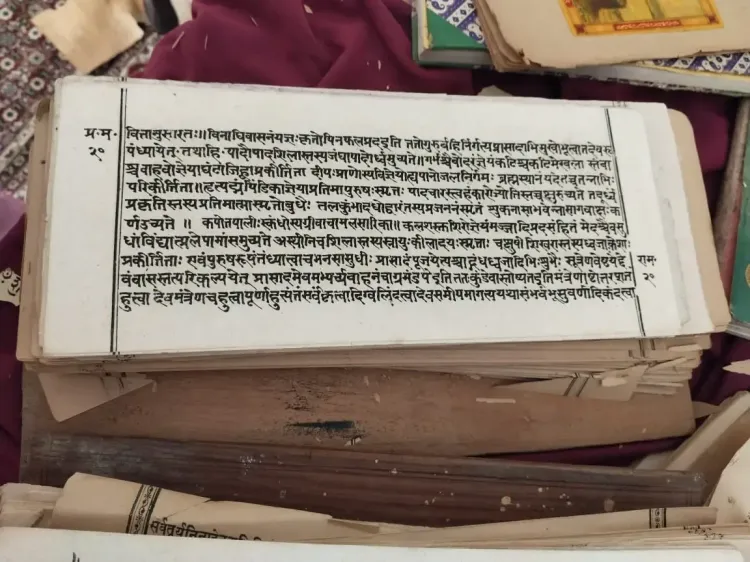
Patna, April 18 (NationPress) In an extraordinary find, a total of 18 rare manuscripts have been retrieved from an ancient temple located in Chandipur village, within the Warisaliganj block of Nawada district, sparking significant interest throughout the area.
This discovery was made as part of the Centre's Gyan Bharatam Mission, with the digitization process already in progress.
The manuscripts were unearthed at the Shri Thakur Radha Raman Lal Ji Temple, a historic edifice constructed in 1883 AD in Chandipur village.
During an inspection led by Deputy Development Commissioner Neelima Sahu on Saturday, a comprehensive survey uncovered a total of 18 handwritten and block-printed manuscripts.
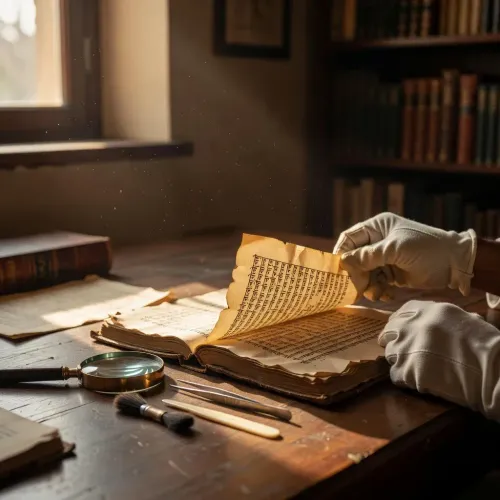
These texts are believed to possess considerable historical and cultural significance, providing insights into India's rich intellectual heritage.
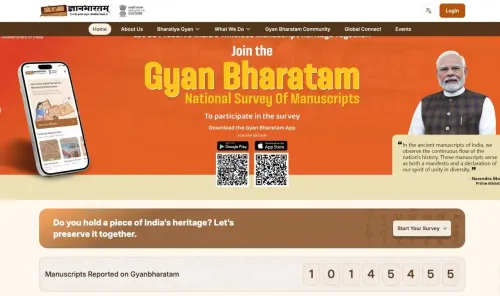
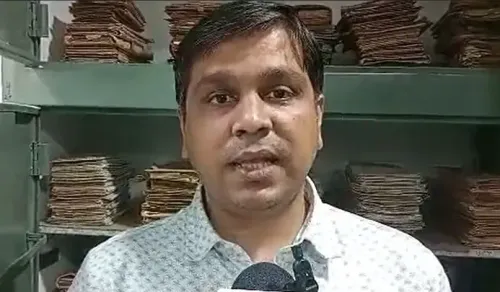
All recovered manuscripts have been cataloged on the official 'Gyan Bharatam' digital platform.
A district official noted that this initiative marks a significant step towards preserving India's cultural heritage and making it accessible for future generations.
The mission's goal is to identify and protect ancient manuscripts found across the country, many of which are inscribed on palm leaves, birch bark, textiles, and delicate paper.
Experts assert that these manuscripts often contain a treasure trove of knowledge covering various fields, including Ayurveda and traditional medicine, literature and philosophy, astronomy and science, as well as local and regional history.
By employing modern technology and artificial intelligence for digitization, the government aims to incorporate these texts into a national digital repository, ensuring access for both researchers and the public.
The administration has clarified that the ownership of the manuscripts will remain with their current custodians, while the government will focus exclusively on scientific digitization and preservation efforts.
Officials have also encouraged citizens to provide information related to similar manuscripts, highlighting the importance of community involvement in safeguarding India's heritage.
The 18 manuscripts found in Chandipur represent more than just historical documents; they are vibrant symbols of India's cultural and intellectual legacy.
Their preservation under the Gyan Bharatam Mission is anticipated to establish a valuable knowledge base for future generations.
Point of View
The recovery of these manuscripts represents a vital effort in preserving India's diverse cultural heritage. The Gyan Bharatam Mission's initiative to digitize and safeguard these texts is commendable, ensuring that future generations can access and appreciate the wealth of knowledge embedded in these historical documents.
NationPress
16 Sept 2026
Frequently Asked Questions
Where were the manuscripts found?
The manuscripts were discovered at the Shri Thakur Radha Raman Lal Ji Temple in Chandipur village, Nawada district.
What is the Gyan Bharatam Mission?
The Gyan Bharatam Mission is an initiative by the Indian government aimed at identifying, preserving, and digitizing ancient manuscripts across the country.
What types of knowledge do these manuscripts contain?
These manuscripts often encompass knowledge in various fields, including Ayurveda, literature, philosophy, astronomy, and local history.
Will the ownership of the manuscripts change?
No, the ownership of the manuscripts will remain with their current custodians, while the government will focus on digitization and preservation.
How can citizens contribute to this mission?
Citizens are encouraged to provide information about similar manuscripts to support the preservation of India's cultural heritage.