Vaishnaw: CG Semi Sanand to Begin Commercial Production
Synopsis
Union Minister Ashwini Vaishnaw announced on 4 July 2026 that CG Semi in Sanand, Gujarat is set to begin commercial semiconductor production — a landmark moment for India's Rs 76,000 crore India Semiconductor Mission and its Atmanirbhar Bharat electronics agenda.
Key Takeaways
Union Minister Ashwini Vaishnaw announced on 4 July 2026 that CG Semi, Sanand will begin commercial semiconductor production.
Sanand, Gujarat is an established industrial hub and a key node in India's high-technology manufacturing strategy.
The announcement falls under the India Semiconductor Mission , approved in 2021 with an outlay of Rs 76,000 crore .
The Production Linked Incentive (PLI) scheme for semiconductors, expanded in 2022-23 , has supported investment attraction in this sector.
Commercial production marks a transition from investment and construction to active operations — a threshold closely watched by industry and government.
The milestone is part of India's broader Atmanirbhar Bharat push to reduce near-total dependence on imported chips.
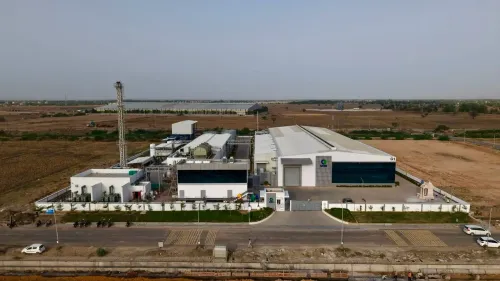
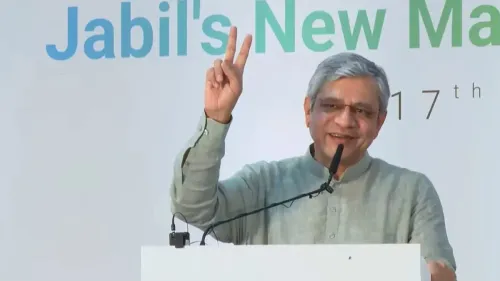
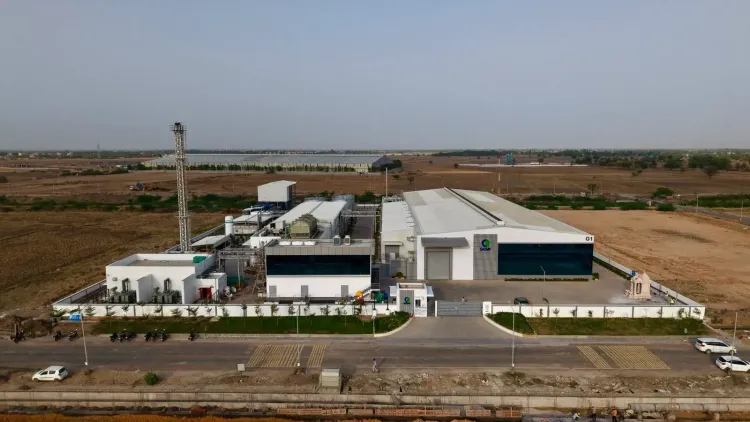
Union Minister Ashwini Vaishnaw announced on Saturday, 4 July 2026 that a semiconductor facility — CG Semi, located in Sanand, Gujarat — is set to begin commercial production, marking a significant milestone in India's push for domestic chip manufacturing.
Context
The minister's post, brief but pointed, stated: 'Semiconductor facility to begin commercial production' — with the location pinned to CG Semi, Sanand. Sanand, an established industrial hub in Gujarat, has in recent years been positioned as a preferred destination for high-technology manufacturing investments, drawing interest from electronics and advanced manufacturing sectors.
The announcement signals that at least one unit under India's semiconductor push has crossed from the investment-and-construction phase into active commercial operations — a threshold that has been closely watched by industry and policymakers alike.
Policy Backdrop
The development sits within the framework of the India Semiconductor Mission (ISM), approved by the central government in 2021 with an outlay of Rs 76,000 crore. The mission, administered by the Ministry of Electronics and Information Technology (MeitY), was designed to catalyse domestic fabrication, assembly, testing, and packaging capacity to reduce India's near-total dependence on imported chips.
Complementing the ISM, the Production Linked Incentive (PLI) scheme for semiconductors and electronics was expanded in 2022-23 to attract global chip manufacturers and anchor investments across the supply chain. Gujarat has emerged as one of the central nodes in this industrial strategy, benefiting from state-level infrastructure and policy support.
The broader effort forms part of the Atmanirbhar Bharat agenda in electronics — a recognition that semiconductor supply-chain vulnerabilities, exposed sharply during the global chip shortages of the early 2020s, pose strategic and economic risks that domestic production can help mitigate.
Stakeholders and Impact
The commencement of commercial production at a domestic semiconductor unit has direct implications for electronics manufacturers across India who currently source chips almost entirely from overseas suppliers, primarily in East Asia. A domestic supply source, even at initial scale, introduces an alternative node in the procurement chain.
Gujarat's industrial ecosystem stands to benefit from the downstream employment, ancillary services, and supply-chain activity that a functioning semiconductor facility generates. For the broader sector, the milestone provides a proof-of-concept that India's fiscal incentives and industrial-corridor investments can translate into operational capacity.
What's Next
Attention will now turn to the ramp-up trajectory of the CG Semi, Sanand facility — specifically, the product categories it will serve and the volume of output it can deliver in its initial phase. Policymakers and industry will also watch whether this milestone accelerates investment decisions at other approved semiconductor units still in development stages.
The Ministry of Electronics and IT is expected to track commercial production milestones across all ISM-approved projects as indicators of the mission's on-ground progress. With Vaishnaw holding direct charge of both the electronics and information technology portfolio, further announcements on the semiconductor pipeline are likely as additional units approach readiness.
Point of View
Which has staked considerable credibility — and Rs 76,000 crore in public funds — on the India Semiconductor Mission delivering tangible output. A facility crossing into commercial production, rather than remaining a ribbon-cutting promise, shifts the narrative from aspiration to execution. For Vaishnaw, who holds the electronics portfolio, the timing reinforces a pattern of using X to personally flag policy wins at the moment of fruition. The broader implication is that India's semiconductor ambitions, long seen as a decade-long bet, may be entering a phase where milestone announcements become more frequent — and more verifiable.
NationPress
2 Oct 2026
Frequently Asked Questions
What is CG Semi in Sanand?
CG Semi is a semiconductor facility located in Sanand, Gujarat, which Union Minister Ashwini Vaishnaw announced on 4 July 2026 is set to begin commercial production. Specific details on its ownership and capacity are not yet officially disclosed in public records.
What is the India Semiconductor Mission?
The India Semiconductor Mission is a central government initiative under MeitY, approved in 2021 with an outlay of Rs 76,000 crore, aimed at building domestic semiconductor fabrication, assembly, testing, and packaging capacity to reduce India's reliance on chip imports.
Why is Sanand important for India's semiconductor plans?
Sanand in Gujarat is an established industrial hub that has been positioned as a preferred location for high-technology manufacturing. It benefits from state-level infrastructure support and has attracted electronics and advanced manufacturing investments as part of India's Atmanirbhar Bharat strategy.
What does commercial semiconductor production mean for India?
Commercial production at a domestic semiconductor facility means India has moved from the investment and construction phase to actually manufacturing chips on home soil, which can reduce import dependence, strengthen supply-chain resilience, and support downstream electronics manufacturers.
What is Ashwini Vaishnaw's role in India's semiconductor policy?
Ashwini Vaishnaw is the Union Minister of Electronics and Information Technology and is directly responsible for implementing semiconductor and electronics policy, including overseeing the India Semiconductor Mission and related PLI schemes.