CM Bhajan Lal Calls Rajasthan to Save Every Drop of Water
Synopsis
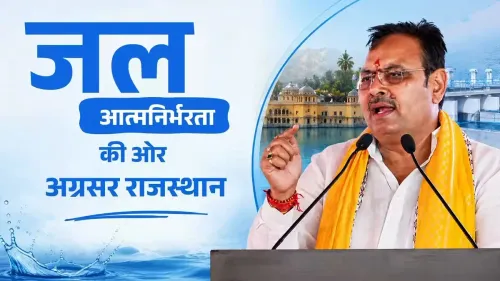
Rajasthan Chief Minister Bhajan Lal Sharma on 24 July 2026 urged citizens to conserve every drop of water, calling for collective effort to achieve a water self-reliant Rajasthan — reinforcing a long-standing state policy priority amid the monsoon season.
Key Takeaways
CM Bhajan Lal Sharma posted a public water conservation appeal on 24 July 2026 , calling Rajasthan residents to help achieve Jal Aatmanirbhar Rajasthan .
Rajasthan is India's largest state by area and faces chronic water scarcity due to its arid and semi-arid geography.
The Mukhyamantri Jal Swavalamban Abhiyan , launched in 2016 , established village-level water self-reliance as a formal state goal through rainwater harvesting structures.
The central Jal Jeevan Mission (launched 2019 ) targets functional household tap connections in rural areas, with Rajasthan as a key implementing state.
The appeal coincides with the monsoon season , the most critical period for groundwater recharge and reservoir replenishment in the state.
Rural households and farmers are the primary stakeholders, with water access directly affecting agricultural output and daily livelihoods.
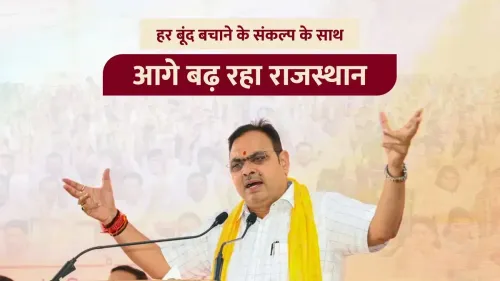
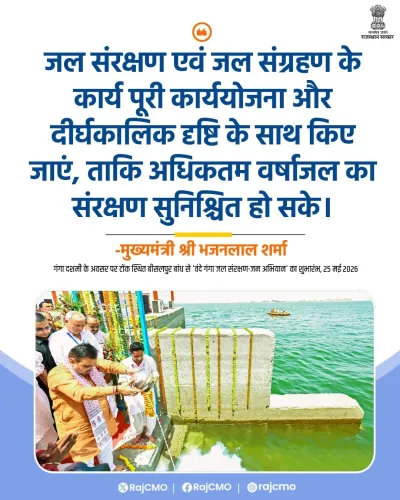
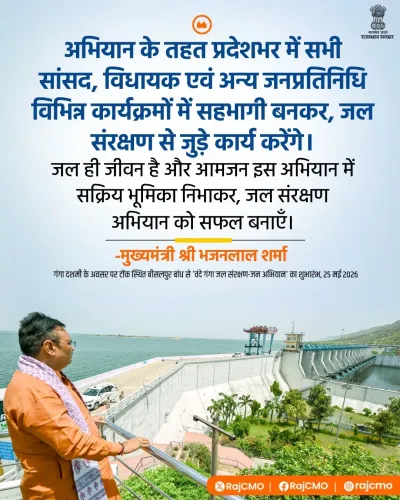
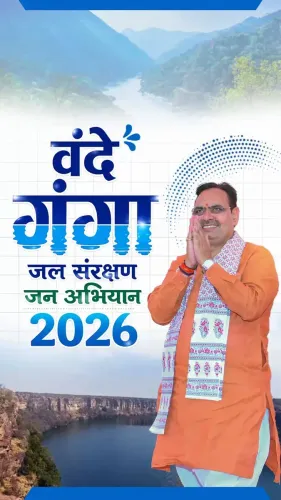
Rajasthan Chief Minister Bhajan Lal Sharma on Friday, 24 July 2026, issued a public call for collective water conservation, urging citizens to contribute to making Rajasthan water self-reliant by preserving every drop of water. The appeal, shared on X, underscores the state government's continued focus on water security in India's largest and most arid state.
Context
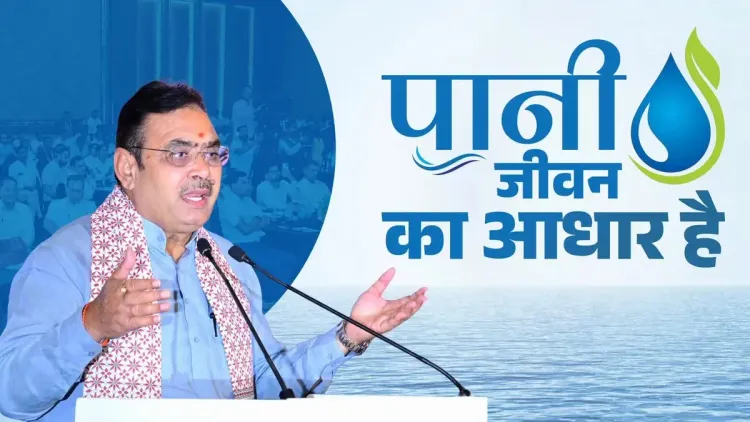
CM Sharma posted in Hindi: 'जल जीवन का आधार है और इसका संरक्षण हम सभी की जिम्मेदारी है' ('Water is the foundation of life and its conservation is the responsibility of all of us'). He called on residents to conserve each drop of water and contribute meaningfully toward the goal of a Jal Aatmanirbhar Rajasthan — a water self-reliant Rajasthan. The message was accompanied by a video, amplifying its outreach.
The appeal arrives in the midst of the monsoon season, a critical window for rainwater harvesting and groundwater recharge across Rajasthan's arid and semi-arid districts, where water availability remains chronically low compared to the national average.
Policy Backdrop
Rajasthan has a long policy lineage on water conservation. The Mukhyamantri Jal Swavalamban Abhiyan, first launched in 2016, sought to achieve village-level water self-reliance through community-built structures such as check dams, tanka systems, and bunds. The scheme institutionalised the idea of jal aatmanirbharta (water self-reliance) as a state-level goal.
At the national level, the Jal Jeevan Mission, launched in 2019, aims to provide functional household tap connections to every rural home, with states including Rajasthan responsible for on-ground implementation. CM Sharma's post aligns with both these frameworks, reinforcing that supply-side infrastructure must be matched by demand-side conservation behaviour among citizens.
Successive governments in Rajasthan — regardless of party — have prioritised water harvesting and groundwater recharge given the state's low and erratic rainfall and its high dependence on agriculture. CM Sharma, who assumed office in December 2023, has continued this policy emphasis as part of the BJP government's development agenda for the state.
Stakeholders and Impact
The communities most directly affected by water scarcity in Rajasthan are rural households and farmers, who depend on seasonal rainfall, rivers, and groundwater for drinking water and irrigation. In drought-prone districts, women and girls often bear the burden of water fetching, making conservation a livelihood and gender issue as much as an environmental one.
A sustained push for water self-reliance — backed by both community participation and state infrastructure — has the potential to reduce dependence on tanker supply, lower agricultural distress during dry spells, and improve groundwater tables over the medium term. CM Sharma's public appeal seeks to activate citizen responsibility as a complement to government schemes.
What's Next
State-level progress reports on tap water coverage under the Jal Jeevan Mission and the number of groundwater recharge structures built under conservation campaigns are expected to be key metrics ahead of Rajasthan's next budget session. The monsoon period offers the state its best annual opportunity to replenish reservoirs and aquifers, making community awareness drives like this one especially timely. Whether the government follows the post with a formal programme announcement or a district-level conservation drive will determine the operational weight behind the message.
Point of View
The post deliberately echoes a vocabulary central to the BJP's national brand, applying it at the state level to water security. The timing during monsoon is strategically sound: it allows the government to claim credit for conservation awareness precisely when citizen action can yield measurable results in groundwater recharge. Whether this translates into a concrete programme or remains a public messaging exercise will define how much policy weight the appeal ultimately carries.
NationPress
25 Jul 2026
Frequently Asked Questions
What did Rajasthan CM Bhajan Lal Sharma say about water conservation?
CM Bhajan Lal Sharma called water the foundation of life and urged all citizens to conserve every drop, contributing to the goal of making Rajasthan water self-reliant. He made the appeal in a post on X on 24 July 2026.
What is Jal Aatmanirbhar Rajasthan?
Jal Aatmanirbhar Rajasthan refers to the goal of making Rajasthan self-reliant in water through conservation, rainwater harvesting, and groundwater recharge — a vision that has been pursued through schemes like the Mukhyamantri Jal Swavalamban Abhiyan since 2016.
What is the Mukhyamantri Jal Swavalamban Abhiyan?
The Mukhyamantri Jal Swavalamban Abhiyan is a Rajasthan state scheme launched in 2016 to promote rainwater harvesting and community-led water conservation through village-level structures such as check dams and tanks.
Why is water conservation so important for Rajasthan?
Rajasthan is India's largest state by area and is largely arid and semi-arid, with low and erratic rainfall. This makes it highly vulnerable to water scarcity, affecting both drinking water access and agricultural productivity for millions of rural households and farmers.
What is the Jal Jeevan Mission and how does it relate to Rajasthan?
The Jal Jeevan Mission is a central government scheme launched in 2019 to provide functional household tap connections in rural India. Rajasthan is one of the key implementing states, and the mission complements state-level conservation efforts by improving water supply infrastructure.