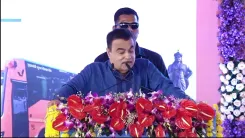
CM Bhupendra Patel marks 12 years of Make in India

Synopsis
Gujarat Chief Minister Bhupendra Patel marked 12 years of the Make in India programme on 25 September 2026, crediting PM Modi's leadership and framing the initiative as the cornerstone of India's Viksit Bharat 2047 goal, with ambitions spanning semiconductors to shipbuilding.
Key Takeaways
Make in India completed 12 years on 25 September 2026 , originally launched in September 2014 by PM Narendra Modi.
Gujarat CM Bhupendra Patel described the programme as an 'unprecedented revolution in manufacturing, innovation and exports.' Patel invoked a 'chips to ships' formulation, signalling ambitions spanning semiconductors to shipbuilding.
The initiative has been linked to Atmanirbhar Bharat and Production Linked Incentive (PLI) schemes rolled out from 2020 onward.
Patel framed Make in India as the foundational pillar of the Viksit Bharat by 2047 development target.
India's stated shift from domestic consumption to a 'Make for the World' supply-chain leadership role is a central theme of the anniversary messaging.
Twelve years after Prime Minister Narendra Modi planted a flag in the ground of Indian ambition, Gujarat Chief Minister Bhupendra Patel has joined the anniversary chorus — but with a frame that reaches well beyond ceremony. On Friday, 25 September 2026, Patel posted a message saluting the milestone, arguing that Make in India has matured from a branding exercise into what he called an 'unprecedented revolution in manufacturing, innovation and exports.'
Writing in Hindi, Patel offered congratulations to the nation — 'समस्त देशवासियों को हार्दिक बधाई' ('heartfelt congratulations to all citizens') — before outlining the ambition at the programme's core: that India is no longer content merely to consume, but is moving toward a 'Make for the World' posture, seeking to lead global supply chains rather than simply plug into them.
From 'chips to ships' — the ambition on display
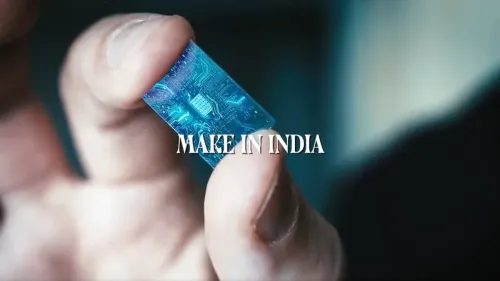
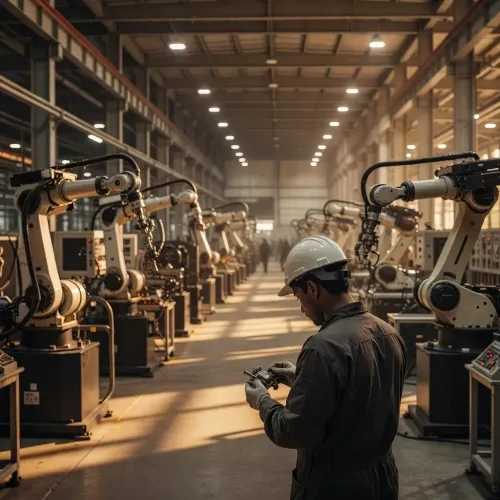
The phrase Patel reached for — 'chips to ships' — is a deliberate shorthand for the breadth of industrial sectors the programme targets. Semiconductors and shipbuilding sit at opposite ends of the complexity spectrum, and invoking both in the same breath signals that the government's manufacturing pitch is no longer confined to labour-intensive assembly. The post credits the combination of local talent, modern technology, and large-scale infrastructure investment as the engines pulling foreign and domestic capital into India.
Make in India was launched in September 2014, positioning India as a global manufacturing destination and offering a regulatory and incentive framework to attract foreign direct investment. From 2020 onward, it was bolstered by the Atmanirbhar Bharat ('self-reliant India') push and a suite of Production Linked Incentive (PLI) schemes that extended manufacturing subsidies across sectors from mobile phones to pharmaceuticals to solar panels.
Patel's message and the Viksit Bharat arc
Patel explicitly ties the programme to the government's long-horizon goal: Viksit Bharat by 2047, the centenary of independence. He describes Make in India as the 'strongest foundation' for that vision — framing twelve years of industrial policy not as a standalone initiative but as the load-bearing base of a generational project. The language is consistent with how the BJP has sought to narrate economic policy: milestones along a continuous arc rather than discrete wins.
Gujarat, which Patel leads, has historically been among the most active states in translating Make in India targets into ground-level investment pledges, using the biennial Vibrant Gujarat Summit as a showcase for manufacturing commitments. That state context gives his tribute a degree of institutional weight beyond a routine social-media salute.
The real test of the programme's twelve-year report card — progress on semiconductor fabrication plants and the shipbuilding corridor, both central to the 'chips to ships' claim — will show up in investment disbursement and export figures over the next budget cycle. Those numbers will either validate the anniversary rhetoric or complicate it.
Point of View
Making industrial policy feel like a civilisational project rather than a technocratic programme. The 'chips to ships' framing is notable: it signals a deliberate pivot in ambition from low-end assembly to high-complexity, high-value manufacturing, sectors where India's actual capacity is still being built out. For a state CM, endorsing a central programme this publicly also serves a local purpose — Gujarat's record as a flagship investment destination benefits when the national manufacturing brand is strong. Whether anniversary rhetoric translates into verifiable export and FDI milestones is the question that the next Union Budget will have to answer.
NationPress
25 Sept 2026
Frequently Asked Questions
When was Make in India launched?
Make in India was launched in September 2014 by Prime Minister Narendra Modi to position India as a global manufacturing hub and attract foreign direct investment.
What did Gujarat CM Bhupendra Patel say about Make in India's 12th anniversary?
Patel congratulated the nation and described Make in India as an unprecedented revolution in manufacturing, innovation and exports, crediting PM Modi's visionary leadership and linking the programme to the Viksit Bharat 2047 goal.
What does 'chips to ships' mean in the Make in India context?
The phrase signals India's ambition to lead manufacturing across the full complexity spectrum — from semiconductor chips at the high-technology end to shipbuilding at the heavy-industry end — reflecting a shift beyond labour-intensive assembly.
How does Make in India relate to Atmanirbhar Bharat and PLI schemes?
From 2020, Make in India was extended through the Atmanirbhar Bharat initiative and Production Linked Incentive (PLI) schemes, which offer financial incentives to manufacturers across sectors including electronics, pharmaceuticals and solar energy.
What is Viksit Bharat 2047 and why is it linked to Make in India?
Viksit Bharat ('Developed India') is the government's target to achieve developed-nation status by 2047 , the centenary of independence. Make in India is framed as the industrial and manufacturing foundation required to reach that goal.