CM Conrad Sangma Reviews Aadhaar Linkage for Meghalaya Welfare Schemes
Synopsis
Meghalaya CM Conrad Sangma chaired a review on July 16 revealing 57.13% MHIS-PMJAY beneficiary Aadhaar linkage and 61.01% NFSA e-KYC completion. The state plans to deploy Common Service Centres and run district-level camps to close the gaps and protect benefit flows for eligible households.
Key Takeaways
77.02% of MHIS-PMJAY households in Meghalaya are Aadhaar-linked, but individual beneficiary linkage lags at 57.13% .
Under the National Food Security Act , Meghalaya has achieved 61.01% e-KYC completion , leaving a significant portion of ration-card holders pending.
The state will consider deploying Common Service Centres (CSCs) to accelerate remaining e-KYC and Aadhaar enrolment.
Additional awareness and enrolment camps will be organised through district administrations and departments across the state.
CM Conrad Sangma underlined that beneficiaries of central schemes must complete mandatory Aadhaar requirements to continue receiving scheme benefits.
The review covered four departments: Community and Rural Development, Health, Social Welfare, and Food and Civil Supplies .
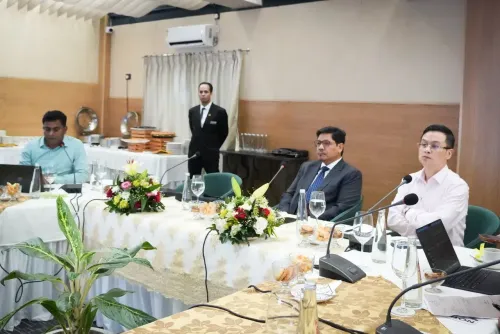
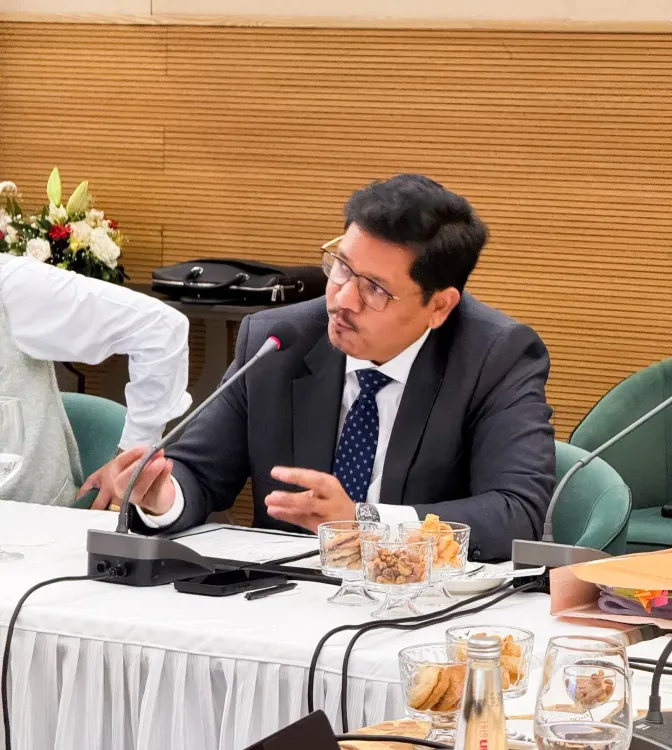
Meghalaya Chief Minister Conrad Sangma on Thursday, July 16, 2026, chaired a high-level review of Aadhaar enrolment and seeding across key state departments — including Community and Rural Development, Health, Social Welfare, and Food and Civil Supplies — to ensure eligible citizens continue receiving benefits under central and state government schemes.
What the Review Found
The review revealed that 77.02% of households covered under the Meghalaya Health Insurance Scheme–Pradhan Mantri Jan Arogya Yojana (MHIS-PMJAY) are Aadhaar-linked, while beneficiary-level linkage stands at a lower 57.13% — indicating a significant gap between household and individual authentication. Under the National Food Security Act (NFSA), the state has achieved 61.01% e-KYC completion, leaving a substantial share of ration-card holders yet to complete the mandatory process.
CM Sangma noted that the government will consider engaging Common Service Centres (CSCs) — the village-level digital kiosks operating under the Digital India programme — to accelerate the remaining e-KYC work and bridge Aadhaar gaps, particularly in remote areas.
Context
PMJAY, launched in 2018, provides health assurance to economically vulnerable households and requires Aadhaar linkage for beneficiary authentication and claim processing. Meghalaya integrated its state health scheme with PMJAY in 2019–20, progressively tightening Aadhaar requirements since then. The NFSA, enacted in 2013, governs subsidised foodgrain delivery through the public distribution system, with central guidelines from 2017 onward mandating Aadhaar seeding for ration cards.
The broader framework rests on the Aadhaar Act of 2016, which enabled biometric linkage across welfare schemes as part of the JAM trinity — Jan Dhan, Aadhaar, and Mobile — designed to reduce leakages and enable direct benefit transfers.
Policy Backdrop
Northeastern states have historically faced last-mile challenges in Aadhaar enrolment owing to terrain, connectivity deficits, and documentation gaps among tribal communities. The deployment of CSCs as enrolment facilitators is a proven model used across Indian states to cover populations that cannot easily access urban enrolment centres.
CM Sangma's review reflects a broader national push for 100% Aadhaar seeding in health and food-security databases, with state governments increasingly held accountable for coverage gaps that can interrupt benefit flows to the poorest households. The government also resolved to intensify awareness and enrolment drives through additional camps in coordination with district administrations and line departments.
Stakeholders and Impact
The gaps identified directly affect rural and tribal households in Meghalaya who risk losing access to subsidised foodgrains or health coverage if mandatory e-KYC and Aadhaar seeding are not completed. For MHIS-PMJAY, the difference between the 77.02% household linkage and 57.13% beneficiary linkage suggests that while a household may be enrolled, individual members — particularly women, elderly persons, and children — may not yet be authenticated.
CM Sangma was explicit that while the state government will extend every possible support, beneficiaries of central schemes must themselves complete the mandatory requirements, as compliance is essential for the uninterrupted flow of scheme benefits.
What's Next
The government is expected to announce specific timelines for CSC engagement and district-wise camp schedules in the coming weeks. Progress on Aadhaar coverage targets may also come up for discussion in the next session of the Meghalaya Legislative Assembly. The outcome of intensified enrolment drives will be closely watched as a measure of the state's ability to close the authentication gap before benefit disbursement cycles.
Point of View
Connectivity-challenged state is a pragmatic choice, but the gap between household-level and individual-level PMJAY linkage points to a deeper last-mile authentication problem that camps alone may not fully resolve. This review fits a wider pattern of northeastern states accelerating JAM-trinity compliance ahead of potential central audits of welfare rolls.
NationPress
16 Jul 2026
Frequently Asked Questions
What is the current Aadhaar linkage status for MHIS-PMJAY in Meghalaya?
As of the July 16, 2026 review, 77.02% of MHIS-PMJAY households are Aadhaar-linked, but individual beneficiary linkage stands at a lower 57.13%, meaning many household members are yet to be personally authenticated.
What is MHIS-PMJAY and who does it cover in Meghalaya?
MHIS-PMJAY is the Meghalaya Health Insurance Scheme integrated with the central Pradhan Mantri Jan Arogya Yojana, launched nationally in 2018. It provides health coverage to economically vulnerable households and requires Aadhaar linkage for claim processing.
What is e-KYC and why is it required for NFSA ration cards in Meghalaya?
e-KYC (electronic Know Your Customer) is a biometric or OTP-based Aadhaar verification process. Central guidelines issued from 2017 onward made it mandatory for National Food Security Act ration-card holders to complete e-KYC to continue receiving subsidised foodgrains through the public distribution system.
How will Meghalaya bridge the Aadhaar gap for welfare beneficiaries?
The state government plans to engage Common Service Centres (CSCs) — village-level digital kiosks under the Digital India programme — to expedite remaining e-KYC, and will also run additional enrolment camps in coordination with district administrations and line departments.
Will Meghalaya beneficiaries lose welfare benefits if they do not complete Aadhaar e-KYC?
CM Conrad Sangma has stated that completing Aadhaar enrolment and e-KYC is mandatory for central scheme beneficiaries, and failure to comply could interrupt the flow of benefits. The state government will provide support through camps and CSCs, but the responsibility to complete the process rests with beneficiaries.