CM Dhami Marks World No Tobacco Day With Anti-Tobacco Pledge
Synopsis
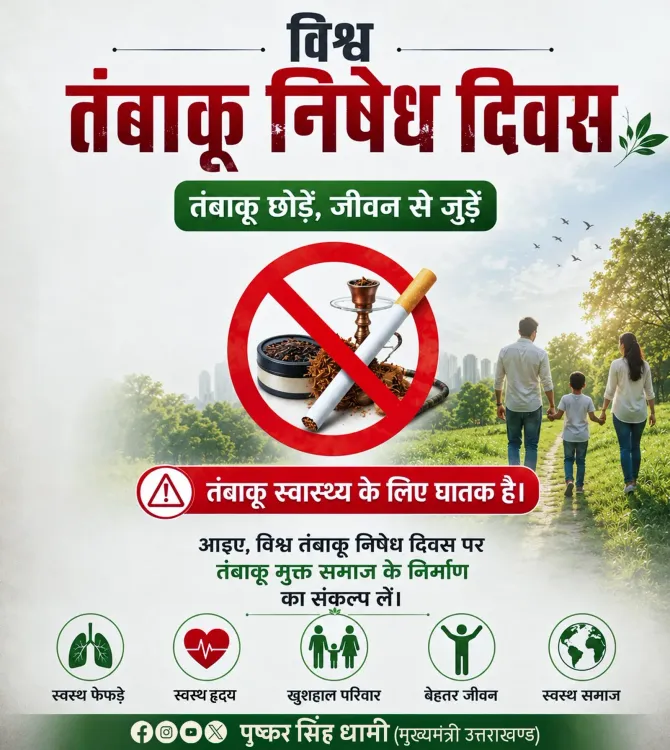
On World No Tobacco Day, 31 May 2026, Uttarakhand Chief Minister Pushkar Singh Dhami called on citizens to pledge against tobacco use and spread awareness of its dangers, framing good health as society's greatest asset.
Key Takeaways
Uttarakhand Chief Minister Pushkar Singh Dhami posted an anti-tobacco appeal on 31 May 2026 , marking World No Tobacco Day .
He called tobacco consumption a harm not just to the individual but to families and society as a whole.
World No Tobacco Day is a WHO -led annual observance held every 31 May globally.
India ratified the WHO Framework Convention on Tobacco Control in 2004 and enacted COTPA in 2003 .
The National Tobacco Control Programme , active since 2007-08 , supports state-level tobacco control capacity including in Uttarakhand .
Youth and state health departments are the primary stakeholders targeted by such awareness drives.
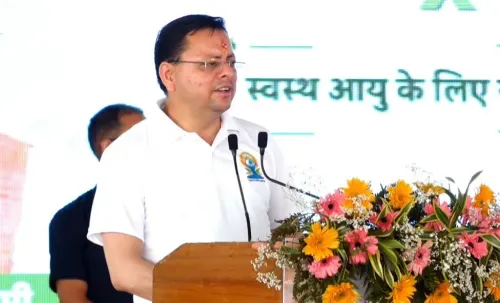
Uttarakhand Chief Minister Pushkar Singh Dhami on Sunday, 31 May 2026, marked World No Tobacco Day by calling on citizens to pledge against tobacco use and spread awareness about its harmful effects on individuals, families, and society at large.
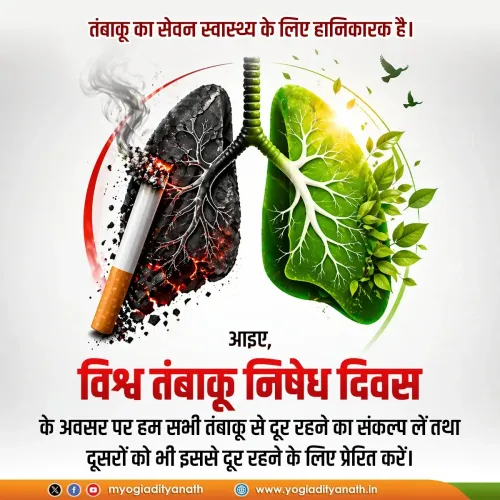
In his post, CM Dhami wrote: 'स्वस्थ जीवन ही सबसे बड़ी पूंजी है' ['Good health is the greatest wealth'], adding that tobacco consumption harms not only the individual but also inflicts serious consequences on the family and society. He urged people to stay away from tobacco and to make others aware of its ill effects on this annual observance.
Context
World No Tobacco Day is observed every year on 31 May under the auspices of the World Health Organization (WHO) to highlight the health and social dangers of tobacco use. The day serves as a global platform for governments, health bodies, and civil society to reinforce anti-tobacco messaging. Indian leaders at the central and state level routinely mark the occasion with public appeals and awareness drives.
India is among the world's largest tobacco-consuming nations, making such annual observances particularly significant. State governments play a frontline role in translating national commitments into community-level action.
Policy Backdrop
India ratified the WHO Framework Convention on Tobacco Control (FCTC) in 2004, binding itself to a comprehensive set of demand- and supply-reduction measures. At the legislative level, the Cigarettes and Other Tobacco Products Act (COTPA), 2003 bans smoking in public places and regulates tobacco advertising and packaging across the country.
The National Tobacco Control Programme (NTCP), launched by the Ministry of Health and Family Welfare in 2007-08, provides the programmatic backbone for tobacco control, building capacity at the state and district levels. Uttarakhand, like other states, operates within this national framework to implement awareness campaigns and enforcement.
Stakeholders and Impact
The primary stakeholders in tobacco control efforts are tobacco users, particularly the youth, who remain a key target group for prevention messaging. State health departments are responsible for ground-level enforcement of COTPA provisions and the implementation of NTCP activities including counselling centres and school-based awareness programmes.
Families and communities bear indirect costs of tobacco-related illness, including loss of income and increased healthcare expenditure. CM Dhami's message explicitly acknowledges this social dimension, framing tobacco control as a collective rather than purely individual responsibility.
What's Next
Observers will watch whether Uttarakhand's state budget allocations for health and tobacco control translate into measurable enforcement and programme outcomes in the coming fiscal year. At the national level, any proposed amendments to COTPA could further strengthen the regulatory framework that state governments rely on. The annual observance also typically precedes intensified enforcement drives in several states, making the weeks following World No Tobacco Day a critical period for public health action.
Point of View
Aligning the state government with the WHO-led global agenda and reinforcing India's FCTC commitments at the subnational level. By framing health as 'the greatest wealth' and extending the harm narrative to families and society, the message attempts to broaden the emotional resonance beyond individual choice. For a BJP-governed state like Uttarakhand, such messaging also fits a wider pattern of welfare-oriented communication that complements legislative enforcement with social norm-building. The real test, however, lies in whether the rhetoric is backed by measurable budget allocations and enforcement data in the months ahead.
NationPress
14 Oct 2026
Frequently Asked Questions
What is World No Tobacco Day and when is it observed?
World No Tobacco Day is an annual global health observance held on 31 May every year, coordinated by the World Health Organization to highlight the dangers of tobacco use and advocate for effective policies to reduce consumption.
What did Uttarakhand CM Pushkar Singh Dhami say on World No Tobacco Day 2026?
CM Pushkar Singh Dhami urged citizens to pledge to stay away from tobacco and to make others aware of its harmful effects, stating that 'good health is the greatest wealth' and that tobacco harms individuals, families, and society.
What is the Cigarettes and Other Tobacco Products Act (COTPA)?
COTPA, 2003 is a central Indian law that bans smoking in public places and regulates tobacco advertising, sponsorship, and packaging across the country, forming the primary legislative tool for tobacco control in India.
What is the National Tobacco Control Programme in India?
The National Tobacco Control Programme (NTCP) was launched by India's Ministry of Health and Family Welfare in 2007-08 to build state and district-level capacity for tobacco control, including awareness campaigns and cessation support.
Has India signed the WHO Framework Convention on Tobacco Control?
Yes, India ratified the WHO Framework Convention on Tobacco Control (FCTC) in 2004 , committing to a comprehensive set of measures to reduce tobacco demand and supply across the country.