CM Dhami Hails Uttarakhand's Growth Under Double-Engine Govt
Synopsis
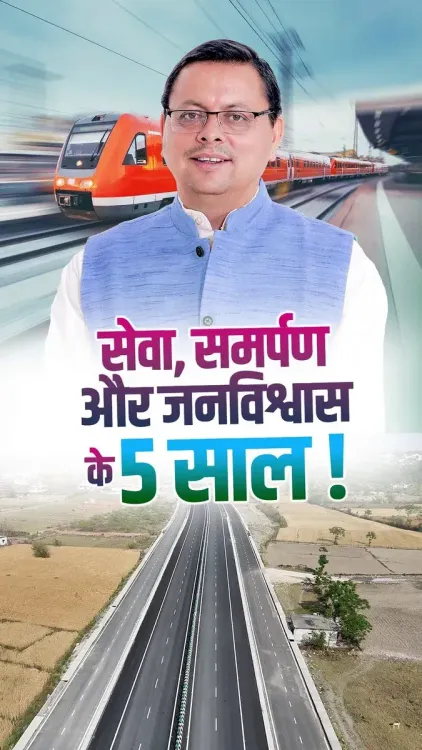
Uttarakhand CM Pushkar Singh Dhami on 9 July 2026 praised PM Narendra Modi's leadership and the BJP's double-engine governance model, saying the state's founding dreams of development, connectivity, and public welfare are now reaching new heights.
Key Takeaways
CM Pushkar Singh Dhami posted on 9 July 2026 crediting the BJP's double-engine government for Uttarakhand's developmental progress.
He stated the dreams that accompanied Uttarakhand's formation on 9 November 2000 are now being realised at new heights.
The post highlighted three pillars: development, connectivity, and public welfare as areas of transformation.
Senior central leaders Amit Shah and Rajnath Singh were tagged, signalling coordinated central-state messaging.
Key programmes linked to this narrative include the Char Dham all-weather road project , PM Awas Yojana , and Ayushman Bharat .
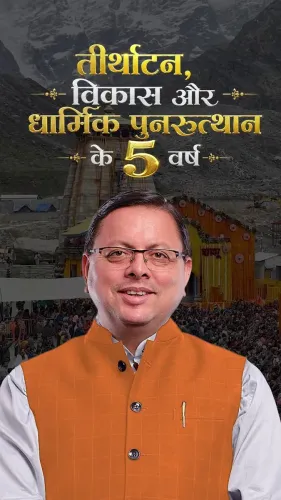
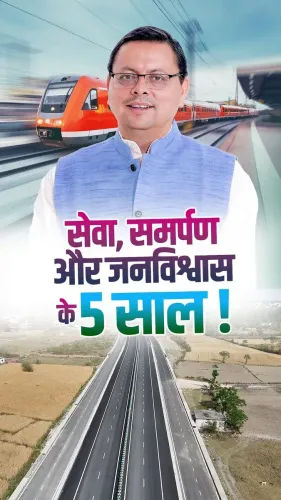
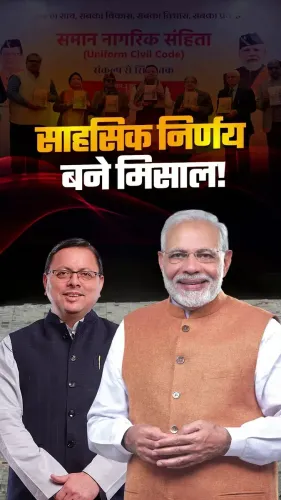
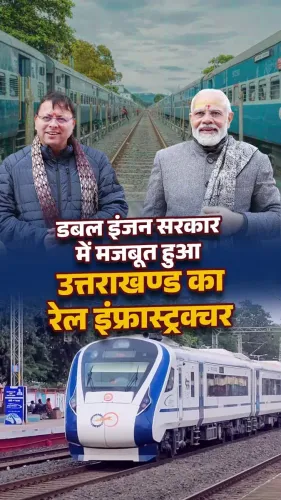
The post was accompanied by a video , indicating a broader communication push beyond the text message.
Uttarakhand Chief Minister Pushkar Singh Dhami on 9 July 2026 credited the BJP's double-engine government model for transforming the hill state, saying the founding dreams of Uttarakhand are now reaching new heights under the leadership of Prime Minister Narendra Modi.
Context
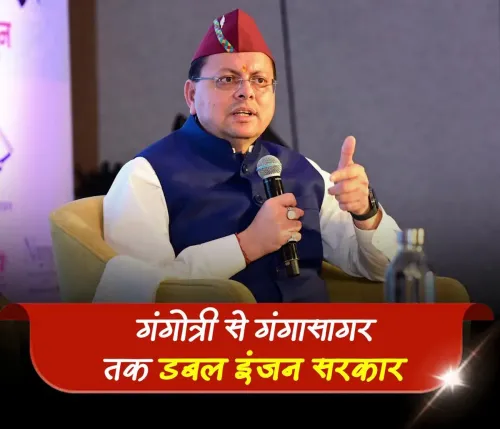
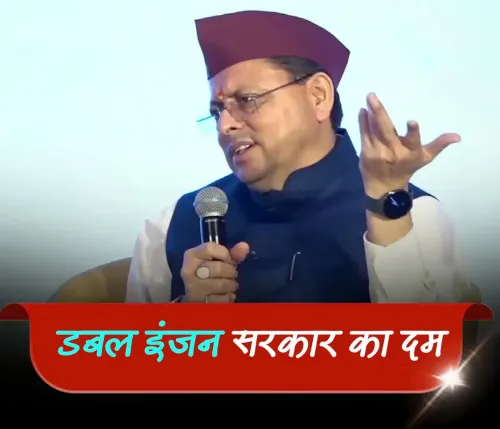
Posting in Hindi on X, CM Dhami wrote: 'जिस विश्वास और उम्मीद के साथ उत्तराखंड का निर्माण हुआ था, आज वे सपने साकार होते हुए नई ऊंचाइयों को छू रहे हैं' — 'The dreams with which Uttarakhand was built are today being realised and touching new heights.' He tagged senior Union ministers Amit Shah, Rajnath Singh, the Prime Minister's Office, and the party handles @BJP4India and @BJP4UK in the post, which was accompanied by a video.
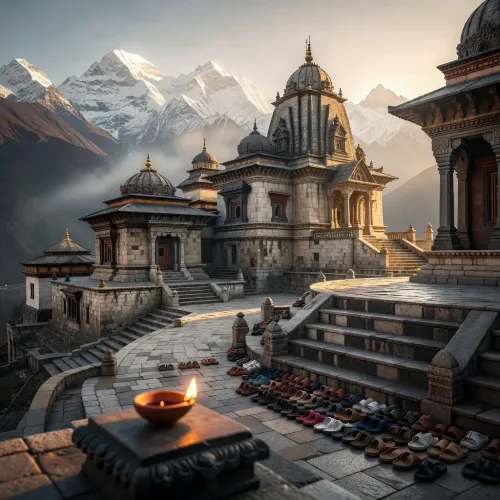
Uttarakhand was carved out of Uttar Pradesh on 9 November 2000 to fulfil long-standing regional aspirations for a dedicated hill state focused on its unique developmental and cultural needs. The state has since positioned itself as a hub for pilgrimage tourism and Himalayan connectivity.
Policy Backdrop
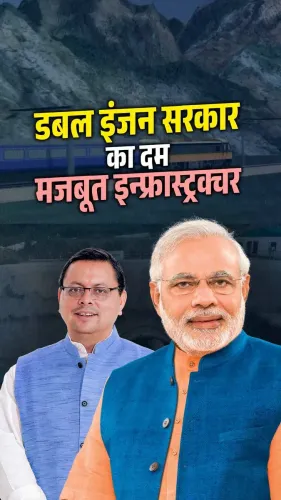
The BJP's 'double-engine government' framework — where the same party governs both at the centre and in the state — has been the party's flagship governance pitch since 2014, premised on faster fund flow, aligned priorities, and reduced administrative friction. CM Dhami, who took charge in 2021, has anchored his administration's identity to this model.
On the ground, the model has been associated with flagship central initiatives extended to Uttarakhand, including PM Awas Yojana and Ayushman Bharat, as well as the Char Dham all-weather road connectivity project launched around 2016 to open up the state's four sacred pilgrimage sites to year-round traffic. Defence Minister Rajnath Singh's portfolio also intersects with the state through border-area infrastructure in its sensitive frontier zones.
Stakeholders and Impact
The beneficiaries of the development narrative CM Dhami invokes span a wide cross-section: residents of remote hill districts who gain from improved road access, pilgrimage tourists visiting the Char Dham circuit, and border communities in districts abutting China and Nepal whose strategic connectivity has been a national priority. Welfare scheme beneficiaries — particularly those enrolled under health and housing programmes — form another major constituency.
The post's tagging of senior central leadership signals the state government's intent to publicly reinforce its alignment with New Delhi ahead of any upcoming budget cycles or policy announcements that may direct resources toward Himalayan states.
What's Next
Observers will watch for concrete announcements in the next Uttarakhand assembly session or the monsoon session of Parliament that could give substance to the progress CM Dhami has described. Additional phases of the Char Dham connectivity project and potential expansions of central welfare schemes to the state's hill districts remain the most likely vehicles through which the double-engine promise will be measured.
As Uttarakhand approaches the mid-term of the current assembly's tenure, the political stakes of delivering visible development outcomes in connectivity and welfare are set to intensify for both the state administration and its central partners.
Point of View
Amplifying the message across party networks. The invocation of Uttarakhand's founding aspirations ties present-day governance to an emotional, identity-laden origin story, a recurring rhetorical device in BJP-ruled hill states. The tagging of the PMO and senior cabinet ministers suggests this is coordinated political communication, not merely a routine social media update. It fits a broader pattern of BJP-governed states building a pre-budget or pre-session record of visible progress claims to strengthen their case for central resource allocation.
NationPress
10 Jul 2026
Frequently Asked Questions
What did CM Pushkar Singh Dhami say about Uttarakhand's development?
CM Dhami said the dreams with which Uttarakhand was built are today being realised and touching new heights, crediting PM Modi's leadership and the BJP's double-engine government for progress in development, connectivity, and public welfare.
What is the double-engine government model in Uttarakhand?
The double-engine government model refers to the BJP governing both at the centre and in the state simultaneously, which the party argues enables faster fund flows, aligned priorities, and more efficient delivery of central schemes at the state level.
When was Uttarakhand formed and why?
Uttarakhand was formed on 9 November 2000 when it was carved out of Uttar Pradesh to address the distinct developmental and cultural needs of the Himalayan hill region and fulfil long-standing aspirations for a separate state.
What are the key infrastructure projects in Uttarakhand under the BJP government?
The most prominent project is the Char Dham all-weather road connectivity project , launched around 2016, which aims to provide year-round access to the state's four major pilgrimage sites. Central welfare schemes like PM Awas Yojana and Ayushman Bharat have also been extended to the state.
Why did CM Dhami tag Amit Shah and Rajnath Singh in his post?
CM Dhami tagged Union Home Minister Amit Shah and Defence Minister Rajnath Singh along with the PMO, likely to signal coordinated central-state governance and amplify the development message across the party's national network.