CM Dhami: Uttarakhand interest above politics in five years
Synopsis
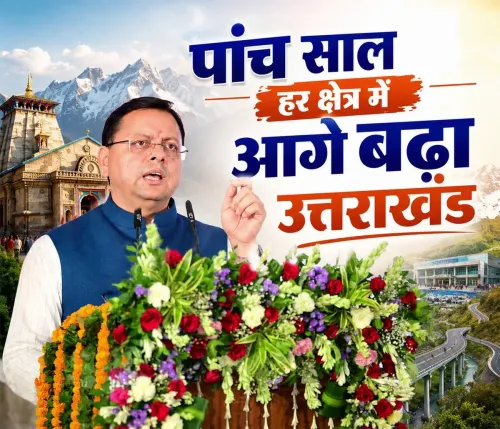
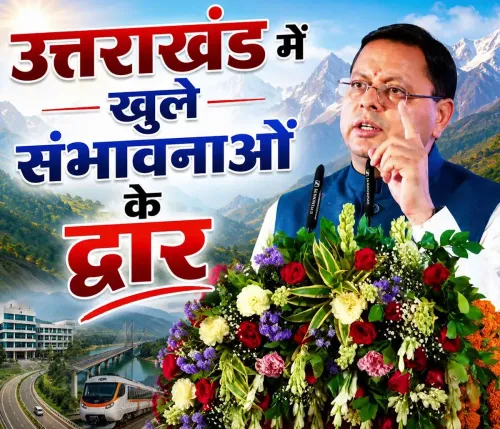
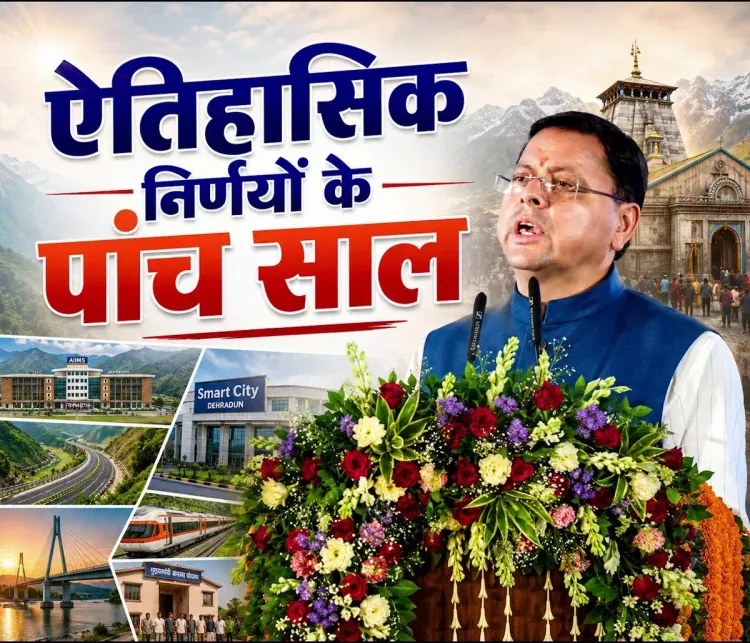
Uttarakhand Chief Minister Pushkar Singh Dhami on 4 July 2026 stated his government rose above politics to prioritise state interest, citing multiple bold and historic decisions taken over five years of BJP rule in the Himalayan state.
Key Takeaways
CM Pushkar Singh Dhami declared on 4 July 2026 that his government placed Uttarakhand 's interest above political considerations.
He cited 'many tough, courageous and historic decisions' taken over the past five years of his administration.
Uttarakhand became the first Indian state to pass the Uniform Civil Code in 2024 under Dhami's leadership.
The government has pursued major infrastructure projects including the Char Dham road network and border area development.
The statement accompanies a video and signals a public review of the administration's governance record.
Attention now shifts to the next assembly session and implementation audits of ongoing state schemes.
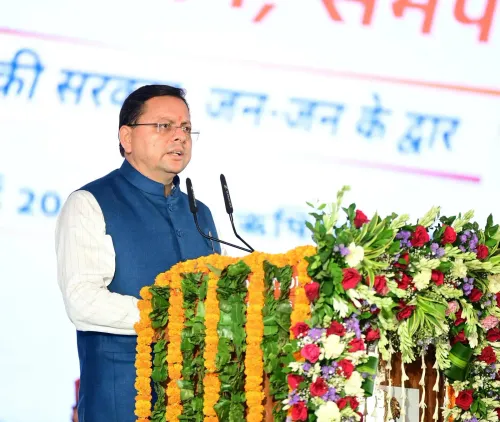
Uttarakhand Chief Minister Pushkar Singh Dhami on Saturday, 4 July 2026, declared that his government had placed the interests of Uttarakhand above partisan politics over the past five years, taking several bold and historic decisions for the state. The statement, shared on his official X account, accompanied a video and underscored the administration's claim of governance that transcended political considerations.
Context
In the post, CM Dhami wrote — 'हमारी सरकार ने राजनीति से ऊपर उठकर उत्तराखण्ड हित को सर्वोच्च प्राथमिकता दी' ['Our government rose above politics and gave the highest priority to the interest of Uttarakhand']. He added that in the same spirit, 'many tough, courageous and historic decisions were taken in the interest of the state over the past five years.' The remark positions the BJP-led government's tenure as one defined by decisive, state-first governance rather than electoral calculation.
Dhami first became Chief Minister in 2021 and has continued to lead the state following the BJP's return to power in the 2022 Uttarakhand assembly elections. His tenure has been marked by a combination of infrastructure push, regulatory reform, and cultural policy.
Policy Backdrop
Among the most prominent legislative milestones of this administration was the passage of the Uniform Civil Code in 2024, making Uttarakhand the first state in independent India to enact such legislation. The move was widely seen as a landmark — and contentious — policy decision with national implications, underscoring the 'historic' framing Dhami has used to describe his government's record.
The state has also pursued large-scale infrastructure development, including upgrades to the Char Dham road network connecting key Hindu pilgrimage sites in the Himalayas. Border area development along Uttarakhand's frontiers with China and Nepal has similarly been a stated priority, blending security considerations with local economic development.
Stakeholders and Impact
The primary beneficiaries cited in the government's narrative are the approximately 1 crore residents of Uttarakhand, particularly communities dependent on pilgrimage tourism, agriculture, and border-area livelihoods. State officials and the administrative machinery have been central to executing these programmes across the Himalayan state's challenging terrain.
Critics and opposition parties have at various points contested the pace and equity of development, particularly regarding remote hill districts. However, the government's framing of 'rising above politics' is a direct appeal to voters and civil society to evaluate its record on outcomes rather than ideology alone.
What's Next
The statement arrives at a point where the government's five-year record is increasingly under public scrutiny, with attention turning to implementation reports on ongoing schemes in tourism, border infrastructure, and social reform. The next state assembly session and audit of flagship programmes are expected to provide a clearer picture of whether the claimed 'historic decisions' have translated into measurable outcomes on the ground in Uttarakhand.
Point of View
Designed to shift the electoral conversation from caste arithmetic to policy delivery. The Uniform Civil Code passage and Char Dham infrastructure give the claim concrete anchors, even as implementation gaps in remote hill districts remain a vulnerability. Watching how opposition parties respond to this narrative framing will be as telling as the policy outcomes themselves.
NationPress
4 Jul 2026
Frequently Asked Questions
What decisions has Pushkar Singh Dhami's government taken in Uttarakhand?
The Dhami government's notable decisions include passing the Uniform Civil Code in 2024 — a first for any Indian state — and accelerating infrastructure projects such as the Char Dham all-weather road network and border area development.
When did Pushkar Singh Dhami become Chief Minister of Uttarakhand?
Pushkar Singh Dhami first became Chief Minister of Uttarakhand in 2021 and continued in the role after the BJP won the 2022 state assembly elections.
What is the Uniform Civil Code in Uttarakhand?
The Uniform Civil Code (UCC) passed by Uttarakhand in 2024 is a common set of civil laws governing marriage, divorce, inheritance, and adoption for all residents regardless of religion, making the state the first in independent India to enact such legislation.
What did CM Dhami say about Uttarakhand governance in July 2026?
On 4 July 2026 , CM Dhami posted on X stating his government rose above politics to give the highest priority to Uttarakhand 's interest, and took many tough, courageous and historic decisions over five years.
What is the Char Dham road project in Uttarakhand?
The Char Dham road project is a central government-backed highway development initiative aimed at building all-weather roads connecting the four major Hindu pilgrimage sites in the Uttarakhand Himalayas , boosting both tourism and strategic connectivity.