CM Fadnavis: Maharashtra Women Farmers Empowerment Bill 2026 Passed
Synopsis
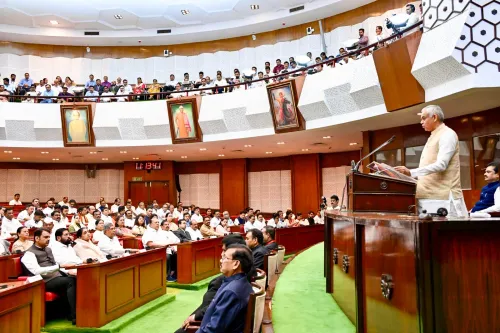
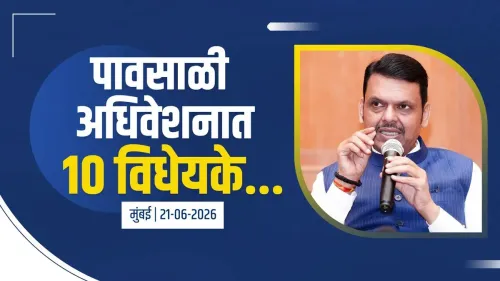
The Maharashtra Legislative Assembly passed the Mahila Shetkari Sakshamikaran (Women Farmers Empowerment) Bill, 2026 on July 2, Chief Minister Devendra Fadnavis announced. The move converts programmatic benefits for women cultivators into statutory entitlements, with the bill now set to move to the Legislative Council.
Key Takeaways
The Maharashtra Mahila Shetkari Sakshamikaran Bill, 2026 was passed by the Maharashtra Legislative Assembly on July 2, 2026 .
CM Devendra Fadnavis confirmed the passage via a post on X, using hashtags #MahilaShetkariSakshamikaran .
The bill aims to empower women farmers in Maharashtra by creating statutory entitlements around land rights, credit access, and agricultural support.
The legislation builds on Maharashtra's 2017-18 agricultural policy and the central Mahila Kisan Sashaktikaran Pariyojana launched in 2011 .
The bill must next pass the Maharashtra Legislative Council before it can receive the Governor's assent and become law.
Rules notification and budgetary allocation in the next state budget session will determine the pace of implementation.
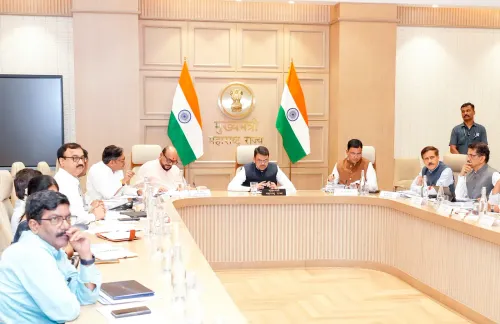
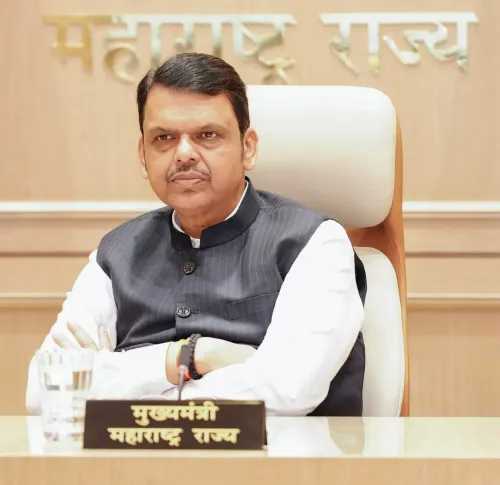
Maharashtra Chief Minister Devendra Fadnavis announced on Thursday, July 2, 2026, that the Maharashtra Mahila Shetkari Sakshamikaran (Women Farmers Empowerment) Bill, 2026 has been passed by the Maharashtra Legislative Assembly, marking a significant legislative step for women cultivators in the state.
Context
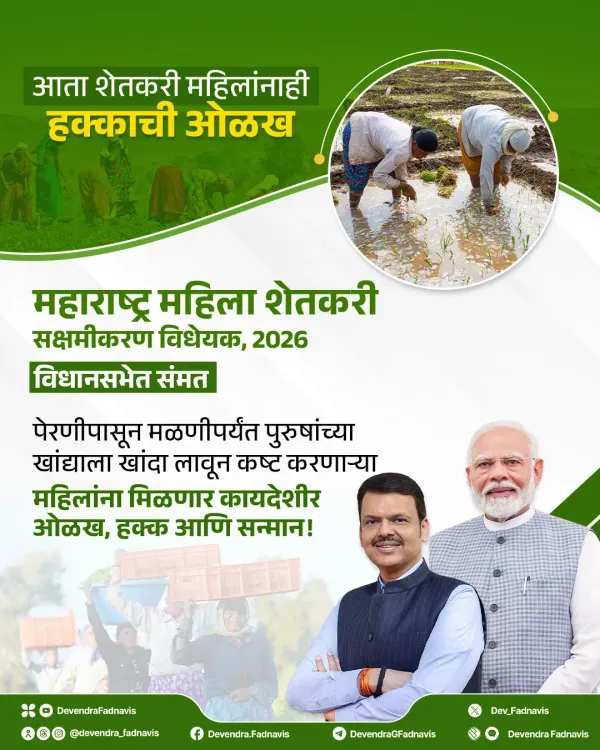
Fadnavis posted on X with the hashtags #महिला_शेतकरी_सक्षमीकरण and #MahilaShetkariSakshamikaran, confirming the bill's passage in the lower house of the state legislature. The Marathi phrase 'महाराष्ट्र महिला शेतकरी सक्षमीकरण विधेयक, 2026 विधानसभेत पारित' translates to: 'Maharashtra Women Farmers Empowerment Bill, 2026 passed in the Legislative Assembly.' The announcement signals a move to convert policy commitments into statutory entitlements for women engaged in agriculture.
Policy Backdrop
Maharashtra has been incrementally strengthening its legislative framework for women in agriculture since the early 2010s. The state government introduced targeted provisions for women in its 2017-18 agricultural policy, focusing on increasing female land ownership and credit access. At the national level, the Mahila Kisan Sashaktikaran Pariyojana, a central scheme launched in 2011, has sought to empower women farmers through skill development and resource access, with additional budgetary support added during 2016-17 for state-level convergence.
Maharashtra's new bill continues a broader pattern seen across Indian states of converting programmatic interventions — which depend on annual budgetary support — into durable statutory rights for women cultivators. By embedding entitlements in legislation, beneficiaries gain a legal basis to claim benefits independent of shifting government priorities.
Stakeholders and Impact
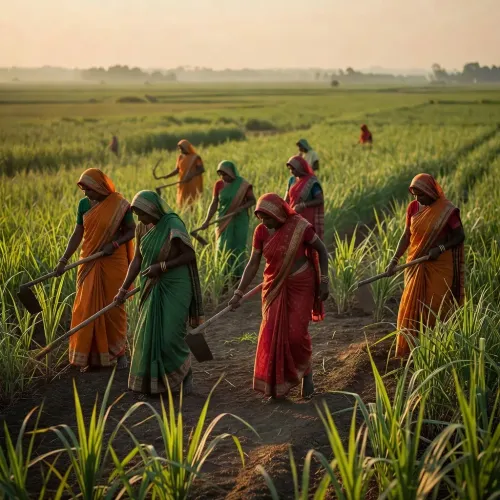
Women farmers across Maharashtra stand as the primary beneficiaries of this legislation. The state has a substantial population of women engaged in agricultural labour and cultivation, many of whom have historically faced barriers in accessing land rights, institutional credit, and extension services. A dedicated law is expected to create enforceable entitlements in these areas, though specific provisions of the 2026 bill will become clearer once the full text is made public.
The passage in the Maharashtra Legislative Assembly is the first of two required steps, as the bill will also need consideration by the Maharashtra Legislative Council, the upper house of the state legislature, before it can receive the Governor's assent and become law.
What's Next
Attention now shifts to the Maharashtra Legislative Council, where the bill will require passage before it can be enacted. Stakeholders will also watch for the notification of rules under the new law and the allocation of dedicated budgetary resources in the next state budget session. The pace of rule-making will largely determine how quickly benefits reach women farmers on the ground.
The legislative move reinforces Chief Minister Fadnavis and the ruling dispensation's focus on agricultural welfare ahead of future electoral cycles, and positions Maharashtra as a state translating gender-inclusive agricultural goals into binding legal frameworks.
Point of View
A model that has gained traction across Indian states over the past decade. For CM Fadnavis, the move strengthens his government's agrarian credentials in a state where rural distress and farmer welfare have been persistent electoral flashpoints. The bill's trajectory through the Legislative Council and the speed of rule-making will be the real test of legislative intent. If backed by dedicated budgetary lines, it could set a template for gender-specific agricultural legislation that other states may follow.
NationPress
2 Jul 2026
Frequently Asked Questions
What is the Maharashtra Mahila Shetkari Sakshamikaran Bill 2026?
The Maharashtra Mahila Shetkari Sakshamikaran Bill, 2026 is a legislation passed by the Maharashtra Legislative Assembly on July 2, 2026, aimed at empowering women farmers in the state by converting programmatic benefits into statutory entitlements related to land rights, credit access, and agricultural support.
Who announced the passage of the Maharashtra Women Farmers Empowerment Bill?
Maharashtra Chief Minister Devendra Fadnavis announced the passage of the bill via a post on X on July 2, 2026, confirming it had been passed in the Maharashtra Legislative Assembly.
What happens after the bill is passed in the Maharashtra Legislative Assembly?
After passing the Maharashtra Legislative Assembly, the bill must be considered and passed by the Maharashtra Legislative Council before it can receive the Governor's assent and become enforceable law.
How does this bill relate to the central Mahila Kisan Sashaktikaran Pariyojana?
The central Mahila Kisan Sashaktikaran Pariyojana, launched in 2011, provided the programmatic foundation for empowering women farmers at the state level. Maharashtra's 2026 bill takes this a step further by embedding similar objectives into state law, making entitlements legally binding rather than subject to annual budget decisions.
What benefits will women farmers in Maharashtra get from this bill?
While the full text of the bill is yet to be made public, the legislation is expected to create enforceable entitlements for women cultivators in areas such as land ownership, institutional credit access, and agricultural extension services, building on Maharashtra's existing gender-inclusive agricultural policy framework.