CM Himanta Adds Anti-Love Jihad, Anti-Polygamy Clauses to UCC Assam

Synopsis
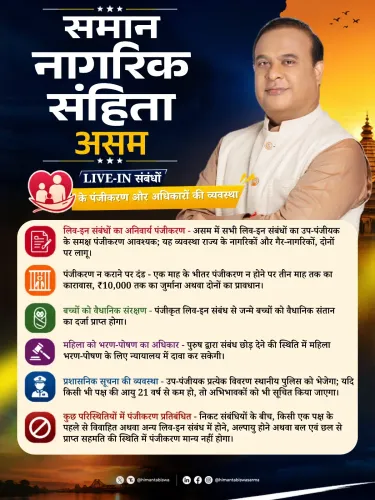
Assam CM Himanta Biswa Sarma announced on 27 May 2026 that two new clauses — strict anti-Love Jihad provisions and a polygamy ban — have been added under the UCC Assam framework, framing the move as a priority for women's safety and dignity.
Key Takeaways
Two new clauses were added to the UCC Assam framework on 27 May 2026 , as announced by CM Himanta Biswa Sarma .
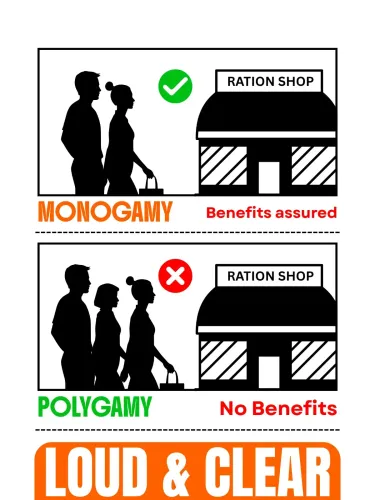
The first clause introduces strict provisions against 'Love Jihad' ; the second imposes a ban on polygamy .
The amendments are framed by the CM as prioritising women's safety and respect .
Uttarakhand was the first Indian state to enact a full UCC law in February 2024 , which Assam's initiative follows in spirit.
The move aligns with the BJP's long-standing national manifesto commitment to a Uniform Civil Code.
The amended bill's tabling in the Assam Legislative Assembly and potential legal challenges are the key developments to watch.
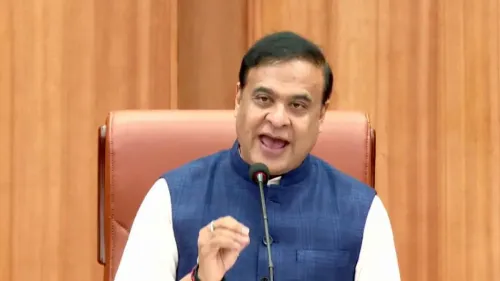
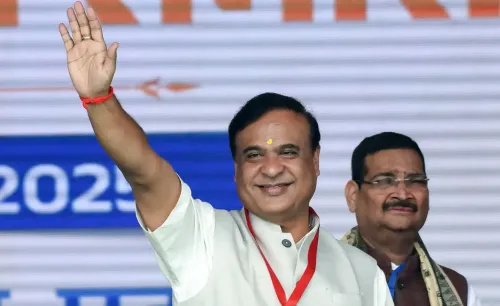
Assam Chief Minister Himanta Biswa Sarma announced on Wednesday, 27 May 2026 that two significant clauses have been added to the state's Uniform Civil Code framework — one targeting what he described as 'Love Jihad' and another prohibiting polygamy. The announcement, made via a post on X, frames the amendments as a priority measure for the protection and dignity of women.
Context
In his post, CM Sarma wrote: 'आज #UCCAssam के तहत दो अहम clause जोड़े गए: Love Jihad के खिलाफ सख्त व्यवस्था और Polygamy पर रोक' — translated as: 'Today, two important clauses have been added under #UCCAssam: strict provisions against Love Jihad and a ban on Polygamy.' He added that the step has been taken with women's safety and respect as the 'highest priority.'
The term 'Love Jihad' is used by sections of the BJP and affiliated groups to describe alleged instances of men from Muslim backgrounds inducing women of other faiths into marriage for purposes of religious conversion — a characterisation that is legally undefined and disputed by civil society and opposition parties.
Policy Backdrop
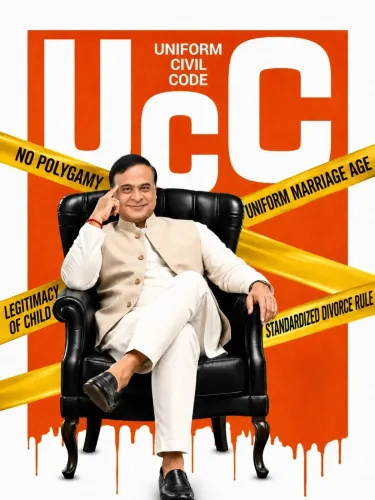
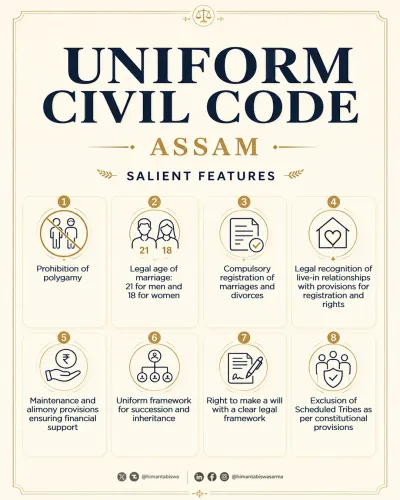
Uttarakhand became the first Indian state to pass a full Uniform Civil Code law in February 2024, covering marriage, divorce, inheritance, and live-in relationships. Assam's UCC initiative follows that template, seeking to replace community-specific personal laws with a common statutory framework, with a particular emphasis on gender equality.
The BJP has carried a commitment to a national Uniform Civil Code in its election manifestos for decades. State-level UCC efforts in Assam and other BJP-governed states represent an incremental legislative strategy, building political and legal precedent ahead of any potential central legislation.
Stakeholders and Impact
The two clauses have direct implications for women in Assam, particularly those in or entering inter-faith marriages, as well as for the state's Muslim community, for whom polygamy is currently permissible under personal law. Supporters argue the amendments strengthen women's legal standing; critics are expected to raise concerns about selective targeting of one community's religious practices.
Civil liberties groups and opposition parties have in the past challenged 'Love Jihad' legislation in other states, arguing that such laws infringe on the constitutional right to marry a person of one's choice. Any bill tabled in the Assam Legislative Assembly is likely to face similar scrutiny.
What's Next
The immediate next step is the tabling of the amended UCC Assam bill in the state assembly, where the ruling BJP holds a comfortable majority. Legal challenges before the Gauhati High Court or the Supreme Court of India are widely anticipated, particularly on the constitutionality of provisions related to inter-faith marriages.
Central government coordination will also be closely watched, as a state-level UCC could either complement or complicate any future national legislation on the subject. The political signalling from Assam is likely to resonate across other BJP-ruled states weighing similar measures.
Point of View
Who has consistently used bold social-policy announcements to consolidate the BJP's base in the Northeast. By bundling an anti-polygamy clause — which has broader cross-community appeal — with a 'Love Jihad' provision, the Assam government is following a pattern seen in other BJP-ruled states of advancing ideologically charged legislation under the umbrella of gender justice. The move also functions as a pressure signal to the central government on the pace of a national UCC. Legal challenges are almost certain, meaning the real test of these clauses lies not in the assembly but in the courts.
NationPress
16 Sept 2026
Frequently Asked Questions
What did CM Himanta announce about Love Jihad and polygamy on 27 May 2026?
CM Himanta Biswa Sarma announced that two new clauses had been added to the UCC Assam framework — one introducing strict legal provisions against 'Love Jihad' and another banning polygamy — citing women's safety as the top priority.
Is polygamy currently legal in Assam?
Under existing Muslim personal law, polygamy (specifically a man having up to four wives) is permissible for Muslim men in India, including in Assam. The proposed UCC Assam clause would seek to override this with a statutory ban applicable to all communities.
Which was the first Indian state to pass a Uniform Civil Code?
Uttarakhand became the first Indian state to pass a full Uniform Civil Code law in February 2024, covering marriage, divorce, inheritance, and live-in relationships.
Can the UCC Assam clauses be challenged in court?
Yes. Legal experts widely expect constitutional challenges before the Gauhati High Court or the Supreme Court of India, particularly on grounds related to the right to marry freely and the protection of religious practices under Articles 25 and 26 of the Constitution.