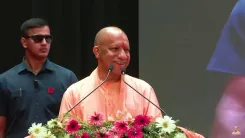
CM Himanta Monitors Assam Floods; Relief Reaches Sivasagar, Jorhat
Synopsis
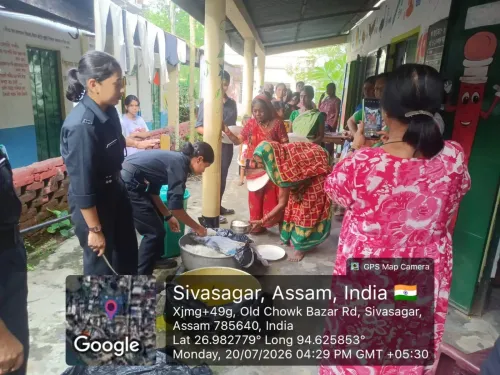
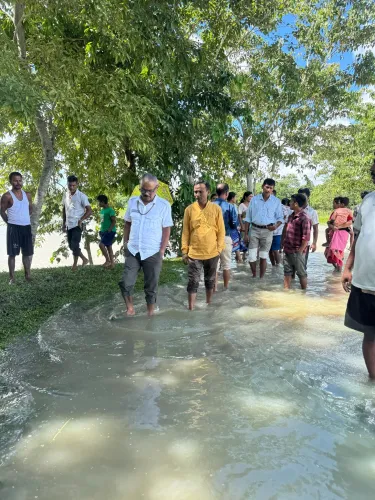
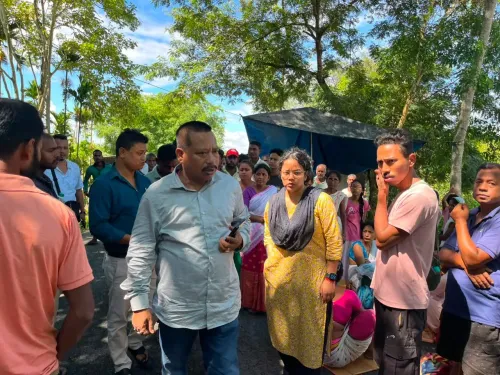
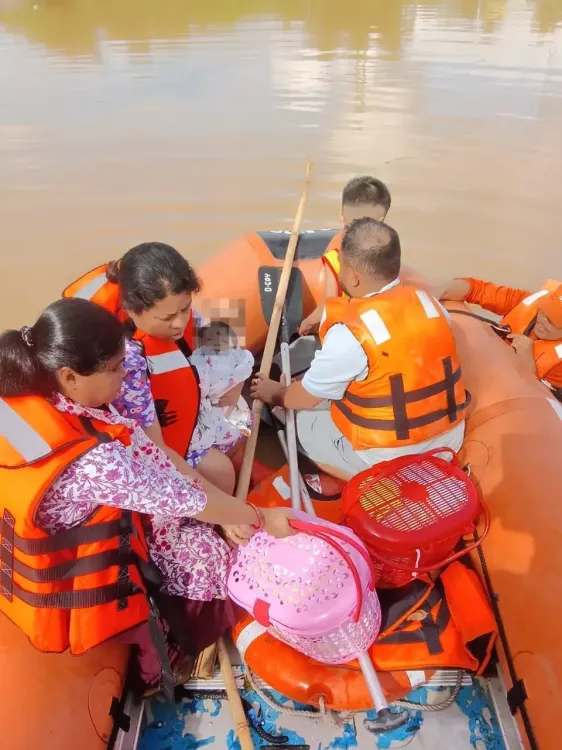
Chief Minister Himanta Biswa Sarma is personally overseeing flood relief across Sivasagar, Jorhat, Charaideo and other Assam districts, with ground teams distributing drinking water, food, and livestock support as rescue and rehabilitation operations continue in full coordination.
Key Takeaways
CM Himanta Biswa Sarma is personally monitoring the flood situation across multiple Assam districts as of 22 July 2026 .
Relief operations are active in Sivasagar , Jorhat , Charaideo , and other affected areas of Assam.
Ground teams are supplying safe drinking water , food , and livestock support alongside rescue and rehabilitation efforts.
Assam's annual flooding is driven by the Brahmaputra river system; the SDRF and NDRF form the backbone of state disaster response.
The three named districts are all in Upper Assam and face recurring monsoon inundation that affects both livelihoods and heritage sites.
Long-term flood mitigation through embankment construction has been a state priority since the 1950s , continuing under the current administration.
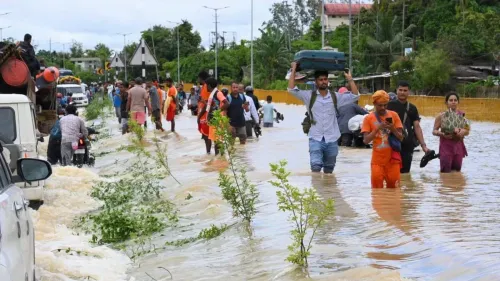
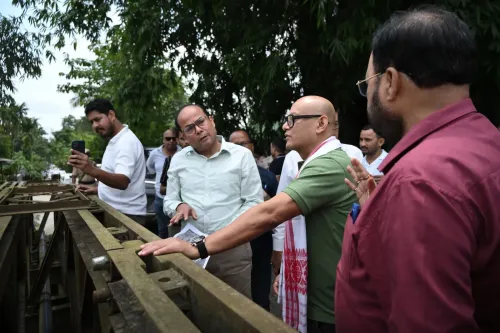
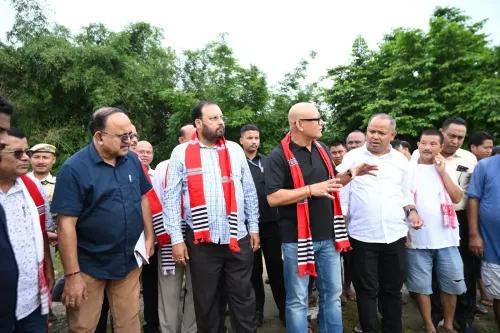
The Chief Minister's Office of Assam confirmed on Wednesday, 22 July 2026 that Chief Minister Dr. Himanta Biswa Sarma is personally monitoring the ongoing flood situation as multi-district relief operations intensify across the state. Ground teams are actively delivering essential supplies to affected communities in Sivasagar, Jorhat, Charaideo, and other inundated areas.
Context
The CMO's post states that teams on the ground are 'ensuring the uninterrupted supply of essential relief materials, safe drinking water, food and livestock support while rescue and rehabilitation operations continue in full coordination to reach every affected community.' The statement underscores a hands-on approach from the Chief Minister's Office during what is typically the most intense phase of Assam's annual monsoon flooding.
Assam's geography along the Brahmaputra basin makes it one of India's most flood-prone states. The river and its tributaries regularly breach embankments during the southwest monsoon, displacing communities and damaging agricultural land across dozens of districts each year.
Policy Backdrop
Flood response in Assam is coordinated through the State Disaster Response Force (SDRF) and district administrations, a framework that has been operational since the early 2000s. The SDRF works alongside National Disaster Response Force (NDRF) teams for search, rescue, and relief distribution during peak flood events.
Successive state governments have also pursued long-term embankment construction and riverbank protection works along the Brahmaputra with central government assistance — a programme with roots stretching back to the 1950s. The current administration under CM Himanta Biswa Sarma, who took office in May 2021, has continued this dual-track approach of immediate relief combined with infrastructure investment.
Stakeholders and Impact
The districts named in the CMO's update — Sivasagar, Jorhat, and Charaideo — are all located in Upper Assam and carry historical significance beyond their administrative roles. Sivasagar is home to Ahom-era monuments, Jorhat is a hub for tea research and education, and Charaideo, carved out as a separate district in 2015, contains ancient Ahom burial mounds. Repeated inundation in these areas threatens both livelihoods and heritage.
Beyond human settlements, the CMO's mention of livestock support highlights the agricultural dimension of flood relief — a critical concern for rural communities whose cattle and poultry represent significant household assets. Ensuring fodder and veterinary care for animals is a standard but often overlooked component of comprehensive disaster response.
What's Next
With relief and rehabilitation operations described as ongoing, attention will turn to the pace of water recession and the restoration of road and communication links in affected districts. Longer-term, the progress of embankment strengthening and drainage projects in Upper Assam — and any supplementary budget allocations for flood mitigation — will be closely watched as indicators of the state's preparedness for future monsoon cycles.
The state's ability to sustain coordinated, multi-agency logistics through the remainder of the monsoon season will be a key test of the administration's disaster management capacity this year.
Point of View
And it establishes a visible accountability trail for relief delivery. CM Himanta Biswa Sarma has consistently used real-time social media communication during disasters to project administrative responsiveness — a pattern that doubles as political messaging ahead of any electoral cycle. The specific naming of Sivasagar, Jorhat, and Charaideo, all Upper Assam districts with distinct cultural identities, suggests deliberate geographic signalling to communities that feel the flood burden most acutely. Whether the operational tempo matches the public communication will ultimately be judged by how quickly affected families receive aid and return to normalcy.
NationPress
22 Jul 2026
Frequently Asked Questions
Which districts in Assam are affected by floods in July 2026?
The Chief Minister's Office has specifically named Sivasagar, Jorhat, and Charaideo as districts where relief operations are active, along with other affected parts of Assam.
What relief is being provided to flood victims in Assam?
Ground teams are supplying essential relief materials, safe drinking water, food, and livestock support, while rescue and rehabilitation operations continue across affected communities.
Who is overseeing Assam flood relief operations?
Chief Minister Dr. Himanta Biswa Sarma is personally monitoring the flood situation, with district administrations and SDRF teams coordinating on-ground operations.
Why does Assam flood every year?
Assam sits along the Brahmaputra river basin, and the river and its tributaries regularly overflow during the southwest monsoon, making annual flooding a recurring challenge for the state.
What is the SDRF and what role does it play in Assam floods?
The State Disaster Response Force (SDRF) is Assam's primary disaster management unit that conducts rescue, relief distribution, and rehabilitation during flood events, often working alongside the national NDRF.