CM Himanta Pushes Assam UCC as Tool for Women's Empowerment
Synopsis
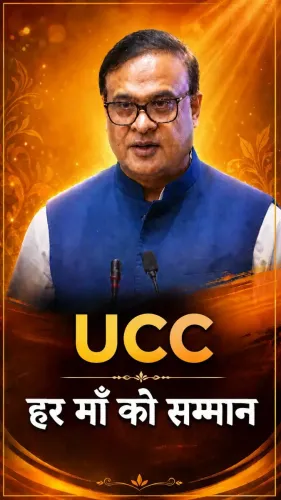
Assam Chief Minister Himanta Biswa Sarma on 8 July 2026 amplified public support for the state's Uniform Civil Code by sharing a women's testimonial, arguing the reform is building a society where every woman feels secure and empowered rather than generating political noise.
Key Takeaways
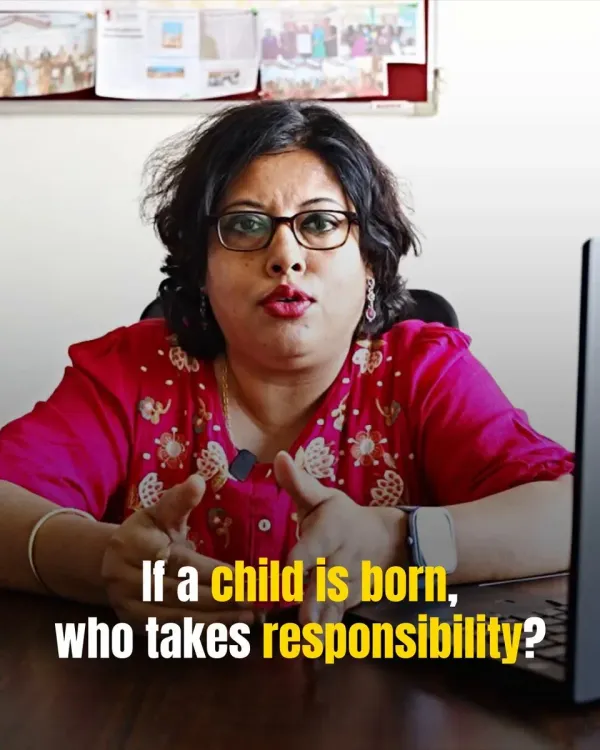
CM Himanta Biswa Sarma posted a video testimonial from Kritanjali Kashyap on 8 July 2026 to build public support for Assam's proposed Uniform Civil Code .
The Chief Minister framed the UCC as a gender-justice measure, stating it helps build a society where 'every woman feels secure, protected and empowered.' Uttarakhand became India's first state to enact a UCC law on 7 February 2024 , serving as a legislative template for Assam.
Article 44 of the Indian Constitution has directed the State to pursue a uniform civil code since the Constituent Assembly debates of 1947–49 .
Any formal Assam UCC bill is likely to face legal challenges before the Gauhati High Court or Supreme Court of India .
Sarma's role as convenor of the North-East Democratic Alliance (NEDA) could spur parallel UCC moves in other North-East states.
Assam Chief Minister Himanta Biswa Sarma on Wednesday, 8 July 2026, shared a video testimonial amplifying public support for the state's proposed Uniform Civil Code (UCC), framing the initiative as a cornerstone of gender justice rather than a political flashpoint. The post featured the perspective of a woman identified as Kritanjali Kashyap, whose account the Chief Minister cited as evidence of the UCC's ground-level impact on women's security and dignity.
Context
Sarma wrote that 'Assam's Uniform Civil Code will be remembered for the difference it makes, not the noise around it,' a pointed rebuttal to critics who have characterised the UCC push as electorally motivated. By foregrounding a personal testimony, the Chief Minister sought to shift the conversation from legislative debate to lived experience. The video underscores the Assam government's sustained communication effort around the UCC, presenting it as a women-first reform rather than a religious or ideological exercise.
A Uniform Civil Code proposes a single set of laws governing marriage, divorce, inheritance and adoption for all citizens regardless of religion, replacing the patchwork of community-specific personal laws currently in force. The Indian Constitution's Article 44, a Directive Principle, has since the Constituent Assembly debates of 1947–49 called on the State to work toward such a common code.
Policy Backdrop
Uttarakhand became the first Indian state to pass a UCC statute when its Legislative Assembly enacted the law on 7 February 2024, setting a template that other BJP-governed states have been watching closely. Assam has been among the most vocal in signalling its intent to follow suit, with CM Sarma repeatedly citing gender equality — particularly protections for Muslim women around marriage and divorce — as the primary rationale.
The BJP's 2019 Lok Sabha election manifesto had reiterated the party's long-standing commitment to a nationwide UCC. Since 2014, BJP-ruled states have advanced incremental personal-law reforms framed as gender-justice measures, even as minority organisations and opposition parties have mounted legal and political challenges. Assam's approach fits squarely within this broader pattern, adding a regional North-East dimension through Sarma's role as convenor of the North-East Democratic Alliance (NEDA).
Stakeholders and Impact
The primary beneficiaries the government highlights are women in Assam, particularly those from communities where customary personal laws have historically limited rights in divorce, inheritance and child custody. Proponents argue a uniform code would give every woman — regardless of her religion — equal legal standing in family disputes.
Religious minority organisations, however, have raised concerns that a state-imposed code overrides constitutionally protected personal-law traditions. Legal scholars note that any Assam UCC legislation, once formally tabled, would likely face scrutiny before the Gauhati High Court or the Supreme Court of India, testing the boundaries of state legislative competence on matters that overlap with central personal-law statutes.
What's Next
The Assam government is expected to move toward formal introduction of a UCC bill in the state assembly, a step that would trigger both legislative and judicial processes. Parallel announcements from other NEDA-member states could amplify political momentum for the reform across the North-East. Sarma's use of citizen testimonials suggests the government is simultaneously running a public-opinion campaign to pre-empt opposition narratives ahead of any formal tabling of legislation.
The trajectory of Assam's UCC will be shaped as much by courtroom challenges as by assembly votes, making the coming months a critical window for both supporters and critics of the reform.
Point of View
CM Sarma is executing a deliberate narrative strategy — anchoring the UCC debate in individual human stories to blunt the 'communal politics' charge levelled by opponents. This mirrors the communication playbook used around the Uttarakhand UCC rollout, where the government consistently foregrounded women beneficiaries. The move also signals that Assam's UCC is entering a more active phase, with public opinion management running ahead of formal legislative action. Within the NEDA framework, Sarma's visibility on this issue positions him as the North-East's primary driver of a reform that remains one of the BJP's most consequential — and contested — long-term commitments.
NationPress
8 Jul 2026
Frequently Asked Questions
What is the Assam Uniform Civil Code?
The Assam Uniform Civil Code is a proposed law that would replace religion-specific personal laws on marriage, divorce, inheritance and adoption with a single set of rules applicable to all citizens of Assam regardless of their religion.
Has any Indian state already enacted a Uniform Civil Code?
Yes. Uttarakhand became the first Indian state to pass a UCC law when its Legislative Assembly enacted the statute on 7 February 2024, under a BJP government.
Why is CM Himanta Biswa Sarma promoting the UCC?
CM Sarma has consistently framed the UCC as a gender-justice reform aimed at giving women equal legal protections in family matters, arguing it will make every woman feel secure, protected and empowered irrespective of her community's personal laws.
Who is Kritanjali Kashyap?
Kritanjali Kashyap is the woman whose perspective on the Assam UCC was shared by CM Sarma in a video posted on 8 July 2026; beyond this testimonial, her identity and background are not confirmed in official records available at this time.
Can Assam be legally challenged over a Uniform Civil Code?
Yes. Legal experts note that once a UCC bill is formally introduced in the Assam assembly, it could face constitutional challenges before the Gauhati High Court or the Supreme Court of India, particularly on questions of state legislative competence and minority religious rights.