CM Himanta's Assam Pushes Handloom Heritage and Weaver Livelihoods
Synopsis
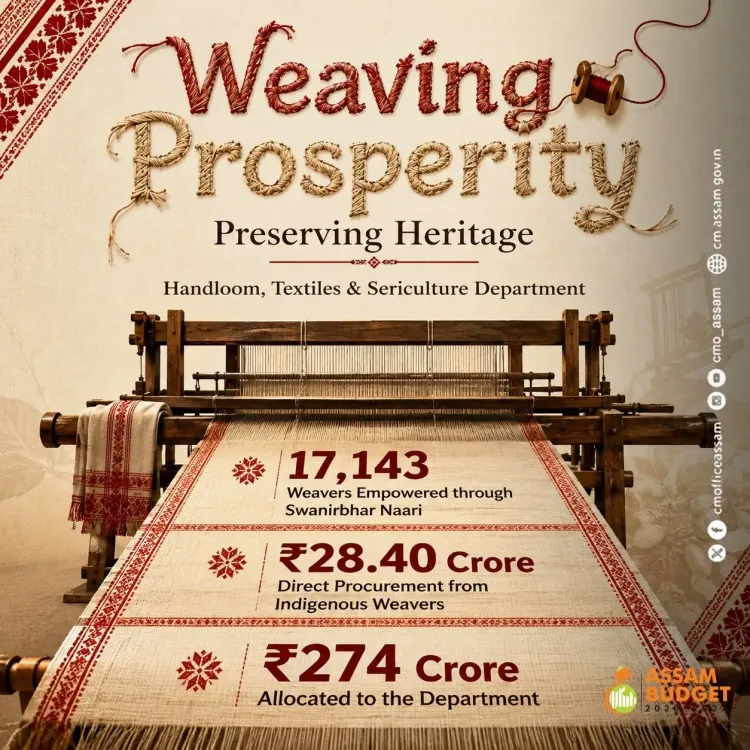
The Chief Minister's Office of Assam on 16 July 2026 spotlighted CM Himanta Biswa Sarma's drive to preserve the state's Muga, Eri and Pat silk weaving traditions while boosting livelihoods for rural artisans, framing the effort as both cultural stewardship and self-reliance policy.
Key Takeaways
The Chief Minister's Office of Assam on 16 July 2026 reaffirmed the government's commitment to preserving Assam's handloom heritage under CM Dr.
Himanta Biswa Sarma .
Assam's weaving tradition centres on GI-tagged Muga , Eri , and Pat silks, with major clusters in Sualkuchi .
The state has participated in the central National Handloom Development Programme , with cluster projects expanded after 2015 .
The government's messaging aligns with the national Atmanirbhar Bharat framework, positioning handloom as a rural livelihood and self-reliance sector.
Women-led weaving households are a key focus of recent handloom policy in the state.
Future budget allocations and assembly-session announcements will indicate the scale of fresh investment in weaver support and market linkage.
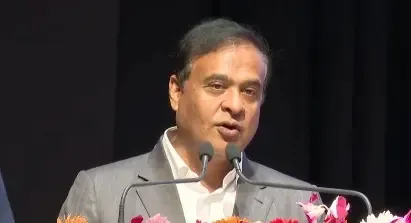
The Chief Minister's Office of Assam on Thursday, 16 July 2026, highlighted the state government's ongoing efforts to preserve Assam's centuries-old weaving heritage while strengthening the livelihoods of artisans who sustain it, crediting the initiative to the leadership of Chief Minister Dr. Himanta Biswa Sarma.
Context
The official post from the Chief Minister's Office of Assam stated that 'Assam's weaving heritage is being preserved with purpose while empowering the hands that keep it alive,' framing the government's handloom agenda as simultaneously a cultural mission and a livelihood programme. The emphasis on 'self-reliance' echoes the national Atmanirbhar Bharat framework, which successive state governments have adopted to position traditional crafts as engines of rural economic independence.
Policy Backdrop
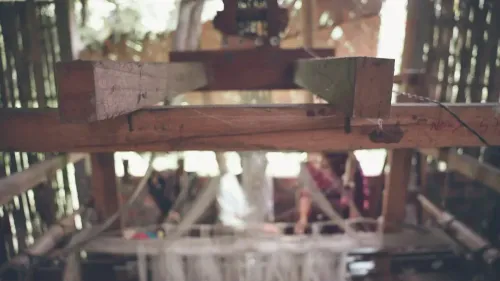
Assam is home to one of India's most distinctive textile traditions, built around Muga, Eri, and Pat silks — three varieties that carry Geographical Indication tags and are woven predominantly in clusters such as Sualkuchi, often called the 'Manchester of the East.' The state has long participated in the central government's National Handloom Development Programme, with cluster-level projects receiving expanded state support after 2015.
Since Chief Minister Dr. Himanta Biswa Sarma assumed office in May 2021, the state government has continued to frame handloom preservation as both cultural stewardship and rural employment generation. Women-led weaving households have received particular attention in recent policy cycles, with efforts directed at linking artisans to wider markets and export channels.
Stakeholders and Impact
The primary beneficiaries of these initiatives are handloom weavers and rural women artisans spread across Assam's weaving belts. For many households, the loom is the principal source of income, making state support for cluster development, raw-material supply, and market access directly consequential for family livelihoods.
GI-tagged products such as Muga silk carry significant premium potential in domestic and international markets, meaning that effective promotion and quality-certification programmes can translate cultural heritage into measurable economic gains for weaver communities. The government's stated goal of taking 'Assam's rich handloom legacy to new heights' signals continued investment in this linkage between identity, craft, and commerce.
What's Next
Observers and policy watchers will look to the state's upcoming budget allocations and assembly sessions for concrete announcements on new handloom cluster investments, marketing tie-ups, or trade expos that give shape to the broad direction outlined in the government's communication. The degree to which fresh resources are committed — beyond existing central-scheme frameworks — will determine whether the current emphasis translates into expanded ground-level support for weavers. A sustained push on export promotion and e-commerce integration for GI-tagged Assam silks could significantly widen the market reach of artisans who have historically depended on domestic and festival-season demand.
Point of View
Championing Assam's GI-tagged silk identity also carries electoral and soft-power value in a state where weaving communities are numerically and culturally significant. The broad language of the post, however, leaves open the critical question of whether new resources are being deployed or existing schemes are simply being repackaged. Concrete budget commitments and scheme-level outcomes will ultimately determine whether this signals a genuine policy push or routine institutional communication.
NationPress
16 Jul 2026
Frequently Asked Questions
What is Assam's handloom heritage?
Assam has one of India's oldest and most distinctive weaving traditions, centred on Muga, Eri and Pat silks — all of which carry Geographical Indication tags. Major weaving clusters are located in Sualkuchi, often called the 'Manchester of the East,' and thousands of rural households, particularly women-led ones, depend on the loom as their primary livelihood.
What is CM Himanta Biswa Sarma doing for Assam's weavers?
Under Chief Minister Dr. Himanta Biswa Sarma, who has led Assam since May 2021, the state government has continued to strengthen handloom cluster support, promote self-reliance among artisan communities, and link Assam's GI-tagged silk products to wider markets, building on the central National Handloom Development Programme.
What is the National Handloom Development Programme?
The National Handloom Development Programme is a central government scheme designed to support handloom weavers through cluster development, infrastructure, raw-material supply and market linkage. Assam has been a participant in the programme, with state-level cluster projects receiving expanded support from 2015 onwards.
What are Muga, Eri and Pat silks?
Muga, Eri and Pat are three distinct varieties of silk produced in Assam, each with unique characteristics. Muga is a rare golden-hued wild silk unique to Assam; Eri is a peace silk used for warm textiles; and Pat is a bright, lustrous variety used in traditional Assamese attire. All three carry Geographical Indication tags protecting their regional identity.
How does Assam's handloom sector connect to Atmanirbhar Bharat?
State governments across India, including Assam, have aligned traditional-craft promotion with the central Atmanirbhar Bharat ('self-reliant India') framework, positioning handloom as a sector that generates rural employment and reduces dependence on imported textiles. Assam's messaging on weaver livelihoods and self-reliance reflects this broader national policy narrative.