CM Pema Khandu receives APSHRC Annual Report 2025-26

Synopsis
Arunachal Pradesh Chief Minister Pema Khandu received the APSHRC Annual Report 2025-26 from Chairperson Bamang Tago on 29 May 2026, commending the commission's work in strengthening human rights awareness and accountability across the state.
Key Takeaways
Bamang Tago , Chairperson of the Arunachal Pradesh State Human Rights Commission , presented the Annual Report 2025–26 to CM Pema Khandu on 29 May 2026 .
CM Khandu publicly appreciated the commission's 'efforts and commitment towards strengthening awareness, accountability and human rights institutions.' The APSHRC was constituted under the Protection of Human Rights Act, 1993 , which mandates annual statutory reporting.
Arunachal Pradesh borders China , Myanmar , and Bhutan and has unique constitutional protections under Article 371H , giving the commission a distinct regional mandate.
The report is expected to be tabled in the Arunachal Pradesh Legislative Assembly as the next statutory step.
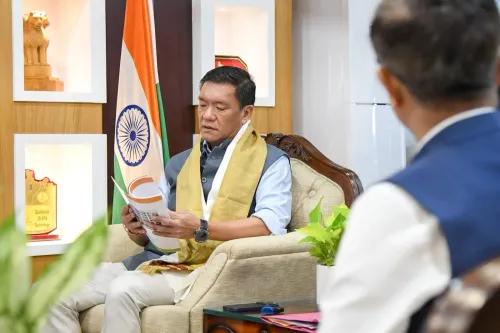
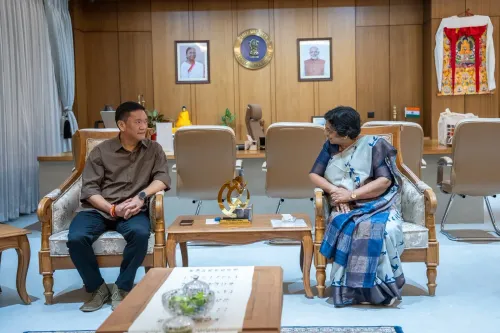
Arunachal Pradesh Chief Minister Pema Khandu received the Annual Report 2025–26 of the Arunachal Pradesh State Human Rights Commission (APSHRC) on Friday, 29 May 2026, when APSHRC Chairperson Bamang Tago called on him and formally presented the document.
Context
The presentation of the annual report is a statutory obligation under the Protection of Human Rights Act, 1993, which mandates state commissions to compile and submit a yearly account of their activities, complaints handled, and recommendations. CM Khandu acknowledged the occasion on social media, expressing appreciation for the commission's 'efforts and commitment towards strengthening awareness, accountability and human rights institutions in Arunachal Pradesh.'
Bamang Tago serves as the Chairperson of APSHRC, the statutory body constituted under the same 1993 Act to inquire into human rights violations and promote rights awareness across the state.
Policy Backdrop
The Protection of Human Rights Act, 1993 empowered states to establish their own Human Rights Commissions to complement the National Human Rights Commission (NHRC), India's apex institution set up in the same year. Several northeastern states established their commissions during the 2000s and 2010s to address region-specific concerns including tribal rights, land disputes, and development-related grievances.
Arunachal Pradesh, India's northeasternmost state bordering China, Myanmar, and Bhutan, has a predominantly tribal population with unique constitutional protections under Article 371H. These demographic and legal specificities give the APSHRC a distinct mandate compared with commissions in other states.
Annual reports function as the primary statutory mechanism for public accountability of state human rights bodies, recording the volume of complaints received, inquiries conducted, and directions issued to government departments during the reporting year.
Stakeholders and Impact
The residents of Arunachal Pradesh — particularly those from tribal communities who rely on the commission as an accessible grievance forum — are the primary stakeholders of the APSHRC's work. Human rights advocates and civil society organisations operating in the northeast also track the commission's findings as a barometer of rights conditions in the state.
India's federal network of human rights bodies operates on the principle that state commissions handle region-specific complaints while coordinating with the NHRC on matters of broader national concern. The tabling of the 2025–26 report in the Arunachal Pradesh Legislative Assembly will be the next formal step in making its findings part of the public legislative record.
What's Next
Following the presentation to CM Khandu, the Annual Report 2025–26 is expected to be laid before the Arunachal Pradesh Legislative Assembly in accordance with statutory requirements. Any recommendations addressed to the state government will then be subject to official response and action-taken reporting.
The government's follow-through on the commission's recommendations will be closely watched by rights advocates, as it signals the administration's commitment to translating institutional accountability into on-ground policy action in one of India's most strategically sensitive border states.
Point of View
But CM Khandu's public acknowledgement on social media signals an effort to project governance transparency in a state where human rights discourse is often shaped by border-security sensitivities. Northeastern commissions have historically faced questions about institutional capacity and follow-through on recommendations, making the legislative tabling of this report a meaningful test of accountability. The broader pattern across Indian states shows that the credibility of state human rights bodies depends less on the report's submission and more on the government's documented response to its findings. For Arunachal Pradesh, with its tribal demographic and strategic border geography, consistent engagement with the APSHRC's output carries both domestic governance and diplomatic signalling dimensions.
NationPress
12 Oct 2026
Frequently Asked Questions
What is the Arunachal Pradesh State Human Rights Commission?
The Arunachal Pradesh State Human Rights Commission (APSHRC) is a statutory body constituted under the Protection of Human Rights Act, 1993, to inquire into human rights violations and promote rights awareness in Arunachal Pradesh.
Who is the chairperson of APSHRC?
Bamang Tago serves as the Chairperson of the Arunachal Pradesh State Human Rights Commission.
What did CM Pema Khandu say about the APSHRC Annual Report 2025-26?
CM Pema Khandu appreciated the 'efforts and commitment of APSHRC towards strengthening awareness, accountability and human rights institutions in Arunachal Pradesh.'
What happens after the APSHRC Annual Report is submitted to the Chief Minister?
After submission to the Chief Minister, the annual report is expected to be tabled in the Arunachal Pradesh Legislative Assembly, where the government is required to respond to the commission's recommendations.
Why does Arunachal Pradesh have its own Human Rights Commission?
The Protection of Human Rights Act, 1993, authorised all Indian states to establish their own commissions to handle region-specific complaints and complement the National Human Rights Commission at the national level.