CM Majhi backs Kavach rollout on key Odisha rail routes
Synopsis
Odisha Chief Minister Mohan Charan Majhi announced on 23 June 2026 that the indigenous Kavach automatic train protection system will be rolled out on key rail routes in Odisha, citing passenger safety as the government's core objective and framing the move as a 'Double Engine Government' achievement.
Key Takeaways
CM Mohan Charan Majhi announced on 23 June 2026 that Kavach will be deployed on major rail routes in Odisha .
Kavach is an indigenous automatic train protection system developed by RDSO under the Atmanirbhar Bharat initiative to prevent signal violations and train collisions.
Field trials of Kavach were first conducted on South Central Railway in 2021-22 ; the Union Budget 2022-23 funded its high-density corridor rollout.
East Coast Railway , headquartered in Bhubaneswar , oversees the routes in question, covering Odisha's mineral belts and port corridors.
The announcement was tagged to Union Railway Minister Ashwini Vaishnaw and PM Narendra Modi , underlining the 'Double Engine Government' framing.
CM Majhi stated the initiative will 'lay the foundation for a safe, empowered and progressive Odisha' and power the state's economic growth.
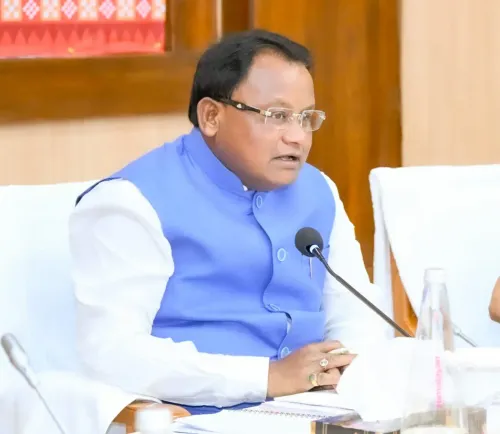
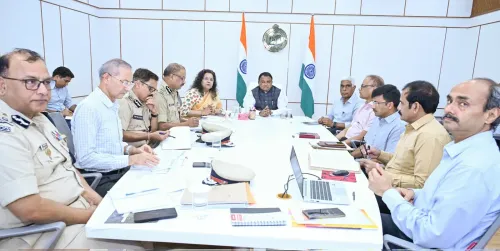
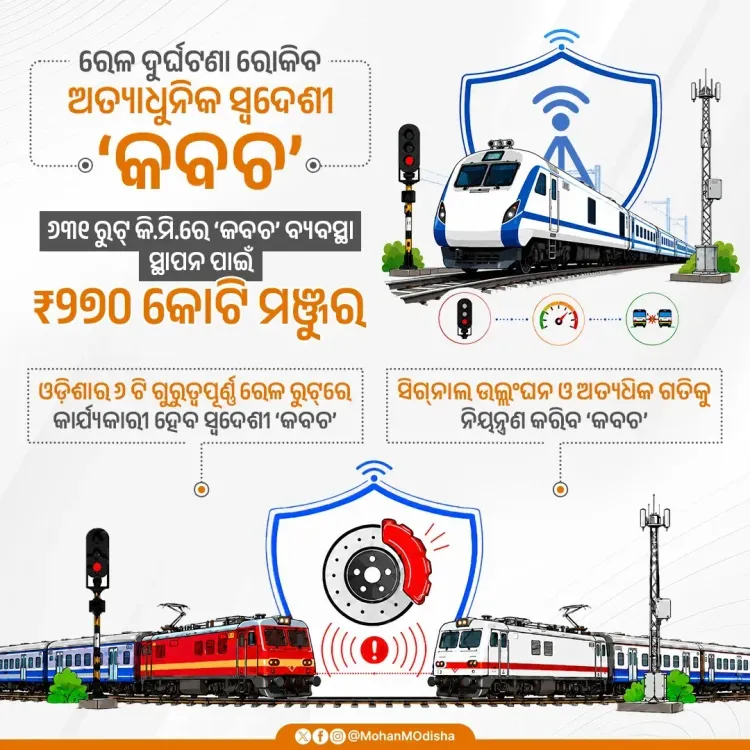
Odisha Chief Minister Mohan Charan Majhi on Tuesday, 23 June 2026 announced that the indigenous automatic train protection system Kavach will be deployed on major rail routes across Odisha, reaffirming his government's commitment to passenger safety and accident-free rail travel in the state.
Context
Posting in Odia, CM Majhi wrote: 'ଯାତ୍ରୀଙ୍କ ସୁରକ୍ଷା ଦିଗରେ ଲୋକଙ୍କ ସରକାର ସଂକଳ୍ପବଦ୍ଧ' — 'The people's government is committed to passenger safety.' He added that this indigenous technology will 'completely prevent problems such as signal violations and train collisions,' and that 'the safe journey of the public is the core objective of our government.' The post tagged the Railway Ministry, East Coast Railway, the PMO, Union Railway Minister Ashwini Vaishnaw, and Prime Minister Narendra Modi.
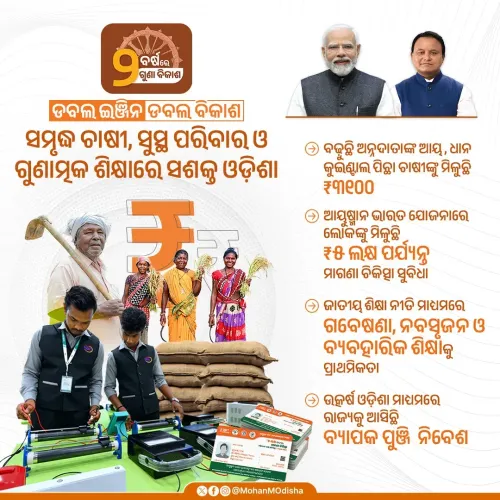
The announcement frames Kavach deployment as a joint achievement of the 'Double Engine Government' — a BJP formulation describing coordinated governance when the same party holds power at both the Centre and the state. Odisha has been governed by the BJP under CM Majhi since June 2024.
Policy Backdrop
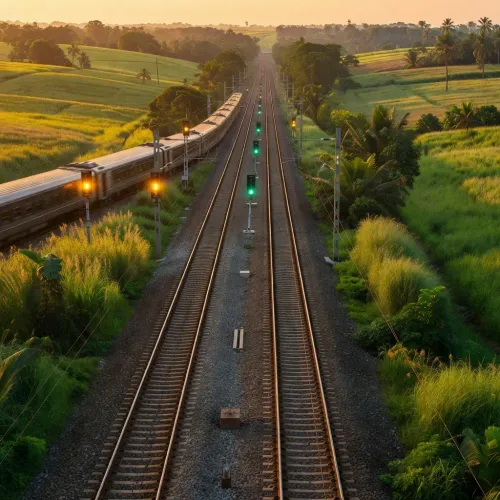
Kavach is an automatic train protection system developed by the Research Designs and Standards Organisation (RDSO) under the Atmanirbhar Bharat initiative. It works by automatically applying brakes when a train risks passing a signal at danger or approaching another train on the same track, effectively eliminating two of the most common causes of rail accidents in India.
Field trials were first conducted on the South Central Railway in 2021-22, and the Union Budget 2022-23 allocated dedicated funds for Kavach's rollout across high-density corridors. East Coast Railway, headquartered in Bhubaneswar, oversees a dense network of routes that traverse Odisha's mineral belts, port corridors, and industrial zones — making it a high-priority zone for the upgrade.
Stakeholders and Impact
Odisha's rail network carries millions of passengers annually and serves as a critical freight artery for the state's mining and industrial economy. Kavach deployment on key routes is expected to directly benefit daily commuters, long-distance passengers, and the broader logistics chain connecting Odisha's ports and industrial corridors to the rest of the country.
CM Majhi emphasised that the initiative will 'strengthen Odisha's economic growth in the coming days and lay the foundation for a safe, empowered and progressive Odisha.' Similar Kavach rollout commitments have been made in other BJP-governed states, positioning the technology as a flagship symbol of Centre-state coordination on rail safety.
What's Next
Attention will now turn to East Coast Railway's route-specific implementation schedule and the allocation of funds in the next Union Rail Budget. The integration of Kavach across Odisha's busiest corridors will be a key metric for measuring whether the 'Double Engine' coordination translates into on-ground safety improvements for passengers.
If executed on schedule, the rollout could position Odisha as a model for indigenous rail safety technology adoption — with implications for how other eastern states approach similar upgrades in the years ahead.
Point of View
The Railway Minister, and East Coast Railway in a single post, he is publicly anchoring Odisha's rail safety agenda to Centre-state BJP coordination ahead of any formal rollout notification. The 'Double Engine Government' framing has become a standard BJP template to credit both state and central leadership simultaneously, making it difficult to separate administrative intent from electoral messaging. That said, Odisha's rail network — dense, freight-heavy, and prone to high-traffic congestion — is a genuinely high-priority candidate for Kavach. The real test will be whether route-specific timelines and budget allocations materialise in the next Union Rail Budget, or whether this remains an aspirational commitment.
NationPress
23 Jun 2026
Frequently Asked Questions
What is Kavach and how does it work on Indian Railways?
Kavach is an indigenous automatic train protection system developed by RDSO under India's Atmanirbhar Bharat initiative. It automatically applies brakes when a train risks passing a signal at danger or approaching another train on the same track, preventing collisions and signal violations.
Which Odisha rail routes will get Kavach installed?
CM Majhi's announcement refers to 'major rail routes' in Odisha under East Coast Railway's jurisdiction, but specific route names and timelines have not been officially confirmed as of the announcement on 23 June 2026.
What is the Double Engine Government that CM Majhi refers to?
The 'Double Engine Government' is a BJP formulation describing coordinated governance when the BJP holds power at both the state and central levels simultaneously, implying faster policy delivery and infrastructure investment.
Who is responsible for the Kavach rollout in India?
The Kavach rollout is overseen by the Union Ministry of Railways under Minister Ashwini Vaishnaw, with zonal railways such as East Coast Railway responsible for implementation on their respective networks.
Why is Odisha considered important for rail safety upgrades?
Odisha has a dense rail network connecting mineral belts, ports, and industrial corridors, making it a high-traffic zone for both passenger and freight movement. The state has also witnessed major rail accidents in the past, heightening the urgency of safety technology deployment.