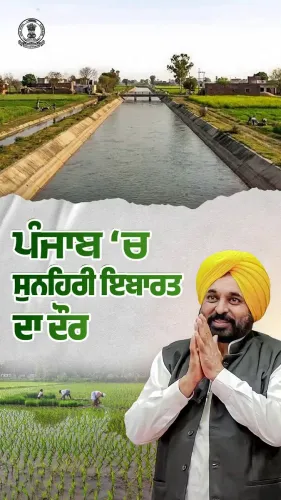
CM Mann: Punjab recharges 22 lakh cusec litres, water table rises 2-4 m

Synopsis
Chief Minister Bhagwant Mann on 20 June 2026 stated that Punjab has recharged 22 lakh cusec litres of groundwater and that a recent central government report shows water table levels rising by 2 to 4 metres in most villages, marking a potential reversal of decades of aquifer depletion in the state.
Key Takeaways
The Chief Minister's Office of Punjab announced on 20 June 2026 that CM Bhagwant Mann has cited historic reforms in agriculture and irrigation.
The Punjab government claims to have recharged 22 lakh cusec litres of water into the ground.
A recent central government report cited by CM Mann indicates groundwater levels in most Punjab villages have risen by 2 to 4 metres .
Punjab has historically suffered severe aquifer depletion due to its rice-wheat cycle and subsidised tubewell electricity.
Key policy milestones include the Punjab Preservation of Subsoil Water Act 2009 and the central government's Atal Bhujal Yojana 2019 .
The next CGWB national groundwater assessment will be watched for independent verification of these claims.
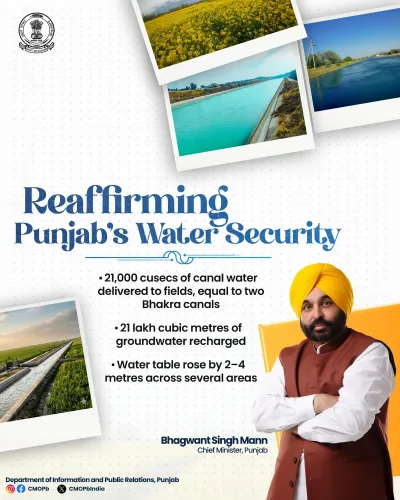
The Chief Minister's Office of Punjab announced on Saturday, 20 June 2026 that Chief Minister Bhagwant Mann has cited historic reforms in agriculture and irrigation, stating that the Punjab government has recharged 22 lakh cusec litres of water into the ground and that groundwater levels in most villages have risen by 2 to 4 metres, according to a recent central government report.
Context
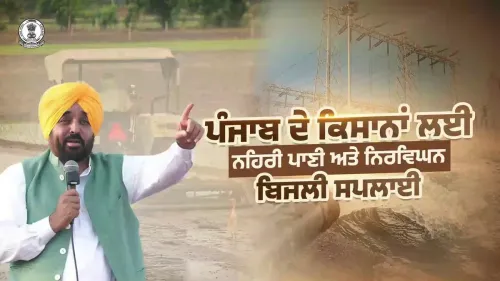
Addressing reforms in the farming and irrigation sectors, CM Mann said — 'ਪੰਜਾਬ ਸਰਕਾਰ ਵੱਲੋਂ 22 ਲੱਖ ਕਿਊਸਿਕ ਲੀਟਰ ਪਾਣੀ ਧਰਤੀ ਵਿੱਚ ਰੀਚਾਰਜ ਕੀਤਾ ਗਿਆ ਹੈ' ('The Punjab government has recharged 22 lakh cusec litres of water into the earth'). He attributed the rise in water table levels to what he described as 'historic reforms' in agriculture and irrigation undertaken by his administration since taking office in March 2022.
The Chief Minister further stated that a recent central government report confirms that groundwater levels in most villages of Punjab have risen by 2 to 4 metres, calling it a very auspicious sign for the state's environment and future — 'ਸੂਬੇ ਦੇ ਵਾਤਾਵਰਣ ਅਤੇ ਭਵਿੱਖ ਲਈ ਇੱਕ ਬਹੁਤ ਹੀ ਸ਼ੁਭ ਸੰਕੇਤ'.
Policy Backdrop
Punjab has faced decades of rapid aquifer depletion driven by its dominant rice-wheat cropping cycle and heavily subsidised electricity for tubewells, making it one of India's most groundwater-stressed states. The Punjab Preservation of Subsoil Water Act, 2009 was among the earliest regulatory interventions, prohibiting early paddy transplantation to reduce extraction during peak summer months.
The central government's Atal Bhujal Yojana (2019) subsequently introduced community-based aquifer management in identified water-stressed blocks across the state, combining recharge infrastructure with awareness programmes. Periodic assessments by the Central Ground Water Board (CGWB), functioning under the Ministry of Jal Shakti, serve as the primary national benchmark for tracking whether such measures produce measurable recovery in aquifer levels.
The Aam Aadmi Party government under CM Mann has positioned water conservation alongside stubble-burning reduction and crop diversification as pillars of its agricultural reform agenda since 2022.
Stakeholders and Impact
A sustained rise in groundwater levels would directly benefit Punjab's farmers, who depend on tubewells for irrigation across millions of acres of agricultural land, reducing pumping costs and extending the productive life of existing wells. Rural households relying on groundwater for drinking and domestic use stand to gain from improved water security, particularly in blocks that had been categorised as 'over-exploited' by the CGWB.
Environmental groups and agricultural scientists have long warned that without a reversal of the depletion trend, large parts of Punjab could face a severe water crisis within a generation. If the central government data cited by CM Mann holds up to scrutiny, it would represent a meaningful shift in a decades-long downward trajectory.
What's Next
Attention will now turn to the release of the next comprehensive CGWB national groundwater assessment report, which will provide independently verifiable, district-level data on aquifer recovery across Punjab. State budget allocations for canal lining, recharge structures, and crop diversification incentives in the coming fiscal year will indicate whether the government intends to consolidate these gains.
The claims made by CM Mann are likely to be scrutinised by opposition parties and water-policy experts who will seek to cross-reference them against official CGWB data, making the next central report a politically significant document for the state.
Point of View
Particularly on the politically sensitive issue of water. The invocation of a 'recent central government report' is a deliberate rhetorical move, lending third-party credibility to a state-level claim ahead of what is likely to be a competitive electoral cycle. However, the specific figures of 22 lakh cusec litres recharged and a 2-to-4-metre rise across 'most villages' are sweeping claims that will face rigorous scrutiny from the CGWB's own published data. If verified, they would represent one of the most significant environmental turnarounds in Punjab's recent history — and a major political asset for the AAP government.
NationPress
20 Jun 2026
Frequently Asked Questions
Has Punjab's groundwater level really risen under Bhagwant Mann?
Chief Minister Bhagwant Mann stated on 20 June 2026 that a recent central government report shows groundwater levels in most Punjab villages have risen by 2 to 4 metres. Independent verification through the next CGWB national assessment report will be required to confirm this claim.
How much water has Punjab recharged into the ground?
CM Bhagwant Mann stated that the Punjab government has recharged 22 lakh cusec litres of water into the earth, citing this as a result of historic reforms in agriculture and irrigation.
What is the Central Ground Water Board and why does it matter for Punjab?
The Central Ground Water Board (CGWB) is a body under the Ministry of Jal Shakti that publishes national assessments of groundwater levels. Its periodic reports are the primary independent benchmark for tracking aquifer recovery in Punjab, one of India's most water-stressed states.
What caused Punjab's groundwater crisis in the first place?
Punjab's groundwater crisis developed over decades due to the intensive rice-wheat cropping cycle, which requires large volumes of irrigation water, combined with heavily subsidised electricity for tubewells that encouraged over-extraction with little cost to farmers.
What government schemes exist to address Punjab's groundwater depletion?
Key interventions include the Punjab Preservation of Subsoil Water Act 2009, which banned early paddy transplantation, and the central government's Atal Bhujal Yojana launched in 2019, which introduced community-based aquifer management in water-stressed blocks across the state.