CM Nitish Kumar Directs Floating Solar, Green Hydrogen Push in Bihar
Synopsis
Chief Minister Nitish Kumar has directed Bihar officials to study floating solar project potential across the state and begin framing a Green Hydrogen Policy, signalling a major step-up in Bihar's clean-energy ambitions aligned with India's 2070 net-zero goal.
Key Takeaways
CM Nitish Kumar has directed a detailed study of floating solar project potential across Bihar , announced on 9 July 2026 .
Officials have been ordered to prepare new schemes based on the floating solar feasibility findings.
The Chief Minister has also directed the initiation of work towards framing a Bihar Green Hydrogen Policy .
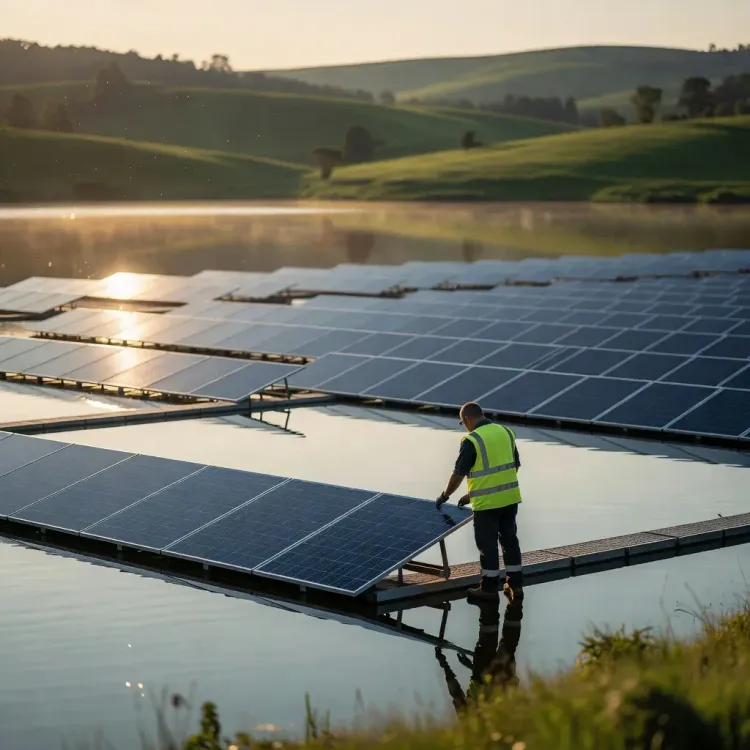
Floating solar installations on Bihar's reservoirs and ponds would save land and reduce water evaporation losses.
The move aligns with the central government's National Green Hydrogen Mission (2023) and India's net-zero target of 2070 .
The Bihar Renewable Energy Development Agency (BREDA) is the state's nodal agency expected to lead implementation.
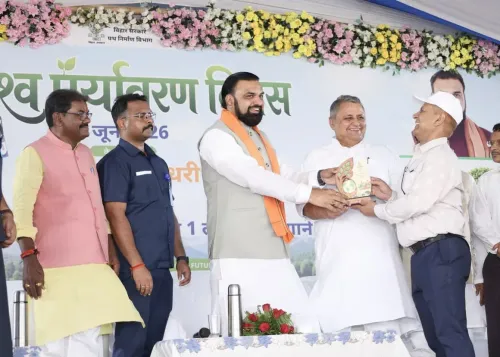
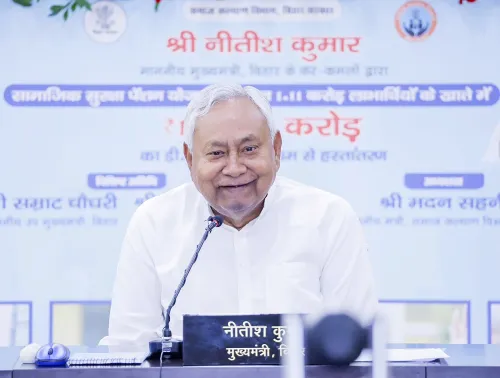
The Chief Minister's Office of Bihar announced on Thursday, 9 July 2026 that Chief Minister Nitish Kumar has directed officials to conduct a detailed study of floating solar project potential across the state and to begin work on a new Green Hydrogen Policy for Bihar.
The official post, shared from the Chief Minister's Office account, stated in Hindi: 'माननीय मुख्यमंत्री जी ने बिहार में फ्लोटिंग सोलर परियोजनाओं की संभावनाओं का विस्तृत अध्ययन कर नई योजनाएं तैयार करने तथा राज्य की ग्रीन हाइड्रोजन नीति के निर्माण की दिशा में आवश्यक कार्रवाई प्रारंभ करने के निर्देश भी दिए।' — translated: 'The Honourable Chief Minister has directed a detailed study of the potential of floating solar projects in Bihar to prepare new schemes, and has also ordered the initiation of necessary action towards framing the state's Green Hydrogen Policy.'
Context
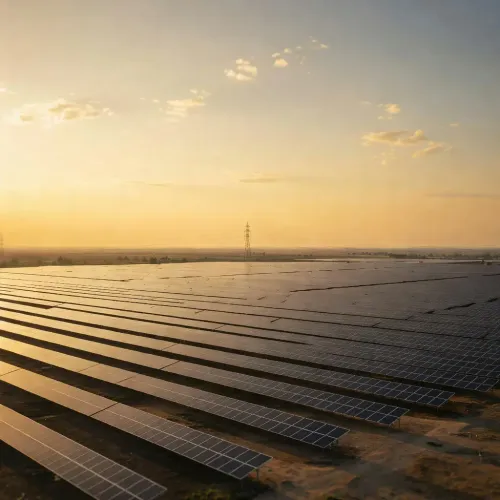
Floating solar projects involve installing photovoltaic panels on the surface of reservoirs, ponds, and water bodies, rather than on land. This approach addresses two of Bihar's key constraints: limited available land for large-scale ground-mounted solar farms and water loss through evaporation from irrigation reservoirs. The state's extensive network of water bodies — fed by rivers originating in the Himalayas — makes it a natural candidate for this technology. Bihar had previously set out solar targets under its Bihar Solar Power Policy 2017, which focused primarily on grid-connected and off-grid installations. The new directive signals a significant upgrade in ambition, moving toward next-generation renewable infrastructure.Policy Backdrop
The push for a state-level Green Hydrogen Policy mirrors the template established by the National Green Hydrogen Mission, launched by the central government in 2023, which aims to scale up green hydrogen production capacity across India to support industrial decarbonisation and energy security. Several Indian states have moved to draft their own complementary frameworks since then. Bihar's 2022-23 budget had already included incentives for new and renewable energy projects, laying a fiscal foundation for expanded clean-energy investment. The Bihar Renewable Energy Development Agency (BREDA), the state's nodal body for solar and renewable implementation, is expected to play a central role in conducting the feasibility studies now ordered by the Chief Minister. India's broader commitment to achieving net-zero emissions by 2070 has accelerated state-level policy activity. Floating solar and green hydrogen are widely seen as the next wave of clean energy development after conventional ground-mounted solar, addressing both land scarcity and the need for industrial-grade clean fuel.Stakeholders and Impact
The directive has direct implications for renewable energy developers eyeing Bihar as an emerging market, as well as for the state's irrigation and water resource departments, which manage the reservoirs and ponds that would host floating solar installations. A successful floating solar roll-out could simultaneously boost power generation capacity and reduce water evaporation losses — a dual benefit for an agrarian state heavily dependent on irrigation. For the industrial sector, a formal Green Hydrogen Policy would provide the regulatory clarity needed to attract investment in hydrogen production, storage, and end-use infrastructure. This could eventually support cleaner processes in Bihar's fertiliser, small-scale manufacturing, and transport sectors.What's Next
The immediate next steps will involve BREDA and relevant state departments completing the detailed feasibility study on floating solar potential, followed by the preparation of new project schemes. Simultaneously, the policy drafting process for Bihar's Green Hydrogen framework is expected to get under way. Stakeholders will be watching for the release of a draft Green Hydrogen Policy and tender notifications for pilot floating solar projects on the state's major reservoirs. The pace of these developments will signal how seriously Bihar intends to position itself as a clean-energy leader in eastern India.Point of View
A state historically associated with power deficits rather than generation ambition. By moving on both technologies simultaneously, the Chief Minister is signalling alignment with the central government's National Green Hydrogen Mission while carving out a state-specific niche through floating solar — a technology well-suited to Bihar's water-rich geography. The political timing is also notable: clean-energy credentials increasingly carry weight in state-level governance optics as India's 2070 net-zero commitment filters down to electoral discourse. Whether these directives translate into actionable tenders and a notified Green Hydrogen Policy will determine if this is a genuine policy inflection point or a directional statement.
NationPress
10 Jul 2026
Frequently Asked Questions
What are floating solar projects and why is Bihar considering them?
Floating solar projects place photovoltaic panels on the surface of reservoirs and ponds, saving land and reducing water evaporation. Bihar is considering them because the state has extensive water bodies but limited flat land suitable for large ground-mounted solar farms.
What is Bihar's Green Hydrogen Policy?
Bihar's Green Hydrogen Policy is a proposed state framework — currently in the early drafting stage as of July 2026 — to support the production, storage, and use of green hydrogen, in line with the central government's National Green Hydrogen Mission launched in 2023.
Who directed the floating solar study in Bihar?
Chief Minister Nitish Kumar directed officials to conduct a detailed feasibility study of floating solar project potential in Bihar and to begin work on the state's Green Hydrogen Policy, as announced by the Chief Minister's Office on 9 July 2026.
What is BREDA and what role will it play?
BREDA, the Bihar Renewable Energy Development Agency, is the state's nodal agency for solar and renewable energy project implementation. It is expected to lead the feasibility studies and scheme preparation ordered by the Chief Minister.
How does Bihar's move connect to India's national clean-energy goals?
India has committed to achieving net-zero emissions by 2070, and the central government launched the National Green Hydrogen Mission in 2023 to scale up clean hydrogen capacity. Bihar's directives on floating solar and a state Green Hydrogen Policy are part of a broader pattern of Indian states aligning their policies with these national commitments.