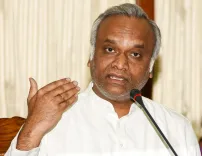
CM Nitish Sets 7-8 Min Target for Bihar's 112 Emergency Response

Synopsis
Chief Minister Nitish Kumar has set a target to reduce Bihar's 112 emergency service response time from 10 minutes to 7–8 minutes by maximising the use of technology and artificial intelligence, the Chief Minister's Office announced on 4 July 2026.
Key Takeaways
Bihar CM Nitish Kumar has directed the 112 emergency service to cut response time from 10 minutes to 7–8 minutes .
The Chief Minister emphasised maximum use of technology and Artificial Intelligence (AI) to achieve the target.
The directive was shared by the Chief Minister's Office of Bihar on 4 July 2026 in a reply to BJP leader Samrat Choudhary .
Bihar integrated 112 ERSS operations with GPS-enabled state control rooms around 2018–19 under the national Emergency Response Support System.
Implementation will require budget allocations, AI dispatch software procurement, and expanded control-room capacity.
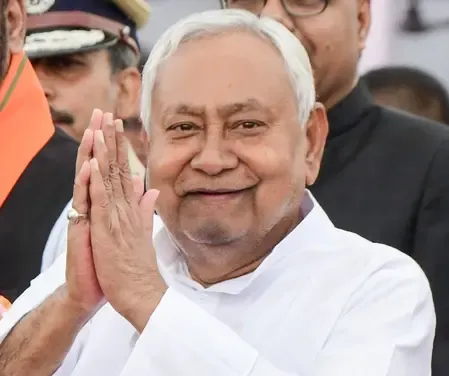
The Chief Minister's Office of Bihar on Saturday, 4 July 2026, shared that Chief Minister Nitish Kumar has set a new response-time target for the state's 112 emergency service, aiming to cut average arrival times from 10 minutes to 7–8 minutes through greater use of technology and artificial intelligence.
Context
The post, a reply to BJP leader Samrat Choudhary (@samrat4bjp), quotes Nitish Kumar as stating — 'unhone takneek evam Artificial Intelligence (AI) ke adhiktam upyog par bal dete hue' ['emphasising maximum use of technology and Artificial Intelligence'] — that the 112 emergency service response time should be reduced from 10 minutes to 7–8 minutes. The directive signals a direct push from the Chief Minister's office to deploy AI tools within Bihar's emergency dispatch infrastructure.
The exchange between the CMO account and a ruling-party legislator suggests the target has been discussed in a party or governance forum, though the specific meeting or occasion was not detailed in the post.
Policy Backdrop
The 112 Emergency Response Support System (ERSS) is a Ministry of Home Affairs initiative that integrates police, fire, and ambulance services under a single national number. The Government of India piloted ERSS in 2015 and began a nationwide rollout from 2019. Bihar Police integrated 112 operations with state control rooms and GPS tracking around 2018–19.
Across India, states including Andhra Pradesh and Maharashtra have used GPS, data analytics, and AI-assisted dispatch to progressively reduce emergency response times under the same national framework. Bihar's stated target fits within this broader pattern of technology-driven upgrades to public safety infrastructure.
Stakeholders and Impact
The primary beneficiaries of a faster response target are Bihar's approximately 13 crore residents, particularly those in rural and peri-urban areas where emergency services have historically taken longer to arrive. Faster response times in medical emergencies, fires, and law-and-order situations can directly reduce casualties and property loss.
For Bihar Police and emergency responders, meeting the new benchmark would require investments in AI-powered dispatch software, better GPS fleet management, and potentially expanded control-room capacity. The directive places performance accountability on the state's emergency services administration.
What's Next
Concrete implementation will depend on state budget allocations for technology procurement, vendor contracts for AI-based dispatch systems, and pilot project reports from Bihar's 112 control rooms. Observers will watch for formal government orders or tender notices that translate the Chief Minister's directive into funded action.
If achieved, the 7–8 minute response-time target would mark a measurable improvement in Bihar's public safety infrastructure and could serve as a benchmark for other states still working to optimise their ERSS operations under the Digital India framework.
Point of View
Often used to counter perceptions of governance lag. By framing the target in a reply to a ruling-party leader, the CMO is also signalling intra-party accountability on a deliverable that is easy to measure and communicate. The move aligns Bihar with a national pattern where states compete on ERSS performance metrics as a proxy for overall governance quality. The real test, however, will be whether the target is backed by concrete procurement and operational changes in the months ahead.
NationPress
4 Jul 2026
Frequently Asked Questions
What is Bihar's new target for 112 emergency response time?
Bihar CM Nitish Kumar has set a target to reduce the 112 emergency service response time from 10 minutes to 7–8 minutes through the use of technology and AI.
What is the 112 emergency service in India?
The 112 Emergency Response Support System (ERSS) is a Ministry of Home Affairs initiative that integrates police, fire, and ambulance services under a single national emergency number, rolled out nationwide from 2019 .
How will Bihar use AI to improve emergency response?
CM Nitish Kumar has directed maximum use of technology and artificial intelligence in 112 operations, though specific tools and vendor details are yet to be publicly announced.
When did Bihar integrate 112 emergency services?
Bihar Police integrated 112 operations with state control rooms and GPS tracking around 2018–19 as part of the national ERSS rollout.
Which states have already improved 112 response times with AI?
States including Andhra Pradesh and Maharashtra have used GPS, data analytics, and AI-assisted dispatch to reduce emergency response times under the national ERSS framework.