CM Rekha Gupta Hails 12 Years of Modi Govt Farmer Welfare
Synopsis
Delhi Chief Minister Rekha Gupta on June 11, 2026, credited PM Modi's government with transforming farmer welfare over 12 years through PM-KISAN, the Kisan Credit Card, and PMFBY, framing farmers as central to India's self-reliance and food security goals.
Key Takeaways
Delhi CM Rekha Gupta posted on June 11, 2026 , praising 12 years of Modi government agricultural policy under the hashtag #12YearsOfKisanSamriddhi .
PM-KISAN , launched in February 2019 , provides ₹6,000 annually in direct cash transfers to eligible farmer families.
The Kisan Credit Card scheme offers concessional short-term crop loans, with coverage expansion drives initiated from 2018–19 .
PMFBY , introduced in 2016 , provides yield-based crop insurance against losses from natural calamities.
CM Gupta argued the government has reframed farmers as the foundation of India 's self-reliance and food security, not just welfare recipients.
The post is part of a broader BJP communications campaign marking over a decade of the Modi government's farmer-focused policies.
Delhi Chief Minister Rekha Gupta on Thursday, June 11, 2026, credited Prime Minister Narendra Modi's government with transforming farmer welfare policy over the past 12 years, citing three flagship schemes as pillars of agricultural support. She framed the shift as a fundamental change in how the nation views its farming community.
Context
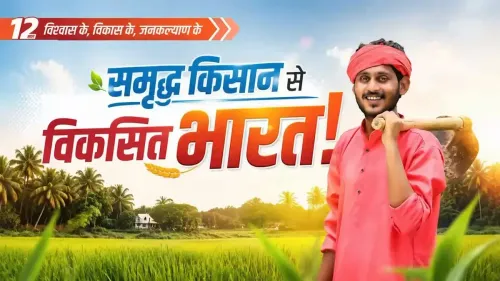
Posting under the hashtag #12YearsOfKisanSamriddhi (12 Years of Farmer Prosperity), CM Gupta wrote that under PM Modi's leadership, farmer welfare had been advanced 'with a spirit of service and compassion.' She specifically highlighted the Pradhan Mantri Kisan Samman Nidhi (PM-KISAN), the Kisan Credit Card, and the Pradhan Mantri Fasal Bima Yojana (PMFBY) as instruments that provided support, financial strength, and security respectively.
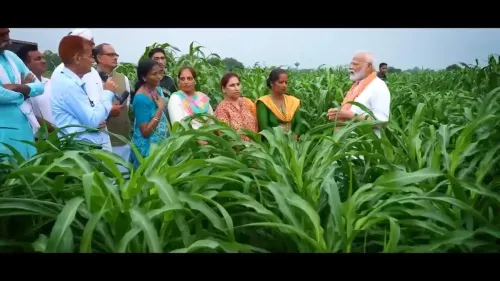
In her words, PM-KISAN 'provided support in difficult times,' the Kisan Credit Card 'gave the strength to move forward,' and crop insurance 'instilled confidence of protection in times of crisis.' The post was accompanied by a video.
Policy Backdrop
PM-KISAN, launched in February 2019, provides ₹6,000 per year in direct cash transfers to eligible landholding farmer families through the Direct Benefit Transfer mechanism. The scheme was designed as an unconditional income support measure to supplement farm household earnings.
The Kisan Credit Card scheme, a longstanding programme for short-term crop loans at concessional rates, received a renewed push from 2018–19 onwards with targets to expand coverage to all eligible farmers and link it with interest subvention benefits. PMFBY, introduced in 2016, replaced earlier crop insurance schemes with a yield-based compensation model to protect farmers against losses from natural calamities.
Together, these three instruments represent the central government's three-pronged approach: income support, credit access, and risk mitigation — addressing the structural vulnerabilities that have historically driven farmer distress in India.
Stakeholders and Impact
The primary beneficiaries of these schemes are India's farming households, particularly smallholder and marginal farmers who are most exposed to income volatility, monsoon dependence, and limited access to formal credit. Rural households across states have been the target demographic for all three programmes.
CM Gupta argued that the cumulative effect has been a shift in national perspective: farmers are no longer viewed 'merely as recipients of assistance' but as 'the foundation of India's self-reliance, food security, and prosperity.' This framing aligns with the broader Viksit Bharat (Developed India) narrative that the ruling BJP has built its agricultural communications around.
She added that growing farmer confidence, new possibilities in agriculture, and rising hope in rural India are together 'providing new strength to the resolve of a Developed India.'
What's Next
The #12YearsOfKisanSamriddhi campaign signals a coordinated political messaging effort across BJP leaders to mark a decade-plus of the Modi government's agricultural policy record. Observers will watch whether scheme modifications or new announcements follow in the next Union Budget cycle or in upcoming agricultural ministry reviews.
With the next agricultural season approaching, the government's ability to demonstrate tangible outcomes — particularly on credit coverage under the Kisan Credit Card and claim settlement rates under PMFBY — will determine whether the narrative of farmer prosperity translates into measurable rural confidence ahead of future electoral cycles.
Point of View
The party seeks to consolidate its farmer-welfare narrative ahead of future electoral cycles. The framing of farmers as agents of 'Viksit Bharat' rather than passive beneficiaries is a deliberate ideological pivot — one that attempts to shift the discourse from distress-relief to national contribution. For a state-level leader like Gupta, amplifying central agricultural policy also reinforces alignment with the Modi government at a time when Delhi's political landscape remains competitive. The durability of this narrative will depend on whether scheme outcomes — particularly insurance claim settlements and credit penetration — hold up to scrutiny in the months ahead.
NationPress
27 Oct 2026
Frequently Asked Questions
What is PM-KISAN and how much money do farmers get?
PM-KISAN, or Pradhan Mantri Kisan Samman Nidhi, is a central government scheme that provides ₹6,000 per year in three equal instalments directly to eligible landholding farmer families through Direct Benefit Transfer. It was launched in February 2019 .
What did Delhi CM Rekha Gupta say about farmer welfare?
On June 11, 2026 , CM Rekha Gupta credited PM Modi's 12-year tenure with transforming farmer welfare, specifically citing PM-KISAN, the Kisan Credit Card, and PMFBY as schemes that provided income support, credit access, and crop insurance security to farmers.
What is the Pradhan Mantri Fasal Bima Yojana?
PMFBY is a crop insurance programme launched by the central government in 2016 . It replaced earlier insurance schemes and offers yield-based compensation to farmers who suffer crop losses due to natural calamities, pests, or diseases.
What is the Kisan Credit Card scheme?
The Kisan Credit Card scheme provides farmers with short-term crop loans at concessional interest rates. The programme received a major expansion push from 2018–19 with targets to cover all eligible farmers and link the card with interest subvention benefits.
What is the meaning of 12YearsOfKisanSamriddhi?
#12YearsOfKisanSamriddhi translates to '12 Years of Farmer Prosperity' and is a BJP campaign hashtag used to mark over a decade of the Modi government 's agricultural welfare policies since 2014 .